Origin Green Award for Monaghan Mushrooms despite Industrial Use of Peat

Monaghan Mushrooms has been awarded Bord Bia’s sustainability mark ‘Origin Green’ but questions have been raised by some environmental groups into the use of peat in the mushroom industry. Measures taken by the company such as increased use of rainwater, green electricity and energy efficient lorries have been widely welcomed. However two groups, An Taisce and Friends of the Irish Environment have been strong in their criticism of Monaghan Mushrooms and also of Teagasc and Bord Bia. Comments on social media from the environmental groups included one from An Taisce saying;  “Unbelievable: How is a heavily using peat business green?”.

Earlier this year An Taisce and Friends of the Irish Environment set out a challenge to the Irish mushroom industry. They jointly wrote to Monaghan Mushrooms (Europe’s largest producer of mushrooms), CMP Mushrooms (a producer organisation representing 90% of Irish mushroom production and growers) and the IFA’s Horticulture and Mushroom Committees to challenge  what they claim is the industry’s “extensive and unsustainable use of Irish peat”.

The environmental groups refer to an EPA study which says that neither past nor current management of peatlands in Ireland has been “sustainable” and that this has serious consequences in terms of climate change, biodiversity loss and water quality. An Taisce and Friends of the Irish Environment, in their letter, ask Monaghan Mushrooms, CMP Mushrooms and the IFA’s Horticulture and Mushroom Committees to reveal the mushroom industry’s plans for:

  1. Reducing its reliance on peat in light of the serious negative environmental consequences of peat use, including climate change; and
  2. Ensuring that any peat the industry uses is sourced from companies which have planning permission and all relevant licences for their operations, and whose extractive activities have been subject to environmental impact assessment and appropriate assessment in accordance with EU and Irish law.

Environmentalist Tony Lowes says; “Industrial extraction from Ireland’s bogs remains the biggest unregulated land use in Ireland, if not in Europe. He claims; “The mushroom industry is one of the biggest drivers of literally thousands of hectares of devastation that is increasing each year without licensing or planning permission.

In 2013 Teagasc said; “Currently, Irish mushroom growers are not under immediate pressure to find alternatives to peat as a casing ingredient. However, the Irish mushroom industry is a major supplier to supermarket chains in Great Britain, where peat conservation and peat replacement are the subject of considerable debate and legislation. Given the importance of the British market for Irish mushrooms, alternative materials for use as a peat replacement or as an ingredient in a peat based casing may be required in the future.” The environmental groups say that Teagasc should now be recommending replacing peat as a casing material.  Their approach is “unacceptable and ethically unjustifiable” according to An Taisce and Friends of the Irish Environment.

Meantime UK food blogger Annie Levy in her ‘Counter Kitchen Culture’ blog has recently written a post entitled ‘Mushrooms Grown with Peat: A Climate Issue’. In it she is critical of the use of peat in mushroom production in Ireland and calls on all mushroom producers to use peat free methods.

Minister Heather Humphreys attended the ceremony in Monaghan Mushrooms to award the Origin Green mark. Later this month she will be attending the ‘Wise Use of Wetlands’ conference in Ballybay Wetlands Centre.   Will Minister Humphreys and the other speakers at this conference see the current way that peat is being used in the mushroom industry as ‘wise use of wetlands’?  Keeping our peatlands intact is hugely important for our biodiversity as many species are experiencing massive decline. Peatlands are also of international importance as carbon sinks. If we keep destroying carbon sinks we are hastening climate change and the destruction of the planet.  This week we hear that carbon dioxide concentrations in the atmosphere has hit the 400 ppm (parts per million) level. It should be at 350ppm if we are to keep the planet safe for our children and grandchildren. (See http://www.350.org.)  Perhaps it’s time that Bord Bia took another look at the criteria for awarding the Origin Green mark before it it’s too late. Being accused of ‘greenwashing’ might be one of the milder consequences they will face.
An Spud Off Mor

Calling all spud growers in the South Monaghan Area. We are in search of the best potato in South Monaghan. The winner will be crowned ‘Farney Spud Champion 2015’

This competition is open to:
● Community Groups
● Schools
● Individuals

Potatoes must be grown locally
Spud Love

On the competition date they should present Continue reading

Transition Monaghan Member Gains Inspiration from ‘Green Trip’ to Holland

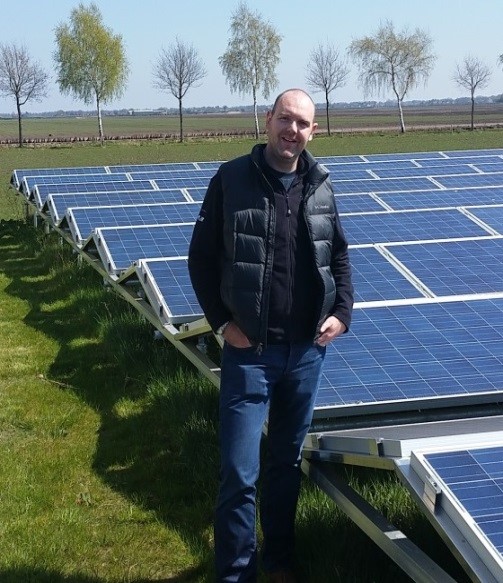
Barry Mc Carron,  a member of  Transition Monaghan, was one of seven participants selected to travel on a green study trip to Emmen in north eastern Holland earlier this month. As part of the ‘Grundtvig Learning Partnership’, the Tipperary Energy Agency had invited interested parties to compete for a chance of taking part in the trip. Here Barry describes the highlights of his visit.

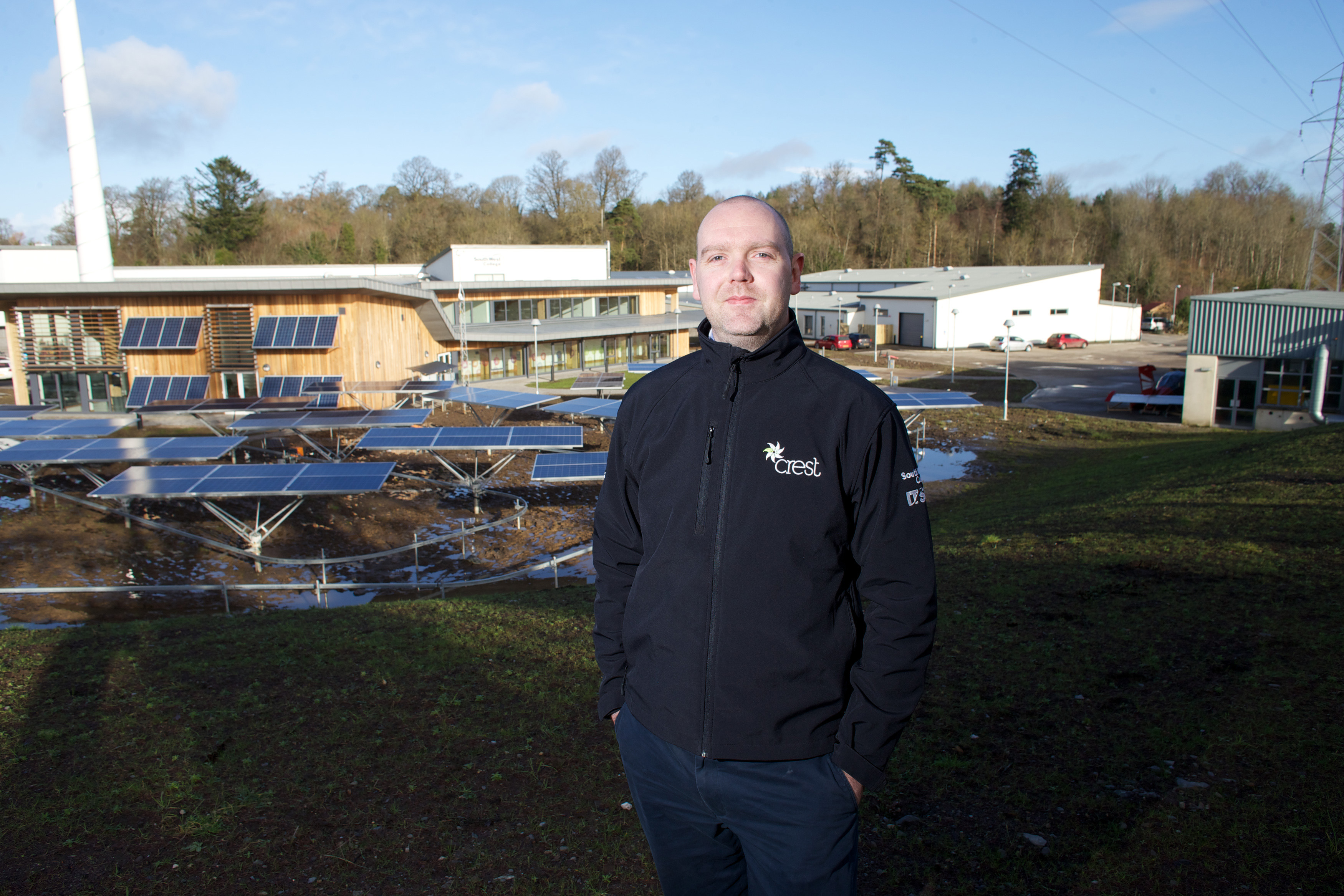
Barry McCarron pictured visiting a photovoltaic facility in Holland

Barry McCarron pictured visiting a photovoltaic facility in Holland

The  Grundtvig programme seeks to improve the quality and European dimension of adult education and make lifelong learning opportunities more widely available to everyone in Europe. As well as the Tipperary Energy Agency there were five other groups which are active in various energy initiatives from across Europe taking part in the trip. They were from Holland, Turkey, Italy, Belgium and Romania. The trip provided an excellent platform for networking and knowledge transfer and this was cultivated through a series of workshops over the three days.

One of the highlights of the trip was a visit to Emmen Zoo, a huge tourist attraction in Holland which draws 1.3 million visitors annually. The zoo is part of a plan for revitalising the city centre of Emmen. Following that, it was on to De Cluft, which is a social initiative/community centre in Emmen. De Cluft has been active since 1977 and plays an important role for both young and old with courses such as flower arranging, painting, pottery, computer training, dancing gymnastics and crafts.

Participants on the trip also visited Landgoed Scholtenszathe to the east of Emmen which is a 1000 hectare agricultural enterprise with circa 350 hectares dedicated to forestry while the other 750 hectares are dedicated to the production of potatoes, sugar beet, onions, and rapeseed. The group got to learn about agricultural technology and renewable energy employed on the site which included a 1.4MW solar photovoltaic system to eliminate there total electricity costs. They are also growing and cultivating rapeseed in order to make bio diesel to offset their fuel bill.

The last leg of the visit was to Drenthe College where the participants took part in a workshop and learned about local energy initiatives called “EMMERGY”. This consisted of an overview of the four programmes Sustainable Cycling, Energy Offices, Energy Centre and Zero Energy Houses.

Overall I found the trip really good and enjoyable and one that will inform my work in CREST (Centre for Renewable Energy and Sustainable Technology) and in my voluntary role with Transition Monaghan. It was a great platform for meeting like-minded people and obtaining expertise and information. The only downside was that the trip was quite short.

This was the fourth of five trips. The first was to a transition town movement in Leuven in Belgium. The second trip saw the participants travel to Tipperary, where they visited Templederry Community Farm, Cloughjordan Ecovillage, Drombane-Upperchurch Energy Team and Gurteen Agricultural College. The third trip saw the participants visit strong examples of low resource use in Italy. A future trip to Turkey is also planned for later in the year. To keep up to date with any future trips see http://www.tea.ie

Successful Cost Efficient Home Event Organised by Transition Monaghan

Members of the public and Transition Monaghan gathered on Saturday morning last to discuss ways in which householders can take measures to reduce their bills in an event organised by Transition Monaghan.

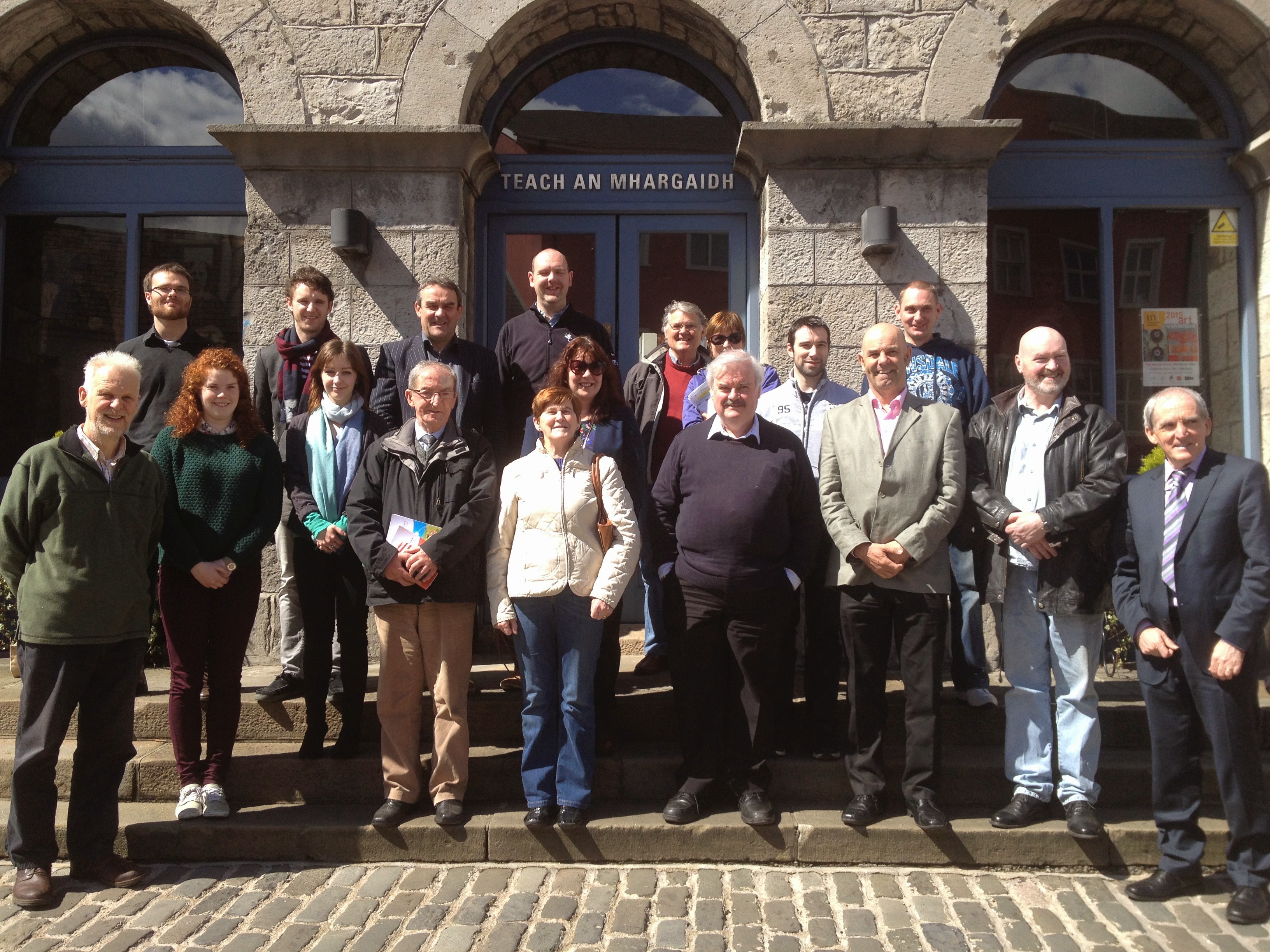
Pictured are the presenters and some of the attendees at Transition Monaghan’s ‘Cost Efficient Home’ event which was held in the Market House Monaghan on Saturday 25 April 2015.

Pictured are the presenters and some of the attendees at Transition Monaghan’s ‘Cost Efficient Home’ event which was held in the Market House Monaghan on Saturday 25 April 2015.

 The event began with addresses by guest speakers Frank Cooney Architect and Michael Hanratty, energy consultant with IHER Services. Frank, who lives in a Nearly Zero Energy Building, spoke of his work as an architect and of the importance in getting the design appropriate to your needs and surroundings, when building a new house. He says it is important to plan correctly when either building or retrofitting a home. He advised that when seeking to make a house more energy efficient, it is best to start with the simplest and least expensive steps, such as sealing draughts before investing in insulation and retrofitting. Investing in renewables should only be done after insulation is maximised.

Michael Hanratty spoke of his work on a European funded project, which involved mapping a profile of the quality of housing stock in North Dublin City. This striking, colour coded map, by geographic area, indicated  the average insulation level in households as well as the overall fuel poverty level. It showed the there is a lot of work to be done to get the housing stock up to adequate BER levels. He mentioned a very useful bit of work which had been done on profiling the housing stock in the country. This study, which categorises the most common Irish house types, illustrates the general level of insulation in these houses, the work which would need to be done to bring it up to a reasonable standard, the costs involved and overall payback time. For example, if you live in a pre 1978, ‘End of Terrace / Semi Detached House’ with cavity walls, you would need to spend a total of €17,920 on an upgrade to bring it up to a standard level, which would give you a payback time of 5.1 years. The cost would be much lower and payback period much shorter if you include SEAI grants. Grant details are listed on the SEAI website http://www.seai.ie.  A full list of Irish house categories and required refurbishment is available on http://www.iher.ie under ‘consultancy and research’.

Following the presentations there were two sessions of four workshops (two running concurrently) on key areas of household expenditure. These focused on simple, everyday measures which householders can take to reduce their spending and environmental impact.

On water, Ollan Herr, a reed bed systems and water harvesting professional, stated that the best way to save water is to avoid unnecessary usage. However, failing that, reduced use is the best step, i.e. showering using a normal shower rather than a power shower. He also mentioned more expensive upgrades which are available such as installing a water collection tank on your roof as well as a system for the re – use of grey water.

Jennifer McAree, who recently completed an internship with DIT Green Campus, spoke of the environmental and cost saving benefit of recycling and composting. She stressed the importance of looking carefully at packaging to see whether it is recyclable and also pointed out that cooked food, dairy products and cooked / raw meat are not suitable for home compost bins.

Michael Connolly delivered a workshop on electricity while Barry Mc Carron who works for the Centre for Renewable Energy & Sustainable Technology in Enniskillen delivered a presentation on heat / insulation.  Both workshops focused on techniques and inexpensive investments that can reduce household energy usage and bills.

Transition Monaghan is a voluntary initiative that always welcomes new volunteers. We hope to run further sustainability events in the future. You can find out more by emailing transitionmonaghan@gmail.com or ‘liking’ us on Facebook.

‘Low Energy Home’ experts for free public event in Monaghan

Members of the public are being invited to an event entitled ‘Your Cost Efficient Home’ which will be held in the Market House, Monaghan on Saturday, 25 April from 11am to 1pm. The focus will be on how you can easily reduce your energy, water and waste bills. There will be two key note presentations by experts in the area of low energy in the home – Michael Hanratty of Energy Action and Frank Cooney of Cooney Architects. The presentations will be followed by workshops on Heating / Insulation, Electricity, Composting and Water. The Water workshop will have information on rainwater harvesting.

 Micheal Callaghan and Barry McCarron of Transition Monaghan, the event organisers, say that they are delighted that two top class professionals in the field of low energy have agreed to present at the Monaghan event.

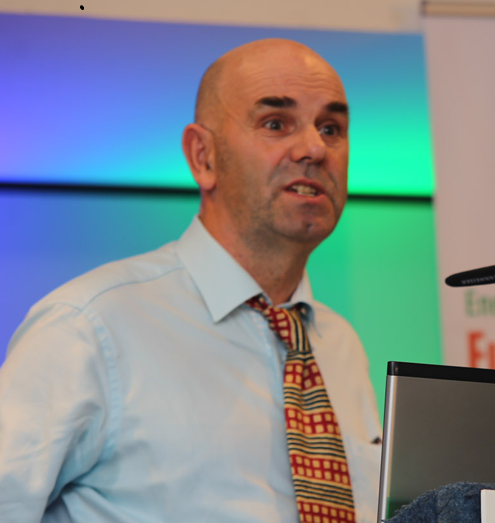
Michael Hanratty, IHER Energy Services

Michael Hanratty, IHER Energy Services

Michael Hanratty is Managing Director of IHER Energy Services, and Energy Consultant to Energy Action, a charity which tackles fuel poverty in Dublin by the provision of insulation in the homes of older people and low income people. Camcas is the equivalent in Cavan – Monaghan. Michael also manages the Nearly Zero Energy Building (NZEB) Open Doors Ireland event which showcases practical experiences of designing and living in low energy buildings.

Frank Cooney, Cooney Architects

Frank Cooney, Cooney Architects

Frank Cooney B.Arch MRIAI is an architect who has 20 years working experience in the area of sustainable architecture and design. Frank with his wife Patricia McCaffrey established Cooney Architects in 1995. They have won many awards including a  gold medal winner of the Green Apple Award for ‘Built Environment and Architectural Heritage’ in 2012, for a low energy retrofit and extension of a period house in Dublin They also won a silver medal Green Apple Award for the retrofit to almost Passivhaus standard, of their own nineteenth century farmhouse in Cavan.

Transition Monaghan say that they would like any contractors and BER (Building Energy Rating) Assessors that are registered with SEAI  to come along and they can be identified to the attendees. However exhibition stand space is not available at the event.  Transition Monaghan hope that the event will lead to many more people taking action to reduce energy use in the home and thereby saving themselves money. It will also help to reduce the amount of money going out of the country on imported fossil fuels and of course help lower our climate damaging emissions.   For more information check http://www.transitionmonaghan.org or email transitionmonaghan@gmail.com.

‘Low Energy Home’ experts for free public event in Monaghan

Members of the public are being invited to an event entitled ‘Your Cost Efficient Home’ which will be held in the Market House, Monaghan on Saturday, 25 April from 11am to 1pm. The focus will be on how you can easily reduce your energy, water and waste bills. There will be two key note presentations by experts in the area of low energy in the home – Michael Hanratty of Energy Action and Frank Cooney of Cooney Architects. The presentations will be followed by workshops on Heating / Insulation, Electricity, Composting and Water. The Water workshop will have information on rainwater harvesting.

 Micheal Callaghan and Barry McCarron of Transition Monaghan, the event organisers, say that they are delighted that two top class professionals in the field of low energy have agreed to present at the Monaghan event.

Michael Hanratty, IHER Energy Services

Michael Hanratty, IHER Energy Services

Michael Hanratty is Managing Director of IHER Energy Services, and Energy Consultant to Energy Action, a charity which tackles fuel poverty in Dublin by the provision of insulation in the homes of older people and low income people. Camcas is the equivalent in Cavan – Monaghan. Michael also manages the Nearly Zero Energy Building (NZEB) Open Doors Ireland event which showcases practical experiences of designing and living in low energy buildings.

Frank Cooney, Cooney Architects

Frank Cooney, Cooney Architects

Frank Cooney B.Arch MRIAI is an architect who has 20 years working experience in the area of sustainable architecture and design. Frank with his wife Patricia McCaffrey established Cooney Architects in 1995. They have won many awards including a  gold medal winner of the Green Apple Award for ‘Built Environment and Architectural Heritage’ in 2012, for a low energy retrofit and extension of a period house in Dublin They also won a silver medal Green Apple Award for the retrofit to almost Passivhaus standard, of their own nineteenth century farmhouse in Cavan.

Transition Monaghan say that they would like any contractors and BER (Building Energy Rating) Assessors that are registered with SEAI  to come along and they can be identified to the attendees. However exhibition stand space is not available at the event.  Transition Monaghan hope that the event will lead to many more people taking action to reduce energy use in the home and thereby saving themselves money. It will also help to reduce the amount of money going out of the country on imported fossil fuels and of course help lower our climate damaging emissions.   For more information check http://www.transitionmonaghan.org or email transitionmonaghan@gmail.com.

Monaghan ‘Cost Efficient Home’ Announced

How you can cut your bills – energy, water and waste will be the focus of an event to take place in the Market House,  Monaghan on Saturday, 25 April from 11am to 1pm. The event which is being organised by Transition Monaghan is free of charge for members of the public to attend. There will presentations by a panel of experts followed by a number of workshops on Water, Electricity, Heating, Insulation and Composting.

Barry McCarron, Transition Monaghan & Centre for Renewable Energy & Sustainable Technology (CREST).

Barry McCarron, Transition Monaghan & Centre for Renewable Energy & Sustainable Technology (CREST).

Chairperson of Transition Monaghan, Micheal Callaghan says that he would encourage people to come along in order to get a lot of useful tips that will help save themselves money. The more we save the more it helps our local economy as we have more money that we can spend locally rather that it going out of the country on imported fuels.

Barry McCarron, one of the organisers of the Transition Monaghan event and who works with the Crest Project on a cross-border sustainable energy initiative says that there are now many new ways we can take steps to be more efficient in the home and use less energy and water and also have less waste going to landfill. Simple and practical steps can be taken, almost little cost, with relatively little effort, which can reduce your impact on the planet and your bills, saving you money! Members of Transition Monaghan and energy experts will be on hand during the day to answer your questions and point you in the direction of more information and tools to help you reduce bills.

Mícheál Callaghan of Transition Monaghan. Members of Transition Monaghan will be at the event to answer your questions about reducing energy.

Mícheál Callaghan says that ‘we are delighted to have two top class professionals in the area of low energy – Michael Hanratty of Energy Action Ireland, and Frank Cooney of Cooney Architects.

The event is supported by funding from Agenda 21 funding from Monaghan Co Council.  For further details on the event see http://www.transitionmonaghan.org or Transition Monaghan’s Facebook page.  For queries please email transitionmonaghan@gmail.com

Davis ’15 & Paris ’15: Have they any relevance to us?

Last week,  world leaders gathered in Davos, Switzerland for the Annual World Economic Forum Summit. In somewhat of an irony, where tickets cost approximately €15,000 for non-invitees, global inequality and climate change were amongst the items on the agenda. While, very little of substance emerged from the Davos summit, it served to generate discussion around global inequality and its links with environmental issues.

Most of us will have often heard the phrase ‘the rich get richer while the poor get poorer’. Unfortunately this is now truer than ever before. Last week, Oxfam released a report which shows that, globally, the wealth of the richest 1% is equal to that of the remaining 99%. Here at home, many are struggling to make ends meet. Child poverty has doubled and homelessness figures have spiked.

Despite world leaders celebrating recent growth in the economy (only just!), ordinary people are not feeling the benefits, and trends are going the wrong way for many. As well as being damaging socially, this inequality is also bad for the planet. Various studies show that a more equal society would be a safer and happier one, but would also be likely to consume less and live in greater harmony with the planet. Therefore, as the notion of ‘trickle down economics’ seems perverse to many and as our planet continues to suffer, action is gravely needed to build a more stable, wholesome economic model, which does not equate economic growth or GDP with progress.

While there are no one size fits all answers to our predicament, there are a number of practical steps that we can all consider taking.

With a general election coming closer, and elections in the North this year, we can scrutinise candidates and demand policies that can help to move us towards a more equal society, with a more sustainable economy and lower climate damaging emissions. Innovation will be required to provide the kind of jobs that can reduce our impact on the environment while building resilient communities across the country. The next few years will prove pivotal in determining whether environmental sustainability and inequalities in society are tackled both nationally and globally. While Davos 2015 has come and gone with little effect, the climate conference in Paris this December will be crucial for our future climate and consequently for the long term prospects of both the economy and society in every country.

Upcoming events & notices for February

Eco-Congregation Ireland event: Climate scientist Prof John Sweeney of NUI Maynooth will be keynote speaker in Regional Cultural Centre in Letterkenny on Friday, 13 February at 7.30pm. See www.ecocongregationireland.com

.Climate Conversations 2015:Bringing People Together for a New Understanding on Climate Change’ – a series of proposed events in Ireland in early 2015. See www.climategathering.org

Climate Change and the Well-Being of the Community: Weekend of 6 – 8 February.  Scottish ecologist Dr Alastair McIntosh will be keynote speaker at ‘Reinhabiting the Earth’ Spring Conference at  Drumalis, Larne, Co Antrim. See www.ecocongregationireland.com or www.drumalis.co.uk.

Afri Féile Bríde 2015, ’Occupy the Imagination’ (Workshop): Saturday, 7 February (11am -5pm) in the Solas Bhríde Centre, Kildare town.  See http://www.afri.ie.

Your Views Sought on Future Retail Development in Co Monaghan:  To give your views, please complete Monaghan Co Council’s online survey by Thursday 11 February. To access it, see ‘News & Events’ at http://www.monaghan.ie/en/home.

Talk on Climate Change (Eco-Congregation Ireland event): Friday, 13 February at 7.30pm in Regional Cultural Centre, Letterkennny.  Speaker: climate scientist Prof John Sweeney of NUI Maynooth. See www.ecocongregationireland.com.

Recycling Arts & Crafts Workshops for Children on Valentine’s Day: Monaghan Town Library  on Saturday, 14 February. Booking essential. Tel 047-81830. Limited places available for the free workshops.

Fossil Fuel Divestment Day (Dublin): Saturday, 14 February. See Fossil Fuel Divestment Gathering – Dublin on Facebook.

Trocaire Primary / Postprimary Classroom Resources for Lent 2015. The theme is climate change and how it is affecting communities around the world. See www.trocaire.org/education/lent2015

Organic Centre in 2015: The Centre’s seed / course catalogue for 2015 is now available. Courses commence on Saturday, 21 February. Some special events to mark the Centre’s 20th anniversary are planned for 2015. See www.theorganiccentre.ie.

Ecology Sunday ‘Salute to Spring @ Navan’: Sunday, 22 February (11am – 3pm) at Navan Centre & Fort, Armagh. A free ‘drop in’ event celebrating the arrival of Spring including  looking at flowers, plants, insects and bird calls. Take a ‘plant identification’ walk and even get to plant your own seeds and bulbs.

Springtime Walks & Talks at the Botanic Gardens: see ‘Events’ at http://www.botanicgardens.ie.

Events at Armagh Planetarium: (1) Electric Half Term, 16-21 February, 10am-5pm. Digital Theatre & Magic Science hands-on workshop (2) Stargazer, Saturday, 28 February 12.30-3pm with Mark Thompson of BBC Stargazing LIVE. See http://www.armaghplanet.com.

Fruit & Nut Tree – Sales & Pruning / Grafting Spring Courses: The Sustainability Institute, Westport, Co. Mayo. See www.fruitandnut.ie

Eco Eye: The new series on RTE 1 is broadcast on Tuesdays at 7pm. Catch up on them on the RTE Player and on YouTube.  See http://www.earthhorizon.ie.

NOTICES FOR BUSINESSES, PUBLIC BODIES, NGOs & JOBSEEKERS

Energy Management Training for Management  / Staff of Schools & Colleges. Workshop 1 on Tuesday, 3 February and Workshop 2 on Tuesday, 10 March in Louth – Meath Eduction Centre. See ‘Energy Managment Course’ at www.energyineducation.ie

2015 IrBEA National Bioenergy Conference: Wednesday, 4 February in Dublin. Theme: ‘From Bioenergy Plan …to Action?’ See www.irbea.ie

STEM Project – Business Networking: Sustainability Project’s closing event on Thursday, 12 February at 10am in Armagh City Hotel. Keynote Speaker:  Susan Hayes, Managing Director of Hayes Culleton – “The Positive Economist”. See ‘Events’ at www.stemproject.com

Irish Renewable Energy Summit: Thursday, 19 February in Dublin. See www.energyireland.ie

Introduction to Organic Production (Fetac Level 5): 10, 18, 24 March & 1 April (10am-5pm) Teagasc, Ballyhaise, Co Cavan. See ‘Events’ at http://www.teagasc.ie.

Climate Bill: Will it be an adequate response?

This week the long awaited Climate Bill was published by the Government. It came a few days after NASA confirmed that 2014 was the hottest year since records began. The Bill sets out the intention of the Government to move Ireland to a low carbon economy by 2050.  The lack of specific targets for emission reductions in this proposed law has been criticised by many environmental groups. This week has also seen Pope Francis highlighting the issue of climate change. Here in Ireland the issue was also highlighted by a visit to Dublin by world famous climate scientist Dr Michael Mann.

The Minister for the Environment, Alan Kelly TD said that the Climate Bill will involve ‘National Mitigation Plans’ which will set out how our national greenhouse gas emissions are to be reduced. There will also be a ‘National Adaptation Framework’ which will outline the national strategy for adapting to climate change. The news was welcomed by the Government parties. A feature of the Bill will also be the setting up of an expert advisory council which will advise and make recommendations to the Minister for the Environment. This feature has been one of the criticism made by Oisin Coughlan of Friends of the Earth who said: “The Bill does not include a definition of low carbon, it doesn’t guarantee the independence of the Council, and it doesn’t include the principles of climate justice,” Climate scientist Professor John Sweeney of NUI Maynooth said: “The clock is ticking, alarm bells are ringing … but we’re pressing the snooze button”.   


In the past week, Pope Francis visited the Philippines. Just over a year ago Typhoon Haiyan caused widespread devastation and loss of life through a region of the Philippines.  The severity of the typhoon was attributed by many to the changing global climate. In a comment as he set out on his trip, Pope Francis said:  “I don’t know if it is all (man’s fault) but the majority is, for the most part, it is man who continuously slaps down nature.” Later this year the Pope plans to issue a major encyclical on climate change.

This week also saw the visit to Ireland of renowned climate scientist Dr Michael Mann of Penn State University. He is the originator of ‘The Hockey Stick’ – a simple, easy-to-understand graph which he and his colleagues constructed to depict changes in Earth’s temperature back to 1000 AD and which clearly highlights the current upward trend. His lecture in Trinity College outlined how he has responded to the disinformation that has been generated by the campaign to deny the reality of climate change. Commenting on the Climate Bill Dr Mann said that it was a “good starting point for debate”.

The warming of the planet is being caused largely by our use of fossil fuels – oil, coal, peat and gas. The ‘Fossil Fuel Divestment’ campaign takes the fossil fuel industry to task for its involvement in the climate crisis. The climate organisation 350.org is calling for organisations and in particular for universities and churches to divest from fossil fuels. On Saturday, 14 February, towns and cities across the world, including Dublin, will host events as part of Global Divestment Day.  More details on the event will be available in the coming weeks.