Call for volunteers in Monaghan to plant ‘1 million trees’ on Saturday, 11 February

rossmorePictured above is Rossmore Park. Trees are the lungs of the earth and provide natural sanctuaries.

If you find yourself getting overwhelmed by all the bad news in the world, there can be no better way to counteract this than by getting your hands dirty and making a positive impact in your local community. Why not join Transition Monaghan in planting trees in Monaghan Town on Saturday February 11th at 10am. In Castleblayney the Community Gardens Group welcome people to come along to their tree planting at Park Road Community Garden at 11am.

The ‘one million trees in one day’ initiative hopes to see one million trees planted all treesacross Ireland on the day. In Monaghan, our Transition will be planting 100 trees, with a mix of native ‘woodland’ and ‘hedgerow’ trees. We will be joined by other local groups on the day, including the Tidy Towns, Men’s Sheds and the Allotment Society. In particular, we welcome new volunteers to lend a hand in the planting. All you need are weather proof clothes and a pair of sturdy shoes or boots. If you have a spade, this is a plus, but if not we will provide some. We will announce the precise locations in next week’s noticeboard and on our Facebook page. For further information, please email transitionmonaghan@gmail.com or call 086 865 2724.

February notices can be found here

Trócaire Director says: “Trump will hurt the world’s poor”

After President Trump was inaugurated, one of his first actions was to delete references to action on climate change from the White House website. He then went on to argue about the numbers attending the inauguration. Meanwhile Éamonn Meehan the Executive Director of Irish charity Trocaire was highlighting in his blog the five ways he claims that the new US President will hurt the world’s poor. They are summarised below.

eamonn.png

Éamonn Meehan pictured on right

CLIMATE CHANGE

trocaire-logoÉamonn Meehan sees the appointment of a climate change sceptic – Scott Pruitt – to the key position of head of the Environmental Protection Agency and his hostility towards science and enthusiastic embrace of coal and oil as a “nightmare scenario for anybody who cares about the future of the planet”. He says that Trump has promised to “cancel the Paris Agreement on climate change Agreement”. The deal has been structured in such a way that it “would take four years for any country to back out, but that has not stopped calls from his supporters to follow through on his pledge.”


The Trócaire Executive Director says that the new US President “champions coal production and has stated his desire to reduce regulation and restrictions on mining and fossil fuel production”. Mr Meehan points out that the recent UN Climate Change Conference pointedly stated that “momentum is irreversible” and he says that any attempt by the new US administration to counter this would seriously weaken global progress. “This will have a devastating impact, especially on the developing world, where people are already struggling in the face of worsening drought and extreme weather”

OVERSEAS DEVELOPMENT AID

Éamonn Meehan says that before becoming President, Mr Trump promised to “stop sending foreign aid to countries that hate us”. According to Meehan this is “open to huge interpretation, it signals the new US President’s desire to further politicise aid by only funding countries with governments considered friendly to US interests.” About one third of American aid is directed at health programmes, so any reduction would, according to the Trocaire chief, have an immediate impact on progress against disease, particularly in Africa. What Mr Meehan sees as worrying would be if Trump uses aid money as a way to influence domestic policies across Africa and the Middle East. “Given Chinese influence in Africa, this could spark a mini-Cold War across the continent as east and west prop up friendly regimes”

THE MIDDLE EAST

President Obama and Secretary of State, John Kerry, opposed Israel’s ongoing policy of settlement construction. Éamonn Meehan says that Trump “will likely give Benjamin Netanyahu a free pass to annex land and continue this policy” Two days after the inauguration we see settlement construction resuming. Trump’s stated intention to reverse decades of US policy, by moving the US embassy from Tel Aviv to Jerusalem is seen as ‘worrying” as it “would enflame tensions in the region”.

WOMEN’S RIGHTS

Last Saturday we saw the huge protest against Trump by over a million women across the US and all over the world. Trump’s election was condemned by equality activists around the world. In India, where women face endemic violence, Éamonn Meehan reports that activists there said that Trump’s victory was devastating because of America’s global leadership role.

It is estimated that one in three women worldwide have experienced either physical or sexual violence in their lifetime. Given the well-publicised comments by the new American President on the matter, Eamonn Meehan says that Trump’s election is “a huge setback for efforts to protect women around the world.”

LATIN AMERICA

Trump’s most publicised plan was his proposal to construct a wall along the Mexican border. The Trócaire Director says that even if this plan never sees fruition, it seems inevitable that he will clamp down on migration. He points out that poor communities in Central America are often hugely reliant on remittances from relatives working in the United States. The casual nature of migration back and forth, he says, has echoes of Irish people’s reliance on the building sites of England in the past. “I have been in villages in Guatemala and Honduras where money from America is the difference between having food and going hungry. Trump’s hostility towards migration will have a devastating impact on these families. Sadly, they are not the only ones bracing themselves for a stormy period ahead.”

Click here for events in February

Is there a way to prevent antibiotic resistant bacteria being the death of us?

There has been a lot of controversy recently over the Irish Cancer Society’s new awareness

d

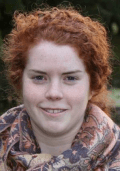
Dearbhla Lenehan

campaign. Did you know, more people will actually die from bacterial-related illnesses than from common cancers? With increasing emergence of antibiotic resistant bacteria this figure will only continue to rise. Dearbhla Lenehan, an Infection Biology PhD student and member of Transition Monaghan explains what antibiotic resistance is and measures we can take to slow down the development of these superbugs.


For a long time the idea of antibiotic resistant bacteria has seemed farfetched or theoretical. When this topic is brought up the response is usually ‘they’ll find another drug or I’m sure something else will work’. Unfortunately, at present, there are no alternatives. In 2015, a bacterium resistant to the ‘last resort’ antibiotic colistin was identified for the first time in China. In 2016 similar findings were found in European countries. Now in 2017 an American woman has died from an infection caused by a superbug resistant to every available antibiotic. Could this be the start of a superbug-killing spree? Unfortunately, antibiotic resistance is increasing and is an issue that affects us all. The main cause of these resistances arises from misuse and overuse of antibiotics.

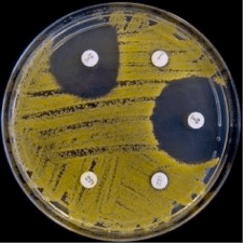
disk diffusion test.png

This graphic shows the routine antibiotic resistance test scientists use. The yellow lines are bacteria; the white circles are disks that contain different antibiotics. When you see a clear circular zone around these disks, that particular antibiotic is killing the bacteria. However, this bacterium is resistant to 3 of the antibiotics tested, as there is no circular killing zone surrounding three disks.

While, on the one hand, antibiotics save millions of lives, on the other hand, antibiotic resistance has been described as one of the world’s most pressing public health problems. Since 2000, there has been a steady increase in the prevalence of antibiotic resistant bacteria. Once easily treatable infections have now become extremely difficult if not impossible to treat; leading to immense discomfort and in some cases can be fatal.

MISUSE

How has this antibiotic resistance come about? Simply – misuse and overuse. Every time you take antibiotics, sensitive bacteria are killed. Antibiotics put a selective pressure on bacteria and in a bid to survive bacteria can manipulate their genetic material or acquire pieces of DNA that code for the resistance properties from other bacteria. Misusing antibiotics is taking antibiotics for a viral infection like a cold or flu. Antibiotics can only treat bacterial infections and won’t help your flu. Another example of misuse is if you do not finish your full course of medication, or do not take it exactly as directed by your doctor. In this case, not all of your infecting bacteria are killed off and in a bid to survive and re-infect they begin to multiply and can find ways to acquire antibiotic resistance.

OVERUSE

Overuse of antibiotics primarily occurs in the farming industry. In Ireland there are strict guidelines regarding the use of antibiotics in farming. However, even with this, a recent report published by the Food Safety Authority of Ireland found that there is still potential for antimicrobial resistance transmission in the food chain. This transmission can occur if we eat meat that’s contaminated with antimicrobial-resistant bacteria, which is more likely in food from animals that received antimicrobial agents. It can also occur when animals treated with antibiotics urinate or defecate. Then traces of these antibiotics enter the soil and bacteria can gain resistance to them. These resistance genes can then be easily passed on to other bacteria and spread.

Bacterial-related illnesses affect the most vulnerable; the young, the old, those receiving chemotherapy and those undergoing organ transplants. Commonly, patients suffering from a completely different disease, sadly end up succumbing to secondary infections. Unfortunately, as more and more bugs gain antibiotic resistance, it’s becoming increasing difficult to help these patients. However, if we act now to inform ourselves about antibiotic use, only take them when we really need them and avoid their overuse, including in farming, we can slow down the emergence of these killer superbugs.

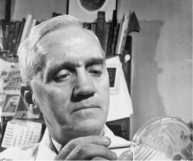
Alexander Fleming, the discoverer of penicillin, said 72 years ago “the thoughtless person

a-fleming

Alexander Fleming

playing with penicillin treatment is morally responsible for the death of the man who succumbs to infection by penicillin resistance”. Unfortunately, his words are becoming a reality and with the increasing prevalence of antibiotic resistance, we will soon enter a post-antibiotic world.


January noticeboard can be found by clicking here 

Click here for February events

Responsible travel and still having fun!

As January is a time that many people think about and plan holidays, Collette McEntee thought it a good time to look at what’s meant by ecotourism, responsible travel and sustainable tourism. Explaining to friends, who were not familiar with the idea, she described it as “Tourism that leaves as little effect on the environment as possible.” The general reaction was “Never heard of it, but it can only be a good thing”. She now tells us more.
collette.png

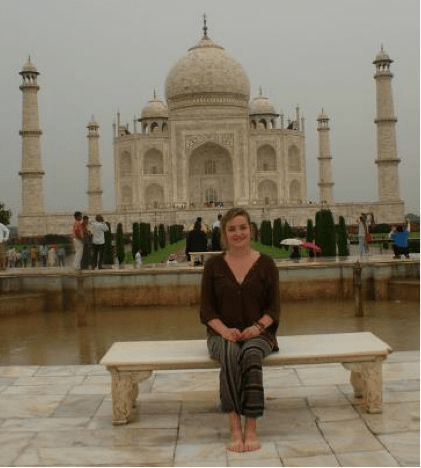
Collette McEntee at the Taj Mahal, India


I have done my fair share of travel with a lot more to do. I have been happy to hop on a plane and be in the air for hours on end until I reach my next venture! India, New York, Paris, Glasgow, Kerry to name but a few of the places that I have had the pleasure to absorb.

However, I can hardly turn in my bed, these days, without harming the planet. It’s tough to keep up and sometimes, to even care. It is increasingly clear that almost everything I do, results in someone/somewhere suffering. Aviation fuel is a damaging contributor to our planet and is not taxed properly and so, by simply sitting on a plane, I am at fault.

IT’S NOT ALL DOOM AND GLOOM!

It’s not all doom and gloom, though! Responsible travel can be adhered to in many ways and it starts at our own daily practices and lifestyle. Carry your own water bottle to refill, avoid using disposable products and packaging, reuse your towel, shower once a day (if even!) – the list is endless. We tend to go into holiday mode when we are away and forget that it’s the same sky and land that we are sharing. Avoid all-inclusive holidays; most of the time, premade, all-inclusive deals are serving a pastiche of what the place has/used to offer. It does not serve well to the locals or a true experience to the traveller/tourist and just pumps money back into the travel company’s base economy.

If you are travelling a long distance, you can make the trip worthwhile by interacting with the place and filter as much money back into the local economy. Making an effort with the new culture and integrating with the people will get you an authentic experience at an agreeable cost (even free!). Avoid short and/or shopping trips abroad where you will visit the same chain stores that are at home but just a car/bus/ferry journey away. Ferries and coaches have lower CO2 emissions per passenger than most aircraft.

Your visit drips back into environments and economies. When researching, don’t just look at the things to do but who/what trip providers are taking you there and their policies. There is a wealth of good, responsible companies that will pull from the local sphere for the experience they provide. Be vigilant and it will be a win-win for you and the locals.

VOLUNTEERING ABROAD

I have been down the volunteer abroad route. Unfortunately, they are often flawed, devised and driven by money and smart marketing. If you are considering a trip like so, do your research and ask questions – how is the money spent? Is there an actual need for me and my skill set in that locality? You could be replacing local people and/or not needed at all and so, guilt and wasted expense are inevitable.

Responsible travel starts at your own doorstep. As they say, explore your own back garden! Inherently, we seek adventure elsewhere. However, recognise your luck to live on this emerald isle – these fields, lanes, communities, towns, pubs, skies, hills, mountains (and the list goes on) are ours. If the weather is right and/or you are prepared, Irish home-grown festivals are a holiday in themselves. Look further than the popular names and there is an abundance of smaller community driven festivals, only a short journey from your home.

WHAT MOTIVATES RESPONSIBLE TRAVEL?

Meeting the locals, experiencing the culture, munching on the local cuisine, learning something new, giving your own hard earned cash to an equally hard earning local business and the list continues. It’s good for the head and heart to enjoy the simple things in life such as exchanging a smile and conversation with another person. Being conscious of the people and place and being conscientiousness are key factors in responsible travel. Whether you are walking along Rossmore Park’s Barn Lake or Thailand’s Ko Phi shoreline, respect and respond positively.

barn lake.png

Barn Lake at Rossmore Park

Another thing to consider, especially in light of the recent rejuvenated fight for the homeless, is the amount of vacant holiday homes in contrast to the amount of homeless on our streets and waiting lists for housing throughout the country. Responsible travel is an all-encompassing term that can stir many varied discussions.

At the end of the day, remember, we are the sum of our behaviours. Actions speak louder than words. Go n-éirí an bothar leat! For more information, see http://www.reponsibletravel.com and http://www.ecotourism.ie.

A link to January events can be found here

February events can be found here

The Organic Centre’s gardening and food predictions for 2017

After a turbulent 2016 we felt that instead of trying to stare into the ‘sustainability’ crystal ball and coming up with predictions for the year ahead, it was safer to pick an aspect that is reasonably predictable – so we will look at what direction growing and cooking our own food wilhans.jpgl take. It also makes it easier if we consider what an expert in this ‘field’ says.  In the New Year newsletter from the Organic Centre, Manager Hans Wieland says that he had his “ear to the ground” and so he has come up with the following predictions for 2017. 
 

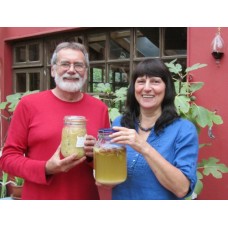
Hans and Gaby Wieland will be delivering a course on fermented foods on Sunday, 19 February at the Organic Centre

  1. More people will compost, because more people do experience the wonderful effect compost has in growing vegetables. More people also begin to realise how much money can be saved by recycling waste material. And because more people following the no dig method in gardening, compost is all they need. Everybody can do it and with a few recycled pallets a compost box is constructed in minutes.

    2. More people will kill their lawn in favour of planting fruit trees and bushes, a few vegetable beds or a herb patch, because lawns are unproductive, costly and time consuming. (Football pitches for kids are exempt!) The revival of growing potatoes in lazy beds as the best strategy to start a garden from scratch is already underway!

    3. More people will have a polytunnel, not just because undercover gardening is so addictive, but because the beauty of for example harvesting lettuce all year round can’t be measured in money terms only. Although the savings can be substantial it is the flavour, the colour and the taste of home-grown salad leaves that are unbeatable.

    4. With the help of polytunnels more people will grow and harvest all year round and experience the seasons in a very down to earth way.

    5. More people will eat weeds, because they are plants often higher in nutrients than our “ordinary” garden plants, but the real thrill for many gardeners often is to find these undervalued species in the wild thus satisfying our discovery instincts.

    6. More restaurants and cafes will have their own kitchen gardens and kitchen gardeners supplying the enterprising chefs with the freshest vegetables and herbs imaginable and often resulting in simple seasonal dishes of extraordinary flavour.

    7. More people will eat fermented foods as they learn how easy it is to cook, pickle and preserve with the help of micro organisms.


The Organic Centre is located in Rossinver, Co Leitrim. They commence the 2017 course with ‘Starting a Garden from Scratch’ on Saturday, 18 February.  See the full course listing and seed catalogue at http://www.theorganiccentre.ie. Note that Cavan Monaghan ETB will run a course on Plant Identification, Care & Maintenance in Castleblayney  commencing on Wednesday, 1 February, 10am – 1pm (15 weeks). See ‘Latest News’ at http://www.cavanmonaghan.etb.ie. For more GIY expertise why not go along to Monaghan GIY events or check out http://www.giy.ie.

 Sustainability 2016: the good and bad news

 The bad news on the sustainability front from 2016 seems to have dominated in 2016. We list below some of the highlights of the bad news and the good news.


The Bad News

Climate Change: 2016 was the hottest year on record and this is unwelcome news for people trying to grow food in many parts of the developing world.  Increased migration will be one of the issues that will arise.


Destruction of Nature: In 2016 we have the confirmation that between 1970 and 2020 almost two thirds of the entire world’s wildlife will have gone and the extinction rate is on the increase.


President-Elect Trump: On the political front the environmental policies of the incoming administration in the US are likely to speed up climate instability and nature extinction.


Ireland’s Climate Damaging Emissions: The EPA confirmed that Ireland is unlikely to meet our 2020 EU greenhouse gas emissions reduction targets.


The Good News

Paris Climate Agreement Ratified: Most governments from around the world (including the Irish Government) have formally ratified the Paris Agreement. In the Agreement world leaders pledged their support to keep global temperatures below 2 degrees Celsius in this century.

Campaigns against Fracking / Fossil Fuels:  In Ireland a Bill to ban fracking passed its first crucial vote in the Dáil.  Thousands of people worldwide campaigned to break free from fossil fuels. This led to the shutting down of major coal-fired power stations in Wales and Germany. The Sioux people at Standing Rock in the US and their allies successfully protested against the proposed Dakota Access Pipeline.  The US government also abandoned its plan for oil and gas drilling in Arctic waters.

Protecting our Oceans: In 2016, more than 20 countries pledged almost €5 billion for ocean conservation and created 40 new marine sanctuaries covering an area of 3.4 million square kms

Global Health Improvements: Among the successes reported by the World Health Organisation was one which stated that since the year 2000, global malaria deaths have declined by 60%.

Events on in January can be found here

Help plant 1 million trees in Ireland in 1 day

Applications for tree packs close on 31 December


Ireland needs more native trees. Packs of trees for planting are now available as part of an initiative to plant one million trees in Ireland on just one day – Saturday 11 February 2017. If you are a landowner or a member of an organisation with suitable space, why not join in and order your trees – they are an ideal Christmas or New Year gift to our country, our planet, our children and future generations.

trees

The not for profit group behind the initiative is called ‘One Million Trees in One Day’ and they provide the trees at a small charge. There are three types of tree packs that contain 50 trees per pack. There is a Woodland Pack, a Coppice Pack and a Hedge Pack and the vast bulk of the trees supplied are of native Irish provenance. Packs include appropriate mixes of oak, hazel, alder, rowan, birch, crab apple scots pine. Hawthorn and blackthorn are the main species in the Hedge Pack. Trees can be ordered online and are delivered to a location that is convenient for collecting them.

Continue reading

Campaign to stop treating soil ‘like dirt’

Soils across the world are being eroded and degraded and combined with climate change it poses a challenge for all of us. In Europe a new campaign has been launched to bring about an initiative to protect soils now and for future generations. In Ireland People4Soil and The Environmental Pillar have joined in the campaign to petition for a soil directive across Europe. To sign the petition go to http://www.environmentalpillar.ie/people4soil


People4Soil is concerned with the conservation of one of our most valuable non-renewable ppl 4 soil.pngresources: soil. We rely on soil to provide healthy food, clean water, support wildlife, store carbon, prevent flooding and ultimately to maintain livelihood across the world and here in Ireland. Ireland’s soils have come under increasing pressure from land use changes, intensification of agriculture, erosion and overgrazing, disposal of organic wastes to soils, afforestation, industry and urbanisation. Lost soil from these processes cannot be replaced and so we must protect them.
On RTE Radio the People4Soil spokesperson Klaus Laitenberger pointed out that the health of the soil in Ireland has deteriorated due to slurry spreading and compaction by heavy machinery. Worm populations have reduced since the traditional method of spreading farm yard manure has been abandoned. He said that farm supports in future should favour soil friendly farming.

WHAT CAN WE DO?

The primary goal of the campaign is to acquire sufficient signatures for a European Citizen’s Initiative. If the European Citizens’ Initiative surpasses 1 million signatures from seven different member states the European Commission will have to prepare and propose a Soil Directive. This directive would make countries protect soils in the same way that they already protect water, air and nature under previously existing directives.

A Soil Seminar was organised as part of the launch of the People4Soil campaign in Ireland and it took place on World Soil Day, on Tuesday last, 5 December. The venue was the Education Centre of the National Botanic Gardens in Dublin. Among the speakers were gardening author and People4Soil spokesperson Klaus Laitenberger, organic grower Nicky Kyle, Helen Kelly, Michael Ewing of the Environmental Pillar and Matthew Jebb Director of the Botanic Gardens

For more information on the People4Soil campaign see

http://www.environmentalpillar.ie/people4soil  and http://www.people4soil.eu.

December event can be found here

The ‘Transition’ of Irish Women

Collette Mc Entee of Transition Monaghan sees the presence of women at the decision making table as crucial. “We are half of the population and so our representation should reflect this,” she says. Collette attended and reports on the ‘Irish Women 1916-2116 Past, Present and Future’ event that took place at the Garage Theatre on Friday last. The event was hosted by Monaghan 5050, a group that strives to bring equality and a greater presence of women in electoral politics.

col.png

Collette Mc Entee

In this year of commemoration this event focused on inviting us to revisit and rethink the role of women in our society. A panel of four speakers, Ruth Taillon, Claire McGing, Mamo McDonald and Noirin Clancy led the discussion.

Minister Heather Humphreys opened the event and as one of just 35 women of 159 TDs (22%), she highlights the imbalance of our Irish voice. Humphreys actively campaigns towards this projected 50/50 ratio and has been appointing male dominated roles to women such as Chairperson of the National Museum of Ireland to Catherine Heaney and employing females as her drivers (Each minister gets two drivers. Humphreys is the only one to employ females in this role).

1916 PROCLAMATION – “EQUAL RIGHTS AND EQUAL OPPORTUNITIES”

2016 has been a commemorative year of the 1916 Rising and I feel more versed than ever on the events and its contributors. The year has also highlighted the inaccurate documentation of the female counterpart in the fight for Irish Independence. Ruth Taillon is the author of ‘When History Was Made: the Women of 1916’ (1996) which identified over 200 female contributors to the Rising and today, research continues with the figure over 300 and growing. Taillon looked back on 1916 and touched on the 1880s Suffrage movement to the Ladies Land League to familiar characters such as Maud Gonne and Jennie Wyse Power – female oppression deeply rooted in our past.


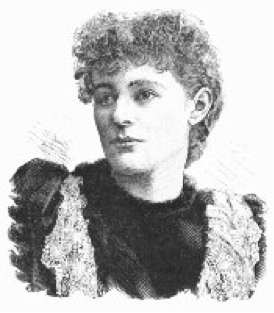
Gonne is an example of the inaccuracy shrouded over our female counterparts. Gonne actively took part and led the Inghinidhe na hÉireann, a radical Irish nationalist group from 1900-1914. However, how is she remembered? As W.B.Yeats’ muse. Our English curriculum in schools has this ingrained in our minds. Last year marked Yeats’ 150th birthday and the 21st December marks Gonne’s. Let’s celebrate that!

maud         Maud Gonne


Claire McGing, a lecturer at Maynooth University, delved into the role of women in politics. In 2012, the gender quota legislation passed and specifies that at least 30% of party candidates for general elections should be female and at least 30% should be male.  In 2019, the quota will rise to 40%. This quota echoes Ireland’s 2020 ‘energy targets’ plan with failure to comply resulting in financial loss. In this case, the political parties will risk losing half of their annual funding from the Exchequer under the Electoral Act 1997. At present, the Dáil has the most women in its history but female representation has yet to rise above 16%. Local elections are not included in this legislation. In local authorities there are few councillors who are women, especially in the more rural counties.

MAMO MCDONALD, A LOCAL LEGEND

Taking us down memory lane, Mamo McDonald, a former ICA president and local legend, painted a vivid picture of life as a woman of the 1950s onwards. McDonald begun with a few lines that were below a picture that hung in her childhood home;


It’s the little things that count…

Big things are very little after all

fame, fortune, reputation

are as dead sea fruit

without the background of a happy home

mamo

Mamo McDonald

Her account supported all those tales my grandparents have recounted to me of their simple yet happy, difficult yet fondly recalled lives. It also highlighted how far we have come and how much quicker we can get there today. In this whirl of advancement, change is accelerating. Rather than cower in a corner ridden with nostalgia for the simpler times, let’s use it to our advantage. A world of equality is within our sight.

The morning concluded with a thought provoking forecast of 2116 by Noirin Clancy, a 5050 representative. Clancy works part time with Longford Women’s Manifesto Project and showed us a really evocative video set in 2116 which predicts an Ireland of equality – 60% women representatives in the Dáil (with a push to reduce this back to equalise the ratio), a crèche in place of the bar in Leinster House, a safer Ireland with nearly 0% domestic violence.

“IT’S THE LITTLE THINGS THAT COUNT”

Today, it can be overwhelming to digest the current global upheaval characterised with accelerating climate change, the election of Donald Trump, technology advancements, Brexit and much more. Resilience and respect are key. As life and the world chugs on, we have to keep defending what we have already won. Respecting each other and our world will encourage our growth as a society and as a healthy, sustainable world.

‘It’s the little things that count…’ resonated with me as it’s becoming increasingly difficult to figure how I and Monaghan can contribute. Taking a small portion of the problem ourselves and working collectively will bring ideas to realisation. Monaghan is a little place but it counts.

Events in December can be found here

Low Carbon Transition: How could it benefit our mental health?

Fortunately, we live in an age where stigma is being lifted around mental health. However, conditions such as depression, anxiety and stress are on the rise in Ireland. Anti – depressants and therapy play an important role in helping people deal with and overcome these issues. While there are many causes of mental illness, in recent times more attention has been paid to the connection between a more sustainable lifestyle and positive mental health. Mícheál Callaghan discusses how the Transition to a low carbon future can be good for the planet and our mental health.

Many people today have to work long hours, sometimes at unsociable times of the day, in jobs they don’t find particularly fulfilling. Wages have been cut across sectors, people are being replaced by machines (e.g. self – service check outs), and the cost of accessing basic services such as health and child care are going up. People are under more pressure and stress. After work we might come home and spend the night in front of the TV. We’re as likely to spend time scrolling our social media feeds than talking to other people. We are less connected to our neighbours and communities than before. Small rural shops and post offices, which once were important meeting places, are closing down. Our fast paced world places more emphasis on individual identity than togetherness. Not only is this terribly sad, but it’s also bad for us. Loneliness is becoming a chronic condition among all ages, especially among the elderly. According to recent research, one in three adults over 65 suffers from loneliness and this doubles their risk of dying. Loneliness kills, and this cannot continue!

black-island-walk

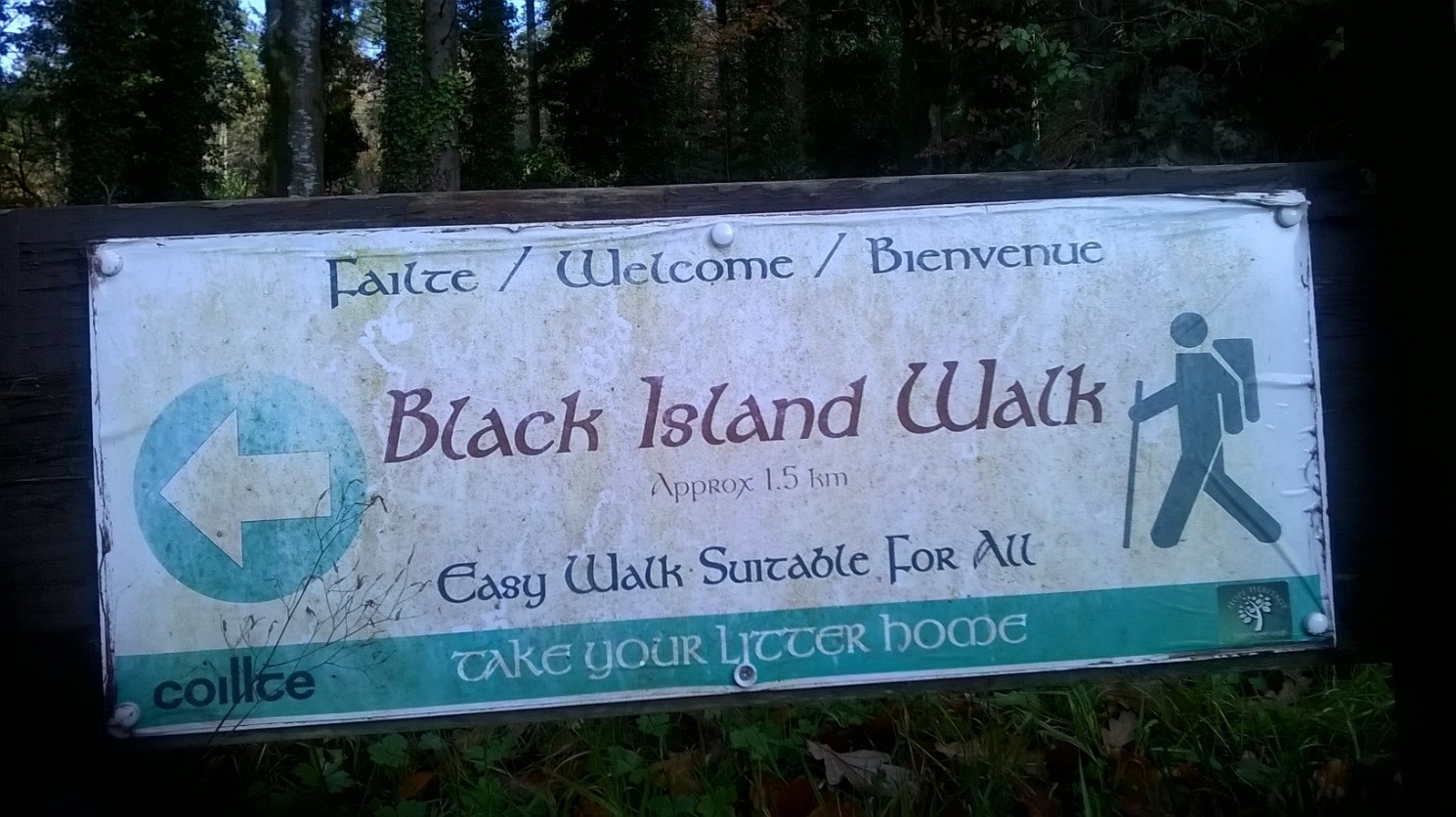
A sign for one of the walks on the Black Island, Lough Muckno, Castleblayney

We are also less connected with the natural world than ever before. More and more people are living in large towns and cities. Many young people from Co. Monaghan head off to cities for college and work. Nature is being destroyed. Even those of us living in the countryside, might not stop to appreciate the beauty of the natural world. Research has shown that our brains react differently to an image of the natural environment compared to the urban environment. It instantly recognises the natural environment, but has to exert more energy to ‘understand’ the unnatural urban world. Spending time in nature is proved to reduce stress and depression. Coming up to Christmas, as we move from Autumn to Winter, we can take a break from the pressure to shop by going for a walk in the woods (Rossmore Park, Lough Muckno or Dartry Forest are fantastic amenities!) and enjoying the crisp air and sound of crunching leaves. Sometimes only when we pause, can we reflect on the various pressures that are on us at this time of year.

RECONNECTING AS WE TRANSITION TO A LOW CARBON WORLD

Connecting with those around us and the natural world can really help us deal with the ups and downs of life. Our fast paced, economic growth obsessed world can fail to recognise the importance of these to our well – being. The transition to a low carbon society, must be one which reassesses how we measure progress. The transition town model, aims to strengthen our sense of community and build resilience as we move to a world which uses less fossil fuels.

If we are going to make this transition successfully we are going to have to collectively plan the future of our communities. It will offer more social interaction and increase our dependence on each other taking us out of our individual silos. Initiatives like community gardens, allotments, community energy projects and other community social enterprises will have a role in this transition. Leading sustainability economists recommend shorter working hours and more time spent with family, friends and community. This transition can build personal resilience by making us more connected with each other, and community resilience by once again emphasising our dependence on each other and the diverse skills that exist in our communities. We can open our eyes to the many talents that our neighbours have, and exchange our skills and knowledge. The transition will also offer opportunities to get closer to nature. It stresses the importance of protecting our biodiversity, creating community gardens and planting fruit and nut trees. Initiatives like Monaghan Allotment Society, Castleblayney Community Gardens and Monaghan Tidy Towns are already doing this. Why not join the community transition by in one of the initiatives above or a similar initiative in your area or get in touch with Transition Monaghan? Email transitionmonaghan@gmail.com.  Together we can protect our community ties, build social capital, and create healthier and happier communities. Not only will it be good for our planet, but good for our health too!

December events can be found here