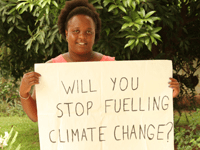
‘Creation Time’: a Christian celebration that focuses on our impact on our environment

This September, a number of Christian churches in Ireland along with Christians in other countries will celebrate the natural world and consider ways to decrease their ecological footprint, in a celebration known as ‘Creation Time’. From 1st of September to the Feast of St Francis on the 4th of October, Christians will explore better ways to relate to the natural world in all areas of their lives, from how they worship, live and work, to their property and finance management, community outreach and contact with the developing world.


Eco-Congregation Ireland (ECI) is promoting this initiative in Ireland, which has been running since 2008. ECI is an inter-church grouping that promotes the ecological messagecocreation.pnges in the practices of Roman Catholic, Church of Ireland, Methodist and Presbyterian Churches as well as the Religious Society of Friends (Quakers) in Ireland. Sr Catherine Brennan, the Catholic representative on the Eco-Congregation Ireland committee has written an article for Intercom Magazine on Creation Time 2016.

sr cat.

Sr Catherine Brennan, Eco-Congregation Ireland

Pope Francis has instituted the 1st September as an annual World Day of Prayer for Care of Creation.  The day of prayer, the Pope said, will give individuals and communities an opportunity to implore God’s help in protecting creation and an opportunity to ask forgiveness “for sins committed against the world in which we live.” The Pope said in his statement announcing the day: “As Christians we wish to contribute to resolving the ecological crisis which humanity is presently experiencing.  In doing so, we must first rediscover in our own rich spiritual patrimony the deepest motives for our concern for the care of creation.”

The climate and biodiversity crises that are causing and likely to cause considerable loss of human life in many countries is largely driven by actions in the developed countries. Efforts are now needed at all levels in all faiths to focus on the moral dimension of this – the greatest challenge facing humanity. To date the topic has seldom been referred to by local clergy and other representatives of various faith groups in Ireland and other developed countries. Exceptions to this have been the Eco-Congregation grouping, Trocaire (the aid agency supported by the Irish bishops), the Methodist Church and various orders of religious sisters. Some individuals like the Columban priest and author Fr Sean McDonagh who is based in Navan and worked in the Philippines have also been to the fore in highlighting the impact of climate change and the urgent need for a ‘greening’ of the Church.

The Creation Time initiative will, it is hoped, prompt parishes in the various Christian churches to discuss the climate issue and develop some local initiatives. Essentially such initiatives need to be awareness raising and actions on reductions of emissions. They also could address in some small way the climate justice issue of people in the developing world suffering the effects of drought and other severe weather events due to climate change. Issues of hunger and malnutrition in various communities have been highlighted by Trocaire in their recent campaign on ‘The Burning Question’ (on climate justice) and on their ‘Africa Food Crisis Appeal’ as millions of people across eastern and southern Africa are in urgent need of food and water due to the worst drought in decades. Millions of people across east and southern Africa are in urgent need of food and water due to the worst drought in decades.Millions of people across east and southern Africa are in urgent need of food and water due to the worst drought in decades.Millions of people across east and southern Africa are in urgent need of food and water due to the worst drought in decades.

The Clogher Justice, Peace and Integrity of Creation Group (JPIC) earlier this year launched a proposal for an initiative entitled ‘Clogher Caring for Our Common Home. The focus of the proposal is on putting the message of Pope Francis’ encyclical on the environment, Laudato Si, into effect in the Diocese of Clogher through action on awareness raising, church infrastructure and liturgy.

(Transition Monaghan’s Liam Murtagh is also a committee member of Clogher JPIC)

Events in August can be found here

September events can be found here

Visions 2100: Changing the world begins with a dream for the future. What’s yours?

Visions can mobilise communities, countries and global networks to deliver extraordinary outcomes. ‘Visions 2100’ is a book and movement headed by Australian native John O’Brien which urges people from all over the world to think about what kind of world they hope for or envisage by the year 2100. On Monday, 25 July Jennifer Mc Aree, Chrissie Walker and Liam Murtagh of Transition Monaghan attended a ‘Visions 2100’ event at An Taisce’s headquarters in Tailors’ Hall, Dublin. Jennifer elaborates below.

Jen McSreeJennifer Mc Aree

As well as collating material and publishing ‘Visions 2100’ as a book, John O’Brien organised four global events in Singapore, Edinburgh, London and Dublin, to promote and spread the word for his inspiring idea. The book is a compilation of short paragraphs from 80 leading environmental thinkers and influencers from across the globe, including our own Mary Robinson – former Irish President, founder of the Mary Robinson Foundation for Climate Justice and current United Nations (UN) Special Envoy on Climate Change. Each author was asked to write about what they predict for our planet at the turn of the next century. While many describe a hopeful, positive future where there is greater equality, less focus on materialism, improved living conditions for the world’s impoverished people and a healthier environment, others do not.

visions

Pictured at the Visions 2100 event were, from left, Dr Cara Augustenbourg (Friends of the Earth), John O’ Brien (author of Visions 2100), Phil Kearney (An Taisce) and John Gibbons (environmental journalist)

Irish journalist and environmentalist John Gibbons, who spoke at the Dublin event, painted a somewhat negative picture of what kind of world humans will inhabit in 2100. In just over 80 years’ time, he envisages that if we continue living as we do and exacerbating climate change, there will only be 50 million people left on the planet out of our current population of 7.4 billion – that is one person for every 140 of us living now! John emphasised that we continue to act for the short term, and that in most countries (including Ireland) there has been no longer term vision put in place. Essentially he believes we must urgently move to a low carbon economy, away from fossil fuel reliance and intensive modern agriculture.

Dr. Cara Augustenbourg, scientist and environmental campaigner based at UCD, was a little more optimistic. Like John Gibbons, she focused on agriculture and lamented at our government’s failure to tackle the issue of greenhouse gas emissions from the sector. However she proposed an alternative method to what we have now, giving the example of Cuba and its focus on community food production. There, many people grow vegetables locally and sell their produce at nearby markets – therefore it remains organic, cheap and convenient. In doing this Cubans naturally consume less meat and dairy and so remain healthier, despite being less well off than most other nations in the Western world. She said we can act on the climate issue now. Governments have to lead change, but there must be a system change, where local people power overtakes international corporate power.

Aideen O’Hora, founder of ‘Sustainable Nation’ referred to the poem ‘Epic’ by Monaghan’s own Patrick Kavanagh. It describes how parochial, yet important local views can be. Aideen linked this with the global issue of climate change. Rapidly rising temperatures are causing drought and water shortages in certain nations, so that millions will be displaced and forced to move to safer countries, while millions more will die from starvation and war. These are challenging predictions to face up to, but they are very real and will become more apparent over the coming decades unless action is taken right now.

Finally, barrister and former Minister for Energy Alex White spoke frankly about his struggles in government to make positive changes to Irish energy policy. He acknowledged that a lot of people still need to be persuaded about the imminence of climate change and to do something about it. He described the reluctance of those in power to act as ‘benign procrastination’. He stressed the need for national engagement; that it needs to be continuous, not just sporadic, in order to drive the message on climate change home.

This was a worthwhile event and the speakers painted a future of major challenges that we all need to play our part in addressing. What do you think Monaghan and the world will be like in 2100? Why not write it in less than 200 words and have it featured on the http://www.visions2100 website?

The August notice board can be found here.

Events in September can be found here.

Our Future! Cutting Emissions Will Save Millions of Lives and €€

Last week we discussed the impact of greenhouse gas emissions (carbon from burning fossidl fuels and methane from cattle). They are causing an increase in global temperatures and we are witnessing the correlating catastrophic results. This week, Transition Monaghan’s Dearbhla Lenehan takes a look at what we in Ireland need to do in tackling the greatest challenge facing us, our children and grandchildren.
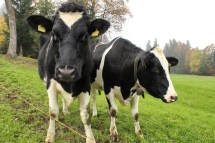
 

Ireland releases 160,000 tonnes of greenhouse gases into the atmosphere every day!  This equates to over 58 million tonnes a year! Our agriculture sector contributes to over one third of these emissions, which is the largest contribution from any sector, followed by energy (22%), transport (19%), industry and commercial (15%), residential (10%) and waste (2%).  In Paris last December, Ireland along with 194 other countries signed an agreement to reduce their emissions, ensuring a less than 2°C increase in global temperature by the end of this century.  Under an existing EU agreement, Ireland must, by 2020 reduce our carbon emissions by 20% compared to 2005 levels or else face massive fines. If we and other high emitting countries don’t take radical action to cut our emissions, we are passing the death sentence on millions of people living in the developing world, whose suffering will only intensify through extreme droughts and other severe weather events.

Ireland won’t achieve 2020 targets

The Environmental Protection Agency has stated that Ireland won’t reach our 2020 target and realistically will only reduce our emissions by 6-11% rather than 20%.  Instead of the sharp reductions we are legally mandated to achieve, transport is set to increase its emissions by up to 16% and agricultural emissions will climb 7% higher than 2014 levels.  This will result in massive fines for Ireland of between €600,000 million and €1 billion.  Wouldn’t it make more sense to invest this into our transport system, energy efficiency and reducing our agriculture emissions instead?


Can we achieve the 2030 targets?

Following on from our 2020 targets the EU Commission stated that we must further reduce our emissions by 30% compared to 2005 levels by 2030.  Seeing as we are already falling well behind in our targets for 2020 it seems inevitable that there will be a continuation of this trend for 2030.

Dr Barry McMullin of DCU says we must reduce our transport emissions by 30%, to do this we need to reduce commuting by non-electric cars occupied by only one person from 5 days to 3.5 days per week. Of course the Government needs to incentivise and promote carpooling, electric cars and using public transport, cycling and walking, but we too must take it upon ourselves to instigate our own change, big or small.

The reduction of cars on our roads would also have a dramatic effect in reducing air pollution around our neighbourhoods, towns and cities.  Air pollution is linked to various respiratory diseases such as; emphysema, bronchitis and asthma.  According to the World Health Organisation, reducing air pollution can also reduce the risk of strokes, heart disease and lung cancer.

Challenge for Irish agriculture

Globally, the greenhouse gas emissions from agriculture is 10-12%, howevecowsr, here in
Ireland due to our large beef and dairy herds our emissions are over 30%.  In Ireland we are proud of our beef and dairy produce. However, it comes at a cost; farmers’ incomes are under pressure and so they are aiming to produce more dairy and beef and therefore, release more emissions.


Nevertheless, there are small changes farmers can make that would drastically reduce their emissions such as; lengthening grazing season, applying slurry in cooler conditions and low sunlight, improving nitrogen efficiency on farms and planting forests.  Actions to reduce agricultural emissions are contained in a new report entitled ‘Climate Smart Agriculture’ (see noticeboard for details).

Environmental groups ‘Stop Climate Chaos’ and the ‘Environmental Pillar’  have responded in a another report entitled ‘Not so Green’. They rebut “the often-misleading array of claims made in relation to the supposed climate, social and ecological sustainability of the Irish agri-food sector”. They also challenge the argument that afforestation presents a viable option to offset emissions from agriculture. Greater emphasis they say should be placed on protecting our peatlands than promoting afforestation in areas that are already good carbon sinks and important for biodiversity.  However, with Minister Heather Humphreys recently publishing legislation to de-designate 46 raised bogs, allowing these bogs to be cut for turf further shows that the Government is not tackling our emissions and biodiversity crisis.

 A Zero Carbon County Monaghan?

All of us in County Monaghan have a role to play in reducing emissions. We could improve insulation levels in our homes and buildings to save energy and money. We could cut back on our driving and flying and use buses more often as well as buying fewer products which had a lot of carbon used in their production and transportation.

Local communities and local authorities such as Monaghan County Council can lead the way in emissions reduction by developing action plans now so as to ensure that we in Monaghan become a zero carbon county before it’s too late.

Trocaire fuelA new short documentary (30 mins) from Trocaire explores the links between the current drought in Africa and fossil fuel consumption in the West. The film is available on YouTube. For a link to it see http://www.trocaire.org/getinvolved/climate-justice.


You can find last weeks article by clicking here

Click here for our August Noticeboard

Feeling HOT HOT HOT – and It’s Getting Hotter

It’s late July and we in Ireland have had a typical Irish summer so far – some warm days followed dby some cool ones. Temperatures reached 30°C (86°F) on our hottest day but many other places around the world have been sweltering under unusually intense heat. If you were in Basra in Iraq a few days ago you would have experienced a scorching 54°C (129°F). Worldwide, the month of June marked the 14th consecutive month of record-breaking temperatures. What is causing this record-breaking heat? How will it affect us in Ireland and others around the world? Is there anything we can do? Transition Monaghan’s Dearbhla Lenehan tells us more.

Climate scientists have been warning us for decades that our continued burning of fossil fuels is increasing greenhouse emissions. This is causing global temperatures to rise, increasing desertification rates, melting of sea ice, rising sea levels, droughts, flash flooding and more frequent violent storms to occur. Just recall Storm Desmond last year? Even now, months later the name still rings a bell and with it flashbacks to the turmoil people had to endure come to the fore. What is causing this string of record breaking heat and severe weather events?

Greenhouse Gas Emissions

Human activities since the beginning of the Industrial Revolution (1750) have increased the atmospheric concentration of carbon dioxide from 280ppm to 400pm in 2015. That’s a 40% increase! Burning of coal, oil and natural gas, along with deforestation, soil erosion and animal agriculture have all contributed to this massive jump in emissions. In 2012, 72% of Ireland’s emissions came from Agriculture, Energy and Transport. It’s estimated that if we continue to emit greenhouse gases at the present rate, the Earth’s surface temperature could drastically increase by 2047, with potentially harmful effects on ecosystems, biodiversity and our livelihoods.

epa

Ireland’s Greenhouse Gas Emissions: Source, EPA

 Climate change in Ireland

In Ireland, temperatures have risen by 0.8°C in the last 100 years. That might not seem like much, but with every degree the global temperature increases there is up to 10% increase in rainfall, a 10% change in streamflow in many river basins, a 15% decrease in sea ice in the Arctic Ocean and 15% reductions in crop yield.

According to Met Éireann, we can expect our global temperature to rise by up to 4.5°C depending on the amount of greenhouse gas emissions by 2100. Already in Ireland the beginning of the growing season for certain species is now 10 days earlier, there’s a decrease in the number of frosty days and an increase in the number of days over 20°C. With temperatures projected to rise further by 2050 we can expect a further lengthening of the growing season which will have a knock-on effect to natural ecosystems which have evolved gradually in accordance with our climate, e.g. migrating birds arrive in spring and feed off insects emerging after winter, if insects hatch earlier fewer chicks will survive. Over the last 30 years rainfall amounts have increased by 5% and are expected to increase further and we can expect more Storms like Desmond and for them to occur more frequently.

There’s still hope.

If we all do our part, be it big or small to reduce our emissions this will help reduce the rate at which our global temperatures increase. If everyone could make an effort to do small things like; walking/cycling to work, carpooling and turning off appliances when they’re not in use, over time these changes lead to a decrease in our individual emissions (and monetary cost).

On a larger, worldwide scale at the COP21 conference held in Paris last year, 195 countries agreed to reduce greenhouse gas emissions in a bid to keep global warming below 2°C. Although there are some significant flaws in this agreement it is still a step in the right direction. When world leaders come together and make a binding agreement to tackle climate change it can only result in good things.

In 1987 most of the world signed the Montreal Protocol, which banned the use of chlorofluorocarbons (CFCs) which were putting holes in the ozone layer. Recently, it was reported that the ozone layer hole over the Antarctic has begun to shrink. The study found that the ozone hole had shrunk by 4 million km2 (an area the size of India) since 2000. This shows that if we come together on a global scale we can make a difference and we can tackle climate change. It all starts with one step, start yours today!

Next week will look at the emission targets for the EU and Ireland and what it will mean for all of us over the next few years.

Events for August can be found by clicking here

The War

The following poem was written by Michael Connolly of Transition Monaghan.

Screen Shot 2016-07-25 at 10.49.18

The war is almost over

Final victory is in sight

So long in the waging

It’s our way of life

When first we did battle

With hand and club and stone

Succumb did the enemy

Though we were alone

Now we be many

And they are few

Now our weapons be colossal

And for them extinction beckons

The great machine now autonomous

Consumes all, everywhere

And defecates its toxic wastes

into land and sea and air

It drives all before it

Nought stands its way

Forests fall, rivers dry, oceans empty

Mountains laid low

Captured it our brethren

To serve our bloody needs

Products we have made them

Value only as corpse

Imprisoned in pitiless pen

More factory than farm

More dead than alive

Maybe mindless beasts we be

So it is that we are winning

of that there’s little doubt

But in victory’s ashes lie

Conquest bereft of gain

Caught we be by progress

A snare of our own devise

The struggle makes it tighten

Smart may-be but not wise

Though the planet be our home

We be callous to our host

Hot she gets on our abuse

Effects profound do oust

Events on in August can be found by clicking here

Japanese Knotweed: the Invasive Plant that Knows no Boundaries

Probably our most invasive and ruthless invasive plant species is Japanese knotweed (Fallopia japonica). A German botanist called Philipp von Siebold first saw the plant in 1850 growing on a volcano in Japan. Thinking it would look pretty in Victorian gardens, he decided to send it back to the Royal Botanic Gardens at Kew, England. Alas, this began its relentless invasion throughout the UK and Ireland including County Monaghan. It is now classed as one of the top 100 most invasive plants in the world. Jennifer Mc Aree of Transition Monaghan elaborates below.                     Knotweed

A clump of Japanese Knotweed being observed by Liam Murtagh, Transition Monaghan.

Japanese knotweed grows along riverbanks, canals and roadsides, in derelict sites and gardens. It is a plant with green, shield -shaped leaves and a bamboo like stem. It produces cream-coloured flowers in late summer and the female variety that we have can grow rapidly to 2-3 metres (up to 1metre in three weeks), eradicating every other plant species in its path through pure force and blocking sunlight.  This kills off native plant species and thus reduces biodiversity very quickly. The plant can force its way through concrete, brick and tarmac, causing considerable damage to buildings and roads. House sales have fallen through and lenders have refused mortgages in the UK in cases where properties are affected by the deadly weed. Construction projects must be delayed where the species is found until it is properly treated, sealed and removed from the site by licensed experts. The British Government spent over £88m eradicating knotweed from the Olympic village site before even beginning to build.

The plant can take hold from fragments as little as 0.6cm, so when cut it will surely spread. Its roots can grow down as far as 3m and create an extensive underground rhizome system. Only the female of the species has spread in the UK (and in Ireland) since being introduced – it has basically cloned itself from the very start.  It is illegal to dump any cuttings. Glyphosate or ‘round-up’ can be used to treat knotweed, but this takes several applications at various stages of the plant’s life cycle. In addition glyphosate is hazardous to human health and the environment, so it needs to be handled with extreme care.

The knotweed issue has come to the fore in Ireland over the past few years. In January 2016, the then Minister for Transport Paschal Donohoe announced a €298m investment to tackle Japanese knotweed along 2,000km of national roadways. While it has rampaged its way across all parts of the country the plant is particularly prevalent in the south-west where the mild, rainy climate has encouraged further proliferation. Kerry County Council has set aside €100,000 for a targeted spraying programme. The weed has taken over large swathes of the Ring of Kerry and Killarney National Park.

A Kerry county councillor recently suggested that knotweed root should be used for making jams and desserts (it apparently tastes like rhubarb). However the idea is unlikely to become popular. To cook with it you need a special licence and it must be highly controlled. Japanese knotweed is used for medicinal and cooking purposes back in its native Eastern Asia, but here it is a very risky business.

A tiny bug called Aphalara itadori is being trialled in the UK where Japanese knotweed persists to determine if it can help eradicate the vicious plant. Until the programme is deemed successful this treatment is unlikely to be adopted elsewhere. For now, it is advised not to cut the plant, but to seek advice and treat it carefully at various stages with glyphosate-based weed-killer, or to dig out the weed as far down the roots as possible and burn it in situ. Never add the cuttings to normal household waste or remove them off site. If the knotweed has grown out of control, you must contact the local council or a registered removal expert.

The Invasive Species Ireland website is a mine of information on Japanese knotweed and how to treat it. Another gem is www.knotweedsurvey.ie, which encourages people to report knotweed locations. Through a nationwide group effort by local authorities, landowners and householders, we might have some chance of destroying this bad boy (apologies, bad girl!) once and for all.

Event for July can be found by clicking here

August events can be found here

Your Tidy Towns Group Needs YOU!

County Monaghan Groups Wage War on Litter

The national Tidy Towns competition adjudication kicked off on June 11th and Monaghan people are being urged to bin or bring their litter home during this period.  Tidy towns committees all over the county have been working tirelessly throughout the year to ensure that our towns not only look well but also to ensure reduction and prevention of waste and litter in the first place. Transition Monaghan member Dearbhla Lenehan takes a look at the Tidy Towns competition and the important work on litter and other environmental challenges being undertaken by Tidy Towns Groups in the county.

N2

Pictured at Castleblayney bypass earlier this year to promote Spring Clean 2016 were (from left): Nial O’Connor, Monaghan County Council, Sarah McGovern, An Taisce Spring Clean Ambassador, Pat Merrick, Castleblayney Tidy Towns and Noel Keelan, Chairperson, Monaghan County Council. 


The Tidy Towns (TT) competition is an annual competition organised by the Department of the Environment, Community and Local Government. Participating areas are judged on all aspects of their local environment and their progress is monitored and detailed feedback is provided year on year.  This gives participants an idea of areas that need improvement for the following year.  This competition helps to generate environmental interest in our communities and also allows us to raise issues to relevant authorities.

LITTER CHALLENGE

Unfortunately, Monaghan suffers greatly with a litter problem and TT volunteers work tirelessly throughout the year picking up (literally) after litter culprits.  At a SWARM (Sustainable Waste and Resource Management) conference in April some members vented their frustration that after all their hard work; conducting litter pick-ups, running anti-litter campaigns and using anti-litter billboard posters that there is still no reduction in plastic bottles, crisp packets and coffee cups thrown out car windows and left on our roadsides.

In one litter picking operation organised by Monaghan County Council and undertaken by volunteers last year, three tonnes of waste were collected on the Castleblayney bypass. That’s the equivalent of three years of household waste! Monaghan County Council installed CCTV along the N2 to tackle the litter problem, but unfortunately, the problem is still evident on this stretch of road.

JUNIOR TIDY TOWNS CAMPAIGN

TT volunteers are a vital part of our community.  Monaghan, like many other counties in Ireland has a serious litter problem, but without the hard work from TT volunteers our scenic views would be extremely unsightly.   The best way to tackle the litter problem is to prevent it and TT groups across Monaghan run several anti-litter campaigns.  For example; Monaghan TT launched a successful Junior Tidy Towns campaign in 2011 which still continues today.   Group members range from ages 4-17 and as well as being involved in litter pick-ups, they plant flowers, paint fences, set up hedgehog houses and take part in wildlife and biodiversity workshops.  There are Junior TT groups in various estates around Monaghan town including; Cluain Lorcain, The Pound Hill/Killygoan, Coolshannagh View and Mullaghmatt/Cortolvin. If you would like to get involved please see jttmonaghan.com for more information.

THINKING GLOBALLY, ACTING LOCALLY

Not only do TT focus on cleaning up and brightening up our towns and villages, they also undertake waste reduction/prevention, biodiversity, energy saving and climate change projects to name a few. A bumble bee and butterfly workshop was organised recently by the Monaghan Tidy Towns Network in association with Monaghan County Council. TT Groups are also being encouraged to compete for the Tidy Towns Pollinator Award. This involves a TT Group undertaking pollinator friendly actions such as growing a wildflower meadow for bees and butterflies and avoiding the use of chemical weed killer. This is to help stem the decline of pollinating insects which are important for biodiversity and the yields of certain farm crops. Yet another TT activity is the eco summer camp like the upcoming one in Castleblayney. See Noticeboard below. Such actions help environmental sustainability and enhance a well- kept town or and village.

EXAMPLE OF GLASLOUGH TIDY TOWNS

TT groups across the county hold a great record when it comes to the Tidy Towns Competition and most recently, in 2015 Glaslough TT won the National award for waste prevention.  Glaslough TT has many on-going projects including the building of a polytunnel, which is managed by their volunteers and school children.  The tunnel is self-sufficient as they save flowering bulbs for following years, plant comfrey plants to produce plant feed and have four composting sites in the village. They have installed water-harvesting systems and they use this to water village’s beautiful flowers (which are also grown in the polytunnel).  Glaslough TT has encouraged businesses in the area to become greener by changing to energy efficient bulbs and being mindful of their electric and water usage and sourcing food locally.  All of their success comes from the hard work and dedication of their members and people in the community doing their bit to get involved.

CHECK OUT YOUR LOCAL TT GROUP

There are TT committees in nearly every village and town in Monaghan. Their volunteers work tirelessly throughout the year to help make our communities a nicer, more scenic place to live. With the continued support from Monaghan County Council, local businesses and schools their great work will continue.  This can only continue if EVERYBODY gets involved and supports the initiatives they organise.

TT

More details on Tidy Towns Groups in Co Monaghan are at http://www.tidytownsnetworkmonaghan.wordpress.com

Events on in July can be found by clicking here

August events can be found here

SPUD OFF 2016 – SOUTH MONAGHAN POTATO GROWING ’N’ COOKING COMPETITION

by Conan Connolly, Transition Monaghan
A celebration and get together for the potato lovers and growers of South Monaghan will take place again this year in Carrickmacross. Now in its second year, we are running this event to promote awareness of the humble spud, the Transition movement and of course promoting GIY in a fun and friendly competitive way. The final will be on Saturday, 11 September in Carrickmacross. Continue reading

BREXIT: What Impact for Climate and Environment?

By coincidence I happened to be in London on a visit at the time of the BREXIT referendum and the result – one that was a shock for many British people living in the capital city. In the past week since the vote, the implications for the environment and in particular the challenge on climate change have been commented on by environmental groups and by various commentators. The general view on these matters is one of concern about what will happen in the coming years.     

brexit

How some newspapers view the environmental impact of Brexit

With a few hours of voting remaining I emerged from London underground train station to see ominously dark skies, with torrential rain and fairly frequent flashes of lightening. ‘One of a few ‘remain’ canvassers sheltering at the entrance from the rain approached me but I quickly informed her that unfortunately I didn’t have a vote

Later that night, I switched off the TV after being reassured on hearing that Nigel Farage of UKIP had conceded that ‘Remain’ would shade it. Apparently he “unconceded” later.  Switching on the TV the next morning caused me to do a ‘double take’. Unbelievably, the banner across the TV screen ‘BBC forecasts Leave to Win’. While life in London continued as normal during the morning, none of the people I met indicated any welcome for the result. Some I felt did not seem comfortable about talking about it. Others commented on the fall of the value of the pound overnight and expressed varying degrees of disappointment. One person said, “we just have to live with it now and make the best of it”. On the ferry home on Saturday I was sitting near the ‘Bureau de Change’ – the people who were changing their Sterling to Euro were the ones who were complaining.

While the insular looking Brexit supporters see the result as a success for Britain the view from those who take a more global perspective is the opposite. The Environmental Pillar in Ireland claimed that Nigel Farage “wants to scrap pollution limits on power stations [in the UK]” and that Prime Minister hopeful Boris Johnson, who “is a climate change skeptic … may attempt to dismantle the UK’s interior legislation that commits them to making deep cuts in carbon emissions.”

All this would indicate that any chance that Britain might give leadership on saving future generations from climate chaos seems to be fading. On other elements many environmentalists feel that environmental protection driven by EU legislation has been beneficial. These include cleaning up sewage from the UK’s beaches, banning pesticides that harm bees, tackling acid rain, and the almost 50% of household waste that is now recycled is as a result of EU targets. They also believe that a Britain outside the EU will not have the same level of Government protection for biodiversity, habitats, water quality etc.


Apart from the shock of the result the other abiding memory of the BREXIT campaign period for many people was the killing of the MP Jo Cox. Jo was an unbelievably dedicated MP, campaigner. She has previously worked as a Development Worker. The radio interview given by her husband Brendan following her death conveyed the amazing commitment she has to people who were most need, be it in her constituency or in war torn parts of the world. Jo did not just talk the talk – she walked the walk. She worked overseas on the front line with refugees and others in need of emergency help. Jo understood not only the challenges that vulnerable people face on this planet – she also appreciated that many forms wildlife on our planet are also at risk, as evidenced by the photo. The world has lost a wonderful person.  Let’s hope many people will be inspired to carry on and intensify the campaigns and practical activities that she was involved in.

Jo cox

Jo Cox holding an ‘Earth Hour’ World Wildlife Fund board which read: I’m supporting a low carbon future to protect our wildlife and countryside.

Events in July can be found by clicking here

August events can be found by clicking here


Shattered Records Means Climate Action is Urgently Needed

Shattered Records Means Climate Action is Urgently Needed

Clogher Diocesan Event and Antrim Anti-Fracking Protest Highlight Issue

On Saturday last, people gathered in Monaghan to mark the first anniversary of the publication of the Pope’s encyclical on climate change, biodiversity loss and poverty ‘Laudato Si’. On the same day a group gathered at Woodburn in Antrim to celebrate the departure of fracking rigs that were exploring for oil in that area. Meantime we hear that greenhouse gasses that cause climate change are rising sharply. If climate chaos is to be avoided in the coming years, resolute action on the climate issue is now needed in every community.        

Pope Francis published the ‘Laudato Si’ encyclical in June 2015 but in the year that has passed the issues he highlighted have become even more urgent. This week we hear that levels of carbon dioxide in the atmosphere will exceed 400 ppm (parts per million) all of this year. The safe level is 350 ppm and we will be at 450ppm in twenty years. Global temperatures records have been shattered each month so far this year and extreme weather becoming more frequent. Sea levels are rising leading to the displacement of some island and coastal communities. These trends are likely to continue. The effects on biodiversity are significant. Last week the first confirmed extinction of a mammal due to climate change has been reported. The Great Barrier Reef’s only endemic mammal species the Bramble Cay melomys has been completely wiped-out.

CLOGHER EARTH DAY EVENT AT ST MACARTAN’S CATHEDRAL

The Clogher Diocesan Earth Day event in Monaghan on Saturday last involved a prayer service on the grounds of St Macartan’s Cathedral followed by a tree planting ceremony. Sr Nellie McLaughlin introduced the event by reminding everyone of the focus of the encyclical on the earth and on the poor. Nellie is author of a book entitled ‘Life’s Delicate Balance’ which is a response to the encyclical. The prayer service involved members of the Clogher Justice Peace and Integrity of Creation Group who were the organisers of the event. There was also a musical contribution by Helena Connolly and Aoife McCooey, both of Clogher don Óige.

Bishop of Clogher, Liam MacDaid attended the event and spoke about the encyclical andreferred to the importance of its message of the need to care for our environment.  Following his address he planted a rowan tree close to the statue of St. Macartan, the patron saint of the Diocese. He said that the rowan was picked as it is a native Irish tree and it is mentioned in stories relating to St. Macartan.

clogher earth.png

Bishop Liam MacDaid speaking at the Clogher Earth Day event outside St Macartan’s Cathedral
billy flynn

Ecologist Billy Flynn speaking to Group beside a rowan tree that was planted at the Cathedral to mark Clogher Earth Day

The event concluded with a talk on the importance of biodiversity by Billy Flynn an ecologist. He referred to the fact that his own perspective on the work in the area of biodiversity has changed in recent years. Initially he would have just focused on the numbers and features of a particular species. Now he also values the animals and plants in their own right and the place that they have on our planet.

FRACKING EXPLORATION RIG DEPARTS FROM ANTRIM SITE

Fracking or hydraulic fracturing is the process of drilling and injecting fluid into the ground at a high pressure in order to fracture shale rocks to release natural gas and oil in the rock. At Woodburn near Carrickfergus the company Infrata had been drilling an exploratory well. A ‘Stop The Drill’ campaign has been protesting at the site for many months. The protestors included a number of environmental groups from across the island of Ireland. Mícheál Callaghan and Conan Connolly of Transition Monaghan recently joined the protest for a day.

The opposition to the drill was because of the potential adverse impact it would have on the water supply to nearby reservoirs and also for climate change reasons, i.e. to stop fossil fuels at their source.. Last week the drilling company decided to leave the site as no oil was found. James Orr, the Northern Ireland director of Friends of the Earth, said the “earth has spoken”. “Today is a time for celebration – this is fantastic news for the community, our water, our climate and our wellbeing,” he said. had previously attended the protest site a few weeks ago.


STAGGERING STATISTICS

  • One billion people worldwide live on less than 2 US dollars (€1.77) a day
  • 1% of the world’s population uses 30% of the world’s resources
  • 3 million people have been forced from home. Among them are nearly 21.3 million refugees, over half of whom are under the 18 years of age. 34,000 people are forcibly displaced every day as a result of conflict or persecution
  • 10 million people are stateless – they have been denied a nationality and access to basic rights such as education, healthcare, employment and freedom of movement.

The first two statistics above were given by Douglas Frantz of the OECD (Organisation for European Co-operation and Development) in an interview on RTE Radio One’s ‘This Week’ programme on Sunday, 19 June. The interview in full is available on RTE Radio Player. The other statistics were published by the UNHCR, the UN Refugee Agency to mark World Refugee Day 2016 on Monday last. For further details, see http://www.unhcr.org/figures-at-a-glance.html. Both sets of statistics highlight the growing global issue of inequality which combined with the climate change issue will require considerable political leadership if they are to be tackled and the world is to be a better place in the coming decades.

Events in July can be found by clicking here.  August event can be found by clicking here