
“Must we wait another 100 years for native forest restoration” is the question posed by the lobby group, Woodland League. Making a serious commitment to restore our native forests as a living legacy for future generations would, according to Andrew St Leger of the League, be a fitting way to honour the men and women of 1916.

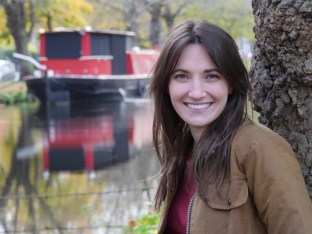
Andrew St Leger of the Woodland League
The Woodland League, a not-for-profit Non-Governmental Organisation is drawing attention to the state of our forests in 2016. According to the League, forests are a most precious and valuable natural resource and in Ireland this great asset was stripped by the Crown from the 1500’s and much neglected since 1922 by successive Irish governments.
The League notes that in 2016 only 0.002% of our land area consists of ancient woodlands, and goes on to say that these ancient woodlands are “without management plans to conserve and protect them”. Ireland has the lowest tree cover in the EU at 11%, and with only 1.25% native species, the least natural forest cover. Most of the forest estate is made up of “exotic conifers, of industrial tree farms reliant on hazardous chemicals to grow and heavy machines for clear-felling.”
Andrew St Leger reminds us that in relation to Coillte forestry, the McCarthy Report of 2011 stated, “Its forest estate is very fragmented, consisting of 6,500 separate properties of which about half are considered commercial, one quarter potentially commercial with investment and one quarter have no commercial value”.
Numerous studies have shown the negative impacts of this forestry model on water and soil, as well as their contribution to flooding and silting up of rivers and streams. The Woodland League spokesperson says that we need major reform of the current stagnant forestry policy that “only benefits the few”. He goes on to call for the State to commit to “a new community oriented model focused on transforming the unproductive areas, (where appropriate back to mixed native forests …as well as ensuring funding for the management and restoration of our ancient woodlands.
The Woodland League also wish to see a National Public Works plan drawn up to target flooding, biodiversity enhancement, river restoration, local fuel wood production for mini grid small scale energy projects, wood crafts, furniture making, training, recreation, meaningful employment, etc., creating viable useful community woodlands of mainly mixed native species.
Andrew St Ledger goes on to say that it is “time to stop pumping more public funding into this outdated tree farming model, and start investing in a forestry policy suited for the future with multiple benefits for all”. The funding for this new policy need not come from the public purse at all; provision already exists within the EU Rural Development funds whereby approx 60% of the funding measures relate to the type of sustainable forestry we are seeking.
If the Woodland League call is responded to we will make progress in reaching our EU and UN commitments to increase our forest cover to reach the EU average of 30%. We will also contribute to our climate change pledges to store more carbon in our forests.
The Woodland League invoke the words of the Omagh poet Alice Milligan (1865 – 1953) a prominent member of the Gaelic League, an organisation instrumental in preparing the country for independence via restoration and awareness of the rich cultural and natural heritage.
Fallen in Eireann are all our leafy Forests,
The oaks lie buried under a bog land mould.
Only in legend dim are they remembered,
Only in ancient books their fame is told.
But seers who dream of times to come,
Have promised forests will rise,
Where perished these.
And of this desolate land,
It shall be spoken.
In Tirconnell of the territories,
There are trees.
Alice Milligan, 1908.
Events in April can be found here
 Feeding the ducks (and swans) is familiar to us all Source: Jennifer Mc Aree
 ed to come into effect in July this year. This new system has a higher charge per kg of waste destined for landfill, with lower charges for compostable and recyclable waste. This is designed to increase recycling rates and reduce the amount of waste being sent to landfill, however, there are concerns that the increased bill for those who refuse to change their ways could result in increased cases of illegal dumping.
 celebrate trees. To be part of ESB Tree Week, the Tree Council of Ireland invites individuals and groups to organise one or more events for the week. Tree Week runs from Sunday, 6 March until Sunday, 13 March and is sponsored by the ESB in association with Coillte.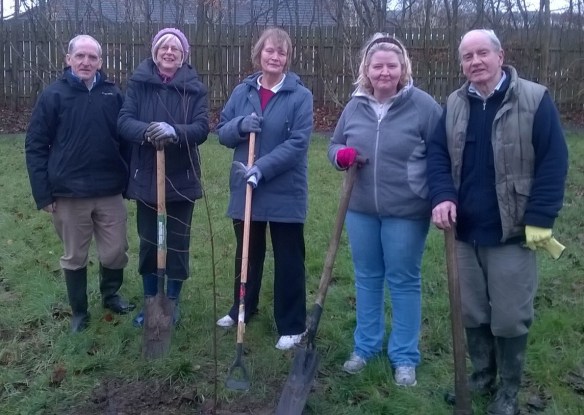
 overlooked by all the main parties as well as the mainstream media” This view of the treatment of the climate issue in the election debates up to this week was voiced by An Taisce’s spokesperson John Gibbons. This week we focus on his views and also on how some other environmentalists view the election.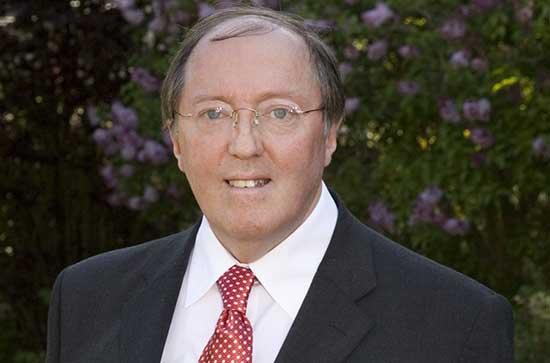
 Transition Monaghan