Climate Bill: Some Success Achieved by Campaigners for a Safe Climate

The Government has decided to introduce some changes to the climate change Bill, which is currently making its way through the Dáil. These amendments are being proposed following extensive debate on the Bill both inside and outside the Oireachtas, as well as following representations from environmental NGOs such as Stop Climate Chaos.

One of these is the inclusion of an explicit statement in the Bill that the Climate Change Advisory Council shall be independent in the performance of its functions. There will also be an amendment to include a specific reference to the principle of climate justice. Climate justice links human rights and development to achieve a human-centred approach, safeguarding the rights of the most vulnerable and sharing the burdens and benefits of climate change and its resolution equitably and fairly.

Oisín Coughlan of Friends of the Earth gave a guarded welcome to the proposed changes but said that they did not go far enough. He said that there is still an absence of a binding 2050 target, and that the Government still won’t commit to having a national climate action plan before 2017, by which stage we are likely to have exceeded our 2020 targets.


New Biodiversity Strategy for Northern Ireland

The Strategy which is entitled ‘Valuing Nature was published by Northern Ireland’s Environment Minister,  Mark H Durkan. Its overall objective is to halt biodiversity loss up to 2020 by implementing over 50 high level actions. The actions include:

  • restoring 240 hectares of ancient woodland;
  • delivering grassland conservation training to over 500 landowners; and
  • delivering peatland and wetland habitat restoration around the Lough Neagh basin.

The Strategy is downloadable at www.doeni.gov.uk/natural-policy-biodiversity-strategy-to-2020-2015.pdf.

Climate Justice Conference: More Activists & Collaboration Needed to Meet the Challenge

“It is not necessary for us to go down this path” –  the words of leading US climate activist, Bill McKibben, founder of 350.org when speaking at last week’s climate justice conference in Maynooth. He was referring to our last chance to avoid catastrophic climate change that is already affecting many of the world’s poorest people and which will hit them even harder in the coming decades. Our only hope is to immediately say ‘no’ to fossil fuels such as coal, oil and gas and say ‘yes’ to renewables.   Mícheál Callaghan, Liam Murtagh and Chrissie Walker of Transition Monaghan attended the conference along with about 400 other delegates, activists, academics and religious leaders. Mícheál and Liam report on the conference. 

maynooth

Liam Murtagh & Mícheál Callaghan at the Climate Justice conference in Maynooth


The conference, which was opened by Mary Robinson, was told that the stakes couldn’t be higher for climate action, as emissions continue to rise and the window for meaningful action closes. As well as the scientific imperative, what came across was the moral and spiritual element to tackling the impending climate crisis . Later this year in Paris, world leaders will gather for a particularly important UN Climate Conference in an attempt to reach a legally binding agreement to cut emissions. This is still far from certain, and there are concerns that the agreement will fall far short of what is needed.  The Intergovernmental Panel on Climate Change IPCC recently stated that emissions will need to be cut by 80% by 2050 and will need to fall to zero shortly after. The UK has a law requiring its emissions be cut in line with climate science, but the Irish Climate Bill currently does not have any emissions targets. Many of the speakers at the Trócaire conference appealed to delegates and to members of the public to demand strong action from our politicians.

One participant at the conference, Phil Kingston of ‘Grandparents For a Safe Earth’ read a ‘letter’ on behalf of future generations – those who do not have a voice at the negotiating table, yet will be most affected by climate change. A particularly poignant line in the poem was ‘until you develop an economy of enough we will not be safe, nor will you.’ It was recognised by Kingston, that the severity of the climate emergency, and the scale of the action required can be frightening and overpowering, such that there is a need to ‘slow down’ and look within ourselves, in an almost meditative manner. (For details about the group see http://www.network23.org/gfase)

Father Séan McDonagh, who has written extensively about the links between theology and care for the earth, noted that we also have the challenge of the onset of the sixth extinction phase in the history of the planet, this being the first caused by humans. He stated that biology tells us that we are part of the living world and that we cannot take our image of being a ‘green’ country for granted. He praised the recent papal encyclical, but said that it must be followed up by discussion and action at parish level.

Bill McKibben of 350.org who is credited with spearheading the increasingly successful ‘Divestment’ movement, spoke about his work and of the need to change the ‘social license’, so that it is no longer acceptable for governments or companies to invest in new fossil fuel projects. He noted how protests in North America have halted a highly controversial oil pipeline across the continent. Reminding us that last month was the 363rd consecutive month with above average global temperatures, his message was that everyone must do their bit and call for strong action.

The conference ended with a rousing message from Director of Policy at Trócaire, Lorna Gold. She called on everyone to go out and tell the story of climate change and to begin acting in their communities and joining in a number of upcoming national campaigning events. Full recordings and information on the conference can be accessed at http://www.trocaire.org/climate-justice-2015. A ‘Climate Justice Activists Toolkit’ is  downloadable from http://www.trocaire.org/activism.


Court Ruling on Climate Issue

The day after the conference, a ruling was handed down in the Netherlands, in the ‘Urgenda case’ which means that the Dutch government must cut their emissions by 25% by 2020. A similar case is underway in Belgium, and this will likely encourage similar action elsewhere.


From Monaghan to Turkey for Insights into Sustainable Living

Jennifer McAree of Transition Monaghan was one those selected by the Tipperary Energy Agency for a green trip to Bursa in Turkey. The trip took place last month. Here Jennifer reports on the background to the project as well as the trip itself, which she describes as a “brilliant experience”.

turkey

On a Green Trip to Turkey were: (L-R) Alex Hamilton, Tipperary Energy Agency, Trisha Purcell, Drombane Village Group, Cemal Yagci, Turkish representative and guide, Jennifer Mc Aree, Transition Monaghan and David Phelan, RPS.

This exciting programme gave people involved in sustainable community projects the chance to travel to other countries around Europe to experience first-hand what is being done elsewhere and to share ideas. It was the last of several trips facilitated by the Tipperary Energy Agency and   associations from various nations that came on board for this programme. These were Belgium, The Netherlands, Italy, Romania and Turkey. A group of Belgians driving sustainability in their local region came up with this idea originally. Through receiving funding under the EU’s Grundtvig ‘Lifelong Learning Programme’ they could make it happen.

The strides being made in Belgium and The Netherlands regarding energy are especially impressive. For example in Emmen, Holland, there is growing government support for community-led energy projects, as well as strong buy-in from most local citizens. This has allowed the Dutch group to influence plans for 200m high wind turbines and a solar panel park the size of 32 football fields. It’s hard to imagine this happening in Ireland due to the current energy policies and national grid structure.

Our own Tipperary Energy Agency made us stand tall among the Northern European trailblazers due to its enlightened projects. These include guiding the completion of Ireland’s first community owned wind farm at Templederry, Co. Tipperary and working towards making the Aran Islands energy self-sufficient. (See http://www.tea.ie for details). The Italian representatives also brought some innovative ideas to the table, such as an air pollution monitoring scheme using bees, a ‘green labyrinth’ for encouraging growing local food creatively and the ‘3Little Pigs’ project which teaches people how to build straw bale houses.

Turkey is not the first country that springs to mind concerning green initiatives, but there are great projects being led by particular parties. It also has some beautiful protected natural sites like Uludag Mountain National Park and Cumalikizik Village, a 700 year old preserved Ottoman settlement (and UNESCO heritage site), both of which we visited. We travelled to Saitabat Women’s Solidarity Centre, where a presentation was given by the founding lady. It is a stunning building in the heart of the mountains where local women are employed to prepare locally sourced foods. We were served a delicious meal prepared on site which included honey, breads, cheeses and olives. This successful rural development model has been adopted throughout Turkey and beyond.

At the Bursa Energy Efficiency Association we learned how they have been educating citizens about energy sustainability through targeted programmes like ‘Energy Lady’ and ‘Energy Kids’. There were also examples of prototype pilot projects like a passive ‘Green Restaurant’ and impressive designs for solar farms. Beforehand we toured the Bursa Energy Museum, housed in a huge old textiles factory, but were disappointed that a planned trip to Marmarabirlik Olive Agricultural Sales Co-Op has been cancelled, where they will soon produce energy from olive waste. A nice touch was a stop off to see an inspirational man with cerebral palsy who has developed an idea for a solar powered wheelchair which he can use. His creation will eventually be manufactured in large numbers, for which he will gain some financial profit.

Notably, many of the green projects we saw that were rural based had some unwelcome surprises. The Mountain Park was surprisingly littered and the Ottoman Village held heavy traffic and commercial stalls, despite its fragility. The cities have some beguiling sites, but are huge and sprawling (especially Istanbul) with unbelievable traffic. Turkey is still developing in many ways. We may look up to the Dutch and Belgians of this world in sustainability terms, but on meeting the Italians, Turks and Romanians, they give the impression of admiration for the Irish because of agencies like the Tipperary Energy Agency. Overall, the trip was fantastic and a once in a lifetime opportunity. The culture is rich, the food delicious and most people we encountered were lovely. It was great to meet and discuss ideas with such diverse and knowledgeable people from both here and abroad.

__


Campaigners show Government have their ‘Heads in the Sand’ on Climate Change

Over 150 people gathered on Sandymount Strand, Dublin on Saturday last to bury their heads in the sand, signifying what the organisers say is the government’s attitude towards climate change. Stop Climate Chaos, the coalition behind the event, says that with just months to go until major global climate talks, the lack of government action on climate change is of serious concern.

Will Pope Francis’s climate change encyclical have a major impact?

The Pope is expected to publish an encyclical today (Thursday) in a continued effort to defend humanity and in particular the poor against the effects of climate change. In anticipation of the upcoming UN summit on climate change in December, Pope Francis will be urging world leaders to commit to reducing greenhouse emissions – in other words, massively reducing the burning of coal, oil and gas. The document, called ‘Laudato Si (Be Praised), On the Care of Our Common Home,’ will portray climate change as a moral, rather than a political, issue and will focus on how many poor communities are, and will be, badly affected by climate change. The encyclical is likely to be critical of the ‘throw-away’ lifestyles of wealthier nations.

Christiana Figueres, Executive Secretary of the UN Framework Convention on Climate Change, said, “Pope Francis is personally committed to this issue like no other pope before him. I do think the encyclical is going to have a major impact.” Recently in a sermon the Pope said, “If we destroy creation, creation will destroy us”. How the members of the Catholic Church react to the new encyclical and how it will affect the upcoming climate negotiations remains to be seen.

New Advisory Council on Climate Change

The Minister for the Environment, Community and Local Government, Alan Kelly T.D., announced the appointments to the National Expert Advisory Council on Climate Change to be established under the Climate Action and Low Carbon Development Bill. The group will comprise eleven members to advise Government Departments and agencies on the actions required to significantly decarbonise the Irish economy by 2050. The Advisory Council, which will be chaired by Professor John FitzGerald, will comprise 11 members in total and will include 4 members representing the EPA, ESRI, SEAI and Teagasc.

Oisin Coughlan of Friends of the Earth had a broad welcome for the Council but said; “The question now is will they be given the explicit legal protection to do their job independently and the resources to do it properly.” He went on to say;”There are a lot of economists on the Council. Six of the seven independent members are economists. The decision not to include a natural scientist is odd.” Commenting on the Climate Bill Oisin Coughlan said that it needs to needs to specify targets in order to make clear how much we’ll reduce emissions by 2050.

Free Insulation for Certain Social Welfare Recipients

You may be eligible for free attic & cavity wall insulation CAMCAS / SEAI Warmer Home Scheme. The conditions are that you own your own home and it was built before 2006, and you are in receipt of one of the following: Fuel Allowance; Family Income Supplement; Jobseekers allowance for over 6 months, and with a child under 7 years. Contact the CAMCAS office on 049 9527384’

Energy Upgrade for Castleblayney Homes with help of SEAI, local Credit Union & Kingspan

Castleblayney Credit Union & Kingspan have been awarded a SEAI grant (Better Energy Communities Projects) of over €30,000 to make 24 homes in the Castleblayney area more energy efficient. The Credit Union will be providing finance to the homeowners in order to carry out the energy upgrade work. Measures proposed include cavity wall insulation, ceiling level insulation, CFL lighting, high efficiency boilers, heating controls with remote access and mechanically assisted powered cleanse and magnetic filtration heating systems. Grants worth €18.6m have this week been awarded to 29 community energy initiatives nationally under this SEAI scheme. According to the Dept of Energy, the projects will between them improve the energy efficiency of 2,435 homes and 400 public, private and community buildings and are expected to deliver lifetime energy savings of €140m.

France Follows Netherlands in Plan to Ban Sale of Roundup in Garden Centres

The active ingredient in Roundup, glyphosate, was in March classified as “probably carcinogenic to humans” by the UN’s International Agency for Research on Cancer (IARC). The weedkiller—used by amateur gardeners as well as farmers—is the star product of American biotechnology giant Monsanto. Now there are plans to ban Roundup from open sale to amateur gardeners in garden centres in the Netherlands and France. There has not yet been any announcement by the authorities here in Ireland about the sale of Roundup.

Sustainability Snippets June 2015

An Spud Off Mór: South Monaghan Potato Growing & Tasting Competition

Transition Monaghan is organising a potato growing & tasting competition for growers from South Monaghan. The closing date for entry is Wednesday, 17 June and the tasting will be undertaken by a panel of blind tasters in JJ Cunningham’s Loft, Carrickmacross on Saturday, 4 July, beginning at 1pm. The potatoes must either be boiled or steamed and cannot have any added ingredients. The competition is open to schools, community groups or individuals. For further information see ‘An Spud off Mór’ on www.transitionmonaghan.org or contact Conan on 086 0641864.

Decision Time is Near for Climate Change

The clock is ticking for a climate change deal. It is being discusssed this week by President Obama and the other leaders of the G7 Group at their summit in Germany. In December, world leaders will gather in Paris to agree a legally binding text on climate action. Friends of the Earth and other NGOs are calling on the Irish Government to strengthen its Climate Bill as it is debated in the Dáil. Continue reading

Solar Power to the People

Solar energy initiatives have recently been in the news in many countries.  This week Barry McCarron looks at ways we can generate solar powered electricity and how it could help reduce the cost of energy for homes and businesses as well as the reducing national greenhouse gas emissions.

Roof solar PV panels generating electricity. (Copyright of Albertbridge: licensed under Creative Commons)

Roof solar PV panels generating electricity. (Copyright of Albertbridge: licensed under Creative Commons)

A recent article in the Irish times featured the possibility of the first Irish solar farms which are due to appear as early as next year. This was according to solar energy firm Amarenco.  This company plan to build up to 30 solar farms across the south of the country. The majority of these solar farms (18-20) are planned for the South East and South West.

There are two main solar technologies here in Ireland are.

  1. Solar Thermal Panels – this is for hot water. There are two types – evacuated tube and flat plate. This is the most common technology seen on roofs in County Monaghan. We will address solar thermal panels in more detail in a future column.
  2. Solar panel electricity systems, also known as solar photovoltaic panels (PV). Solar photovoltaic panels capture the sun’s energy using photovoltaic cells. These cells don’t need direct sunlight to work – they can still generate some electricity on a cloudy day. The cells convert sunlight into electricity, which can be used to run household appliances and lighting.

The website of the Centre for Renewable Energy and Sustainable Technologies (CREST) in Enniskillen has a number of videos and case studies showing the range of solar (and other) renewable technologies available. (See http://www.crestproject.com). CREST will be hosting a 1 day seminar on 24 June with Dr John Harrison on options for battery storage linked to PV panels. This is aimed at technical and business professionals interested in energy storage installations. (See our Noticeboard below).

As we are located in the border region many of us have perhaps noticed the prevalence of solar photovoltaic panels in Northern Ireland. This is as a result of the financial incentives which are currently in place there. In Northern Ireland there are three benefits to a solar photovoltaic installation these are:

  • Cutting electricity bills. Sunlight is free, so once you’ve paid for the initial installation; your electricity costs will be reduced.
  • Getting paid for the electricity you generate. The UK government’s Renewable Obligation Certificates (ROCs) scheme pays you for the electricity you generate, even if you use it.
  • Selling electricity back to the grid. If your system is producing more electricity than you need, you can sell the surplus back to the grid through the Feed-in Tariff scheme.

This growth in Northern Ireland is also down to the price of solar photovoltaic panels falling dramatically in recent years.  This could also play a significant role in the development of a similar industry here, however, adopting solar farms in the places like the “sunny south east” is a bit like putting the cart before the horse. We would advocate domestic/business scale solar panels similar to the market in Northern Ireland before we allow the development of large scale solar farms on premium agricultural land. These solar farms will have a role to play in the future but caution is needed.

Indeed, planning is vital for new energy projects. A part of this ensures that the project does not have a disproportionate impact on the local landscape and the community. In recent times, large energy projects have caused controversy, as local communities felt that they had not been consulted properly. Community energy projects are popping up around the country, whereby smaller energy projects are spearheaded by community groups, often with local shareholders. These small projects help make villages and towns energy secure and they often come with a long – term revenue stream for the community. Examples of community energy schemes include Templederry Windfarm, Co. Tipperary and Northern Ireland Community Energy (as featured in last week’s column.)

The alternative installation of solar panels on roofs is cheaper and less visually intrusive. Homes and companies that install such panels have the benefit of cutting their own electricity bills and learning about the benefits of renewable energy, but the current regulations here make it uneconomical as there is no instrument to allow us to  sell excess power back to the grid at times when their own electricity demand is low.

Until recently Ireland had a support in the form of a feed-in tariff for micro-generation but this was while the price for solar photovoltaic was unaffordable. These measures were abandoned when the price of solar photovoltaic panels was falling and becoming more affordable. The ESB is reluctant about the development of rooftop solar because they fear it will reduce the overall levels of demand on the electricity grid, and make it difficult to cover the cost of their infrastructure. This point is very much debatable. It should be possible to set the market rules so that flexible local generation is made viable while still covering the cost of running the grid.

One way or another, we are going to have to make a big effort to reduce our emissions in order to deal with the climate crisis, and renewable energy is likely to play an important role. Therefore, it will be important that homeowners and businesses can be incentivised to reduce their electricity and heating use, perhaps, in part, by installing solar panels. For more information see http://www.seai.ie/Renewables/Solar_Energy

Constructive Conversations on Sustainability in Dublin & Belfast

Transition Monaghan members Liam Murtagh and  Mícheál Callaghan recently attended the final event in the ‘Climate Conversations’ in Dublin. Michéal also attended a weekend of open air ‘Civic Conversations’ on sustainability as part of Belfast’s Open Source Festival. The Dublin event focused on how we need to respond to the challenge of climate change while the Belfast event looked at practical local responses that develop community resilience to deal with future challenges.  

Liam Murtagh (left) and Míchéal Callaghan (right) of Transition Monaghan pictured at the recent  ‘Climate Conversations’ event  in  the Abbey Theatre, Dublin

Liam Murtagh (left) and Míchéal Callaghan (right) of Transition Monaghan pictured at the recent  ‘Climate Conversations’ event  in  the Abbey Theatre, Dublin

The Climate Conversations series was organised by the ‘Climate Gathering’ Group working with Christian Aid, IBEC,  Irish Congress of Trade Unions, The Environmental Pillar and Trócaire. The theme was ‘bringing people together for a new understanding on climate change’. The final event was held recently in The Abbey Theatre in Dublin.

What was really interesting about the series of events was the fact that that people from very different walks of life gave their perspectives and suggestions. These included artists, business people, trade unionists, PR people and many others.  Throughout the series there was criticism of the economic model that has brought us to where we are and a realisation that many people and organisations deny or avoid the issue of climate change. The later echoes the theme of the recent book by George Marshall, ‘Don’t Even Think About It: Why Our Brains Are Wired to Ignore Climate Change’.

At the final event the presenters ranged from  Mark Patrick Hederman, the Abbot   of Glenstall to Tommy Tiernan, the comedian. The Abbot highlighted the urgency of our predicament:  “Dear people, the whole wide world is now placed in our hands. It is a hand grenade with the pin out, and the time bomb of the 21st century is ticking away. Tick, Tick, Tick.” Tommy Tiernan reminded us that it not just a problem that is external to ourselves;  “Having a Minister for the Environment makes as much sense as having a Minister for Reality. We are nature. The thing we are trying to fix is ourselves.” Teresa O’Donoghue of Transition Ireland focused on the need for the issue to be addressed by all groups in society,  saying;  “We need to get out and act in our communities.”  This perspective was echoed by Ryan Meade, the Director of Climate Gathering in his concluding remarks; “There is no alternative to collaboration; self-righteousness will not work, individual virtue will not work. Collaboration is the only thing that will work.”

The International Community will meet in Paris in December (for the United Nations Framework Convention on Climate Change) to reach an agreement on tackling the climate crisis. The sense of the outcome of the Climate Conversations series in Dublin was that this conversation needs to be happening at all levels – from Government down to communities and among individuals both in advance of the Paris conference and afterwards. For recorded webcasts of the climate conversations see http://www.climategathering.org.

 Civic Conversations as Belfast’s Open Source Festival

Belfast city centre’s Lower Garfield Street was the setting for the recent free, open air ‘civic conversations’, which took place around a long table and under a canopy. The annual ‘Open Source’ event, which was part of the Cathedral Quarter Arts Festival, saw people discuss a variety of issues (a mixture of serious and light hearted) and partake in workshops and demonstrations aimed at all age groups. As well as conversations and workshops on sustainability themes such as growing your own food, permaculture, local currencies and community energy production, there was also an art workshop for children and circus performers. The aim was to bring people of all backgrounds together and engage on important issues facing Belfast into the future, with the hope that it would inspire action at grassroots level to build better communities.

One discussion was whether the public should have access to the same kind of data and information that is available to governments. There was also a discussion co – hosted by Co – Operative Alternatives and Northern Ireland Community Energy (NICE). NICE is currently working with charities and community organisations to develop solar panels on the roofs of their premises. Friends of the Earth Northern Ireland, who were one of the event organisers are working on engaging people on imagining a more sustainable and prosperous future for Belfast.  To take a look at the full list of events and discussion that took place at the Open Source Festival visit www.opensourceni.com/programme.

Origin Green Award for Monaghan Mushrooms despite Industrial Use of Peat

Monaghan Mushrooms has been awarded Bord Bia’s sustainability mark ‘Origin Green’ but questions have been raised by some environmental groups into the use of peat in the mushroom industry. Measures taken by the company such as increased use of rainwater, green electricity and energy efficient lorries have been widely welcomed. However two groups, An Taisce and Friends of the Irish Environment have been strong in their criticism of Monaghan Mushrooms and also of Teagasc and Bord Bia. Comments on social media from the environmental groups included one from An Taisce saying;  “Unbelievable: How is a heavily using peat business green?”.

Earlier this year An Taisce and Friends of the Irish Environment set out a challenge to the Irish mushroom industry. They jointly wrote to Monaghan Mushrooms (Europe’s largest producer of mushrooms), CMP Mushrooms (a producer organisation representing 90% of Irish mushroom production and growers) and the IFA’s Horticulture and Mushroom Committees to challenge  what they claim is the industry’s “extensive and unsustainable use of Irish peat”.

The environmental groups refer to an EPA study which says that neither past nor current management of peatlands in Ireland has been “sustainable” and that this has serious consequences in terms of climate change, biodiversity loss and water quality. An Taisce and Friends of the Irish Environment, in their letter, ask Monaghan Mushrooms, CMP Mushrooms and the IFA’s Horticulture and Mushroom Committees to reveal the mushroom industry’s plans for:

  1. Reducing its reliance on peat in light of the serious negative environmental consequences of peat use, including climate change; and
  2. Ensuring that any peat the industry uses is sourced from companies which have planning permission and all relevant licences for their operations, and whose extractive activities have been subject to environmental impact assessment and appropriate assessment in accordance with EU and Irish law.

Environmentalist Tony Lowes says; “Industrial extraction from Ireland’s bogs remains the biggest unregulated land use in Ireland, if not in Europe. He claims; “The mushroom industry is one of the biggest drivers of literally thousands of hectares of devastation that is increasing each year without licensing or planning permission.

In 2013 Teagasc said; “Currently, Irish mushroom growers are not under immediate pressure to find alternatives to peat as a casing ingredient. However, the Irish mushroom industry is a major supplier to supermarket chains in Great Britain, where peat conservation and peat replacement are the subject of considerable debate and legislation. Given the importance of the British market for Irish mushrooms, alternative materials for use as a peat replacement or as an ingredient in a peat based casing may be required in the future.” The environmental groups say that Teagasc should now be recommending replacing peat as a casing material.  Their approach is “unacceptable and ethically unjustifiable” according to An Taisce and Friends of the Irish Environment.

Meantime UK food blogger Annie Levy in her ‘Counter Kitchen Culture’ blog has recently written a post entitled ‘Mushrooms Grown with Peat: A Climate Issue’. In it she is critical of the use of peat in mushroom production in Ireland and calls on all mushroom producers to use peat free methods.

Minister Heather Humphreys attended the ceremony in Monaghan Mushrooms to award the Origin Green mark. Later this month she will be attending the ‘Wise Use of Wetlands’ conference in Ballybay Wetlands Centre.   Will Minister Humphreys and the other speakers at this conference see the current way that peat is being used in the mushroom industry as ‘wise use of wetlands’?  Keeping our peatlands intact is hugely important for our biodiversity as many species are experiencing massive decline. Peatlands are also of international importance as carbon sinks. If we keep destroying carbon sinks we are hastening climate change and the destruction of the planet.  This week we hear that carbon dioxide concentrations in the atmosphere has hit the 400 ppm (parts per million) level. It should be at 350ppm if we are to keep the planet safe for our children and grandchildren. (See http://www.350.org.)  Perhaps it’s time that Bord Bia took another look at the criteria for awarding the Origin Green mark before it it’s too late. Being accused of ‘greenwashing’ might be one of the milder consequences they will face.

Transition Monaghan Member Gains Inspiration from ‘Green Trip’ to Holland

Barry Mc Carron,  a member of  Transition Monaghan, was one of seven participants selected to travel on a green study trip to Emmen in north eastern Holland earlier this month. As part of the ‘Grundtvig Learning Partnership’, the Tipperary Energy Agency had invited interested parties to compete for a chance of taking part in the trip. Here Barry describes the highlights of his visit.

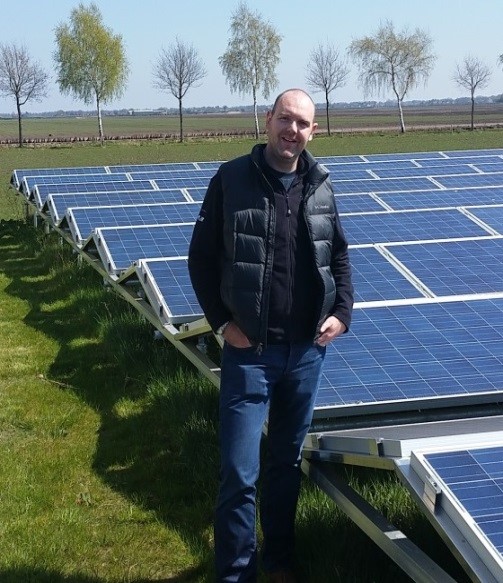
Barry McCarron pictured visiting a photovoltaic facility in Holland

Barry McCarron pictured visiting a photovoltaic facility in Holland

The  Grundtvig programme seeks to improve the quality and European dimension of adult education and make lifelong learning opportunities more widely available to everyone in Europe. As well as the Tipperary Energy Agency there were five other groups which are active in various energy initiatives from across Europe taking part in the trip. They were from Holland, Turkey, Italy, Belgium and Romania. The trip provided an excellent platform for networking and knowledge transfer and this was cultivated through a series of workshops over the three days.

One of the highlights of the trip was a visit to Emmen Zoo, a huge tourist attraction in Holland which draws 1.3 million visitors annually. The zoo is part of a plan for revitalising the city centre of Emmen. Following that, it was on to De Cluft, which is a social initiative/community centre in Emmen. De Cluft has been active since 1977 and plays an important role for both young and old with courses such as flower arranging, painting, pottery, computer training, dancing gymnastics and crafts.

Participants on the trip also visited Landgoed Scholtenszathe to the east of Emmen which is a 1000 hectare agricultural enterprise with circa 350 hectares dedicated to forestry while the other 750 hectares are dedicated to the production of potatoes, sugar beet, onions, and rapeseed. The group got to learn about agricultural technology and renewable energy employed on the site which included a 1.4MW solar photovoltaic system to eliminate there total electricity costs. They are also growing and cultivating rapeseed in order to make bio diesel to offset their fuel bill.

The last leg of the visit was to Drenthe College where the participants took part in a workshop and learned about local energy initiatives called “EMMERGY”. This consisted of an overview of the four programmes Sustainable Cycling, Energy Offices, Energy Centre and Zero Energy Houses.

Overall I found the trip really good and enjoyable and one that will inform my work in CREST (Centre for Renewable Energy and Sustainable Technology) and in my voluntary role with Transition Monaghan. It was a great platform for meeting like-minded people and obtaining expertise and information. The only downside was that the trip was quite short.

This was the fourth of five trips. The first was to a transition town movement in Leuven in Belgium. The second trip saw the participants travel to Tipperary, where they visited Templederry Community Farm, Cloughjordan Ecovillage, Drombane-Upperchurch Energy Team and Gurteen Agricultural College. The third trip saw the participants visit strong examples of low resource use in Italy. A future trip to Turkey is also planned for later in the year. To keep up to date with any future trips see http://www.tea.ie