Preventing nature from being ‘whittled away’

 ‘Whittled Away’ is the title of a recently published book by Pádraic Fogarty. In the book, he describes the decline in Irish wildlife and suggests what can be done to ensure that many more species are not brought to the brink of extinction.   Another initiative is ‘National Biodiversity Week’ – it’s all about inspiring people to protect nature and it takes place from Friday, 19 – Sunday, 28 May.


‘WHITTLED AWAY’

‘Ireland’s natural heritage is being steadily whittled away by human exploitation, pollution and other aspects of modern development. This could represent a serious loss to the nation.’

Irish Government Report, 1969.
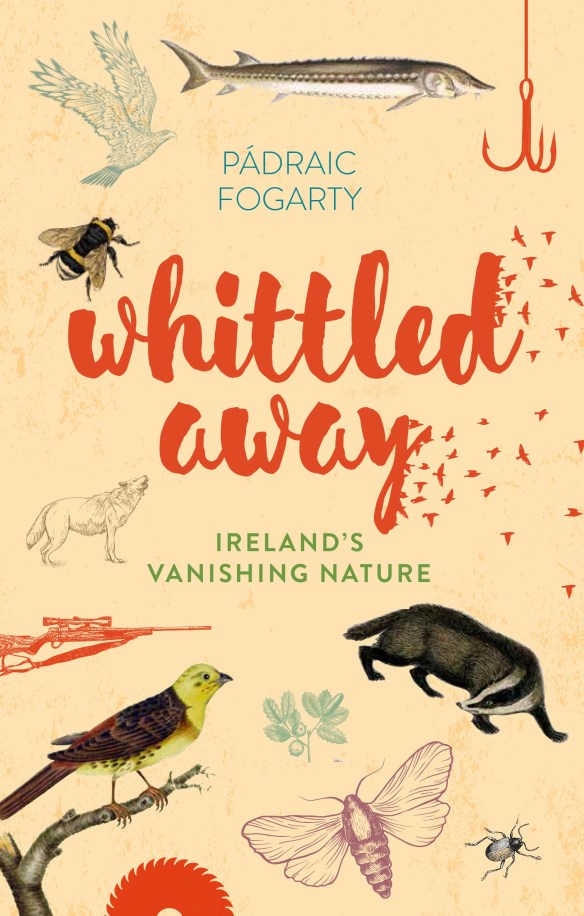
 

Whittled away


Pádraic Fogarty opens his book by quoting the urgent call for intervention to prevent the loss of our natural heritage which was in a government report published in June 1969 – almost 50 years ago.  He tells us that since that report was written, nature in Ireland has continued to disappear at an alarming rate. Overfishing, industrial-scale farming and pollution have decimated wildlife habitats and populations. In a single lifetime, vast shoals of herring, rivers bursting with salmon, and the sound of birds such as the corncrake and the resident curlew have all become folk memories.


‘Whittled Away’ charts the decline and the failure to manage our natural heritage. On a positive note Pádraic Fogarty says that all is not lost: he reveals the possibilities for the future, describing how we can fill our seas with fish, farm in tune with nature, and create forests that benefit both people and wildlife. He calls for the return of long-lost species like wild boar, cranes and wolves, showing how nature and wildlife can recover hand in hand.


Pádraic Fogarty is a professional ecologist who has served as chairman of the Irish Wildlife Trust (IWT), and now works as its campaigns officer and editor of the magazine Irish Wildlife.  In recent weeks he has been critical of the lack of action to prevent the spate of gorse fires countrywide. The fires have destroyed a lot of wildlife including the nests of already endangered birds such as the Hen Harrier.

‘Whittled Away’ is available in hardback or as an eBook from the usual sources as well from the publishers Collins Press at http://www.collinpress.ie or from IWT http://www.iwt.ie.

BIODIVERSITY WEEK (19th – 28th May)

Biodiversity Week takes place next week. It’s about connecting people with nature and communicating the importance of biodiversity and motivating people to play their part in protecting it. It’s also about entertaining people; showing the fun and wonder that can be found in nature; and inspiring people to learn more, see more, do more. There are over 50 events taking place around the country. While none are listed for Co Monaghan there are events in Co Cavan (a bat walk in Virginia) and in Co Meath (a bird/butterfly event in Girley Bog, Kells).

Are you an amateur photographer?  Would you like to be in with a chance to win up to €500 in cash prizes? Then why not enter one of the Biodiversity Photographer of the Year competitions! There are two photography competitions underway.  ‘Biodiversity Photographer of the Year’ competition is open to the general public and ‘Young Biodiversity Photographer of the Year’ competition is open to secondary school students. See details of events and competitions at http://www.biodiversityweek.ie.

BECOME A CITIZEN SCIENTIST

For those who would like hands-on experience in recording and monitoring Ireland’s flora and fauna, there are a number of citizen science projects that you can get involved with. Citizen scientists are volunteers who play an active role in gathering data for scientists. According to a recent study, citizen science has the potential to contribute hugely to regional and global assessments of biodiversity. Citizen science can engage thousands of people in conducting simple experiments, providing important data that would be too time-consuming to generate through other means.

Five suggested citizen science projects relating to biodiversity are listed on the website http://www.greennews.ie. These are Bat Monitoring, Bird / Butterfly Monitoring, Ladybird Monitoring, Count Flowers for Bees and From Soil to Sky (Soil Monitoring). For more information see http://www.greennews.ie.

 BIOLOGICAL DIVERSITY DAY 2017

The theme for International Day for Biological Diversity 2017 on Monday 22 May is Biodiversity and Sustainable Tourism. Biodiversity, at the level of species and ecosystems, provides an important foundation for many aspects of tourism. Recognition of the great importance to tourism economies of attractive landscapes and a rich biodiversity underpins the political and economic case for biodiversity conservation. Many issues addressed under the ‘Convention on Biological Diversity’ directly affect the tourism sector. A well-managed tourist sector can contribute significantly to reducing threats to, and maintain or increase, key wildlife populations and biodiversity values through tourism revenue. This is the challenge for tourism in Ireland and globally.
The Losers in Organic Farming

Written by Dermot McNally

‘Be sure to take all your organic information with a pinch of salt.’

Farmers are among other things, business people – they produce product to sell, hopefully at a profit. So with this in mind Dermot McNally was puzzled as to why more farmers won’t consider switching to organics. The question occurred to him in his local supermarket. He noticed that the rasher (bacon) in his hand was imported from Denmark. Surely we can satisfy the market for rashers ourselves? No is the answer. Dermot investigates why…

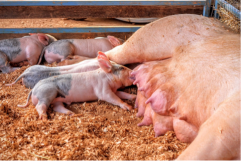
Is there a shortage of pigs in Ireland? Ha! Not a chance! We’ve about 1.3 million pigspigs.png being fattened for slaughter in Ireland. That number includes the pink porkers in the farm up the road. I try not to stand down wind on warm summer days. Was there something special about the Danish rashers? Not particularly. Just the fact that they were organic, more expensive and had a higher percentage of pork than the Irish rashers.
The truth is we can produce run of the mill conventional pork until the pigs trot into the concrete fattening houses but not enough organic pork. It’s a statistical fact that at a third of the European average, we’ve a dismal percentage of organic farmers versus other European nations. It’s also surprising because organic farming is generally more profitable (than other models) which is an important starting point. There’s other positives: it’s generally less intensive, enjoys better margins, attracts better grants and demand for organic products is outpacing supply (except perhaps for lamb where there’s little if any price premium).

Perhaps it’s because we’re slow to change our ways in Ireland and the transition from conventional to organic farming is challenging. And without doubt, organic farming isn’t a cure-all and may not work for many farmers (just as ostrich and deer farming never caught on). Still, none of this explains the low uptake of organic farming in Ireland. So why don’t farmers want to go organic?

WHY WONT FARMERS GO ORGANIC?

One answer is that some are happy. Happy with their return on investment, the effective wage per hour when calculated against income. Farmers who’ve found a niche or vast economy of scale. These farmers exist and they are doing fine farming conventionally using intensive systems and doing everything that the environmental movement hates – using lots of fertilizers, pesticides and antibiotics. It works for them so why would they change?

However for every farmer like the one above, there are many not doing so well. The average farming income is stagnant or falling. Working long, unsociable hours and making a negative return on investment. (Of course lack of profits isn’t affecting the meat factories, the food processors, the suppliers to the farmers or the supermarkets selling on the end product. They all make profit almost every year – if they didn’t they’d go bust.) The truth is the average Irish farmer would be financially better off putting the same amount of working hours into stacking shelves in a supermarket and putting his/her land out to rent or into forestry. Or they could consider a new farming enterprise, one of which might be organic farming.

The thing is, many won’t even consider organic farming as an option. Many seem aware of the pitfalls and drawbacks and none of the advantages. But here’s the crux! Many farmers have never considered that some in the greater farming industry would prefer if the average Irish farmer didn’t rock the boat by going organic. The simple truth is that there are those who will lose out financially if more farmers go organic. And I’m guessing that their opinions are having a negative effect on the general perception of organics within the wider farming community. They include:

  1. The agro-chemical companies who supply pesticides, herbicides and fungicides which are heavily restricted in organics.
  2. Petroleum based fertiliser manufacturers lose out as farmers maximise on-farm sources of manure and natural nutrient to improve soil condition.
  3. The local farming cooperatives / stores who sell all of the above see a drop in sales.
  4. Vets are generally busier in conventional farms as large numbers of animals are pushed through more intensive systems.
  5. And the drug companies supplying the medicines to fix sick animals see a falloff in their sales.

To conclude then: for those would be organic farmers, be sure to take all your organic information with a pinch of salt.

The May noticeboard can be found here

‘Sustainable Energy Communities’ – the way forward?

Written by Liam Murtagh

SUPPORT AVAILABLE FOR SUSTAINABLE ENERGY GROUPS

How can communities – our parishes, villages, towns and county – become more energy efficient and develop more renewable energy? Such energy initiatives will benefit not just our communities; they will also have a positive national and global impact. Support for groups to undertake sustainable energy initiatives in their communities is being provided through the Sustainable Energy Communities (SEC) Programme which is funded by the Sustainable Energy Authority of Ireland (SEAI). Liam Murtagh went along to a networking event to find out more.

On Saturday last, a number of border county sustainable energy groups came together at the Dolmen Centre in Portnoo, Co Donegal. The aim was to learn more about the SEC Programme and to share personal experiences in developing a ‘sustainable energy community’ in their areas. Coincidentally the event took place on Earth Day – it’s an annual global event and this year the theme was environmental and climate literacy.

THE DOLMEN CENTRE

The Dolmen Centre is a community resource centre that has a number of green energy features. These include solar panels and a geothermal heat pump. The Centre was built in the 1990s and on a tour of the facility it was pointed out the management of centre would now like to extend the building and bring the Centre to an almost ‘passive’ energy standard. Additional energy upgrade works being considered include extra insulation, replacement energy efficient windows and possibly a new wind turbine that would not just supply the Centre with power but would also export power to the grid.

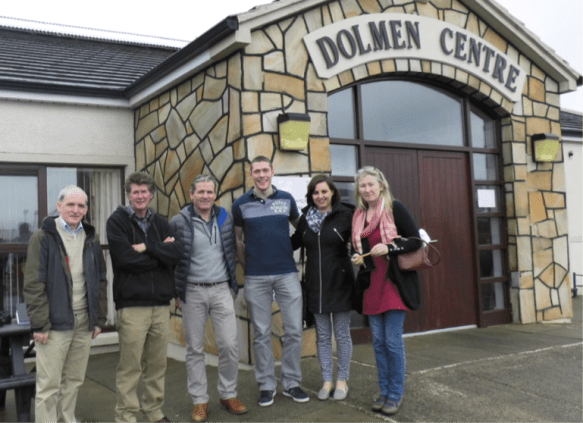
 dolmen.pngPictured at the Sustainability Energy Communities border networking event at the Dolmen Centre, Portnoo, Co Donegal were Liam Murtagh, Castleblayney Sustainable Energy Group, Mel Gavin, IT Sligo, Seamus Dunbar, Manorhamilton, Leo Murray, IT Sligo, Kenneth Doherty, Dolmen Centre, Gillian Gannon, SEAI and Eithne Ní Lochlainn, Gortahork.

 WHAT DOES A SUSTAINABLE ENERGY COMMUNITY (SEC) DO?

 Mel Gavin, a mentor to SECs in the border counties, reminded those attending that a SEC

mel.png

Mel Gavin, IT Sligo and SEAI mentor

is a community in which everyone works together to develop a sustainable energy system. To do so, they aim as far as possible to be energy efficient, to use renewable energy where feasible and to develop decentralised energy supplies. Decentralised energy refers to energy that is produced close to where it will be used, rather than at a large plant elsewhere and sent through the national grid.


According to Mel Gavin, SECs can include all the different energy users in the community including homes, sports clubs, community centres, churches and businesses. The SEC Network in the border counties was there to help build capacity and share skills across communities.

At the networking event the five steps that SEAI recommends for Sustainable Energy Groups were outlined.

  1. Commit – develop a community charter and sign up a partnership agreement with SEAI
  2. Identify – energy master plan
  3. Plan – Establish goals, work programme
  4. Take Action – engage projects, finance, grants
  5. Review – assess impact, share learnings

The process gets repeated on a continuous basis and a mentor is available to the groups to advise on key steps on the journey. SEAI funding is provided to groups in order to develop their competencies and also for technical support.    Many SECs have only recently been set up in the border counties but there are a number well established community based sustainable energy initiatives around the country.

 OVERCOMING BARRIERS TO FUNDING

The event in the Dolmen Centre focused on the process by which Sustainable Energy Groups agree a partnership with SEAI and apply for funding for the development of an Energy Master Plan for their community. Some concern was expressed by groups in relation to the way SEAI funding is paid to groups retrospectively, on completion of a project or phase of a project. This involves groups seeking bridging finance which many group representatives felt creates unnecessary barriers for some communities participating in the Programme.

Despite the challenges, many groups will manage to access the substantial SEAI support that is available to groups wishing to undertake projects relating to energy efficiency and renewable energy in their communities. Further information on the Sustainable Energy Communities Programme is available at http://www.seai/SEC.

Events on in May can be found here

Ireland slowly wakes to opportunity of climate change

Written by Liam Murtagh

WHAT CAN WE IN COUNTY MONAGHAN DO?

What needs to be done at a national level and also at a local level in County Monaghan to put us back on course and play our part in averting global climate chaos?

cara aug.png

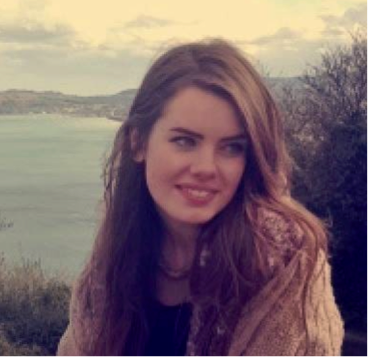
Dr Cara Augustenborg, Chairperson of Friends of the Earth and UCD lecturer on climate change

In a recent interview on RTE One, Dr Cara Augustenborg succinctly set out the challenges and opportunities relating to climate change. She pointed out that during the recession our emissions went down but the upturn in the economy has seen increased emissions in the transport and agriculture sectors – this is at a time when our country has committed to a reduction in emissions. She indicated that we need to seize the opportunity and invest in sustainable transport. In other words we must need to electrify more of our public transport system and incentivise the purchase of electric cars.

In relation to agriculture Dr Augustenborg said that we need to diversify into sustainable types of agriculture, some of which would potentially feed into the renewable energy sector. One can add that sustainable forestry is another area of opportunity for rural Ireland.

Dr Augustenborg argued that one hundred thousand jobs could be created if we move to a low carbon society and a fully renewable energy system. There needs to be a “just transition”, she said, in closing down peat and coal burning power stations and retraining workers for the renewable energy sector. In regard to solar PV she argued that Ireland was being left behind in the rooftop revolution. In other countries house owners are being paid for the surplus electricity they sell to the electricity providers.

In conclusion Dr Augustenborg said that the Government is legally obliged to publish a climate change mitigation plan by 10th June 2017 detailing how we will reduce emissions. The climate campaigner commented: “So far we have not seen any kind of action that would indicate how we would close the gap on meeting our 2020 and 2030 targets.”

IMPLICATIONS FOR COUNTY MONAGHAN

All sectors in County Monaghan have a role to play in moving the county to a low carbon economy. This includes private businesses, the agri sector, community organisations, church bodies and public sector. As individuals if we decide to retrofit our homes to save energy or we install renewables in our homes we engage local contractors and this helps our local economy.

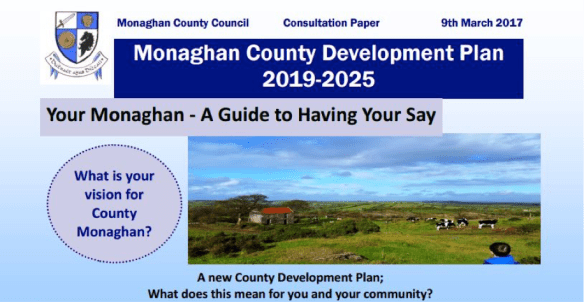
At a county level one key player is our local authority. Monaghan County Council has begun a public consultation process in relation to the preparation of its Monaghan County Development Plan 2019 – 2025. Now is an opportune time for members of the public to make submissions and highlight the need for County Monaghan to seize the opportunities and become a low carbon county. The new plan will extend over much of the period when Ireland will have to meet very challenging 2030 emissions targets or face heavy fines which will eventually impact badly on all of us.

It is vital that the local authority ‘sustainability proof’ all the suggestions and proposals that will be submitted for inclusion in the Plan. All the sections of the Plan are relevant in relation to Ireland’s greenhouse emissions; Housing and Population Growth, Enterprise and Employment, Environment, National Planning Framework, Rural Development, Community Facilities, Town Centres, Transport & Infrastructure, Heritage & Landscape, Tourism & the Arts. The closing date for submissions is Friday, 5 May.

dev planAbove is the opening section of Monaghan County Council’s consultation paper in relation to the 2019-2025 Development Plan. The paper poses questions and seeks your opinion on how the current issues facing your community can be addressed. Suggestions for the Plan on how our communities could move to a thriving low carbon economy / society would no doubt contribute positively to the common good. The full paper can be viewed on http://www.monaghan.ie

A link to the May noticeboard can be found here

‘Deep retrofit’ and renewables for our homes?

Written by Liam Murtagh

OPPORTUNTIES FOR HOMEOWNERS AND ENERGY SECTOR

Want to save money by saving or generating energy? By using improved, seai.pngaffordable technology to ‘deep retrofit’ your home or by installing a heat pump or Solar PV this could become a reality. The people in SEAI have been highlighting the opportunities.  

DEEP RETROFIT

Deep retrofit is a new term for many people. Essentially it means significantly upgrading a building toward nearly zero energy requirements that is practically feasible and achievable. Rather than upgrading isolated parts of the house, the whole home should be assessed as a system, looking at how energy is used and retained. All aspects of the building fabric, insulation, air tightness, ventilation and renewables are assessed. While it will cost monies in the short term it will save you money in the long term.

€5 million has been allocated to the deep retrofit homes scheme. This will fund major energy efficiency upgrades to homes and low carbon heating systems this year. The new multi-annual scheme was launched at the 2017 SEAI roadshow by Minister of Communications, Climate Action and the Environment, Denis Naughten. It is expected to cover up to half the cost of upgrades for individual householders looking to upgrade their homes to an ‘A’ rating on the Building Energy Rating (BER) scale. Full details on how to get involved in the 2017 pilot programme will be published shortly on the SEAI website.

In a week when we heard from the EPA that Ireland’s climate damaging emissions from fossil fuels are increasing in many sectors, this deep retrofit initiative should result in a reduction in emissions from the domestic housing sector.

 RENEWABLE ENERGY IN THE HOME

Solar photovoltaics (commonly referred to as ‘PV’) turn daylight into free electricity.  PVs can be installed on roofs or ground mounted and they operate completely differently from solar hot water collectors. The power from solar PVs cuts down on your electricity bills dramatically.

Many environmental groups are urging the Government to follow the practice in many other countries and ensure that homeowners who export surplus solar electricity to the grid are paid a fair price for it.

There are now many contractors installing PV – one such contractor is Energy Panel, Castleblayney. The company had a stand at the Business and Community Exhibition in Castleblayney on Saturday last. PV panels are now appearing on many commercial premises and farm buildings.   Kingspan have installed the largest solar PV panel roof in Ireland on their insulation factory in Castleblayney.

According to an SEAI report last week, Solar PV (photovoltaics) is set to become one of the most important and fastest growing energy technologies globally to help us meet climate change goals. Irish organisations could capture over €200 million annually of that market due to our research and industry strengths which can be deployed in the sector. The cost of solar panels has dropped by 80% since 2009 (which is good news for those who want to add them to their homes). In the same period, solar PV has become the fastest growing power generation technology worldwide. By 2030 the European solar PV market alone could be worth up to €10bn annually.


energy panelThe showroom of Energy Panel with roof mounted PV panels. The local company had a stand at the Business & Community Exhibition in Castleblayney on Saturday last. Energy Panel supplies and installs solar PV and other energy related products.

A range of renewable energy technologies are being installed by homeowners. These could be solar thermal panels, a small wind turbine, a biomass / pellet boiler or a heat pump. Air-to-water heat pumps are also becoming increasingly popular. If you’re interested, Eurotech Group is a local company that is a leading supplier and installer of air to water heat pumps for underfloor heating and / or domestic hot water.

EXISTING GRANTS FOR BASIC ENERGY UPGRADE

Existing SEAI grant schemes for basic energy efficiency improvements are still available to homeowners. The ‘Better Energy Homes’ scheme provides grants towards Roof Insulation, Wall Insulation, Installation of a High Efficiency Gas or Oil fired Boiler, Heating Control Upgrades and Solar panels. The ‘Warmer Homes Scheme’ aims to improve the energy efficiency and comfort conditions of homes occupied by vulnerable households in receipt of the National Fuel Allowance Scheme through the installation of draught proofing, attic insulation, lagging jackets, low energy light bulbs and cavity wall insulation where appropriate.

liam seaiLiam Murtagh of the Castleblayney Sustainable Energy Group gives Deirdre McGinn some information on energy efficiency grants at the Business & Community Exhibition in Castleblayney on Saturday last.

On the SEAI website (www.seai.ie) you will find a listing of BER Assessors and registered contractors for your area. In addition, there is information on energy efficiency / renewable energy options and details of SEAI grants. It is important to first get your BER completed and to get the Assessors professional advice on your next step.

The April noticeboard can be found here

Forest School: Rossmore Park Spring 2017

Transition Monaghan invited Earth Force Education (Ciara Hinksman and Lucy O Hagan) to Rossmore Park in April 2017 to deliver a series of Forest School sessions. Transition Monaghan organised this event which was part funded by Monaghan County Council.

In later years Transition Monaghan helped promote independently run events by Nourished by Nature, Tanagh OEC, Castleblayney OEC. Rainy at Wild n Free has run events in Rossmore Park in 2021 and is planning more.

Continue reading

Demain / Tomorrow – Film Screening April 2017

SCREENED IN MARKET HOUSE FRIDAY (APRIL 7th) AT 7PM

Transition Monaghan hosted a free public screening of this upbeat film which offers a constructive approach and puts forward solutions to many environmental problems facing mankind.

demain.png


Demain / Tomorrow offers solutions and a feel-good story that will leave you with hope and great ideas for the future. The approach being recommended in the film may well be the best way to solve the ecological, economic and social crises that many countries are going through.

Continue reading

Carrickmacross Youthreach Video on Waste in ECO—UNESCO Awards semi-finals

Congratulations to the Carrickmacross Youthreach students who have made it through to this year’s ECO-UNESCO Young Environmentalist Awards semi-finals. Their film, entitled ‘What A Waste’, aims to highlight the scale of the waste issue, its negative effects on the environment and it suggests what we all can do to help solve the problem. ‘What A Waste’ can be viewed on Youtube or via a link on Transition Monaghan’s Facebook page.

Time to ‘be-leaf’ in Vegetarianism!

This week Transition Monaghan member Laura Hannon – and a vegetarian herself

laura

Laura Hannon

– explains why she believes that moving to a non-meat diet is good for our health and for our planet.


 RUNNING OUT OF THYME…

 We are fond of our meat in Ireland, including it in almost every meal of the day. Whether it is the sausages nestled between the bacon and pudding in our fry, or the chicken sandwich we snack on at lunch time, to the spaghetti bolognese we wolf down for dinner, we always manage to incorporate it somehow. Many may say it is far from a vegetarian/vegan diet we were reared and they would not be far wrong, but we have reached an unforeseen excess and something has got to give. Despite this, an encouraging 10% of the population have found to be currently following a vegetarian diet in Ireland and this number is only increasing as people become more educated on the matter and establish the connection between this unnecessary overindulgence and its effect on our planet.

WHERE HAVE ALL THE FACTS BEAN…?

 The UN’s IPCC (Intergovernmental Panel on Climate Change) urges “shifting consumption away from animal products, especially from ruminant sources in high meat consuming societies”. Unfortunately this is not reflected in the recent Climate Plan produced by the Irish Government.

cow

Is there a ‘cowspiracy’ in Ireland?

US filmmaker Kip Andersen was astounded to learn, during the creation of his documentary Cowspiracy that livestock and their byproducts contribute to at least 51% of all worldwide greenhouse gas emissions. He also discovered that the agricultural sector is responsible for at least one third of all fresh water consumption globally. Livestock or livestock feed occupy one third of the earth’s land and animal agriculture is the leading cause of species extinction, ocean dead zones, water pollution, and habitat destruction. What Kip could not understand was why this information did not seem to be acknowledged accordingly. When he searched the websites of all the major environmental organisations they all cited fossil fuels as the major contributing factor to the emission of greenhouse gases. When Kip questioned representatives of these organisations in interviews, there seemed to be a running theme of uncomfortable mutism. Evidently this was something that they were choosing to ignore.


After further research Kip learned that all these major organisations are membership based. They run on public contributions. If they challenged the habits of the general public, their benefactors, it would hurt their fundraising. People just about do their recycling and if we use energy efficient light bulbs and take quick showers we feel we are saving the world. Yes, these practices are all commendable but their effect is incomparable to the effect that consuming animal produce has. Perhaps it’s not just in the US where there is a ‘cowspiracy’.

IT’S LIKE WE DON’T CARROT ALL…

Aside from the catastrophic effects agriculture has on the environment, eating meat poses ethical uncertainties too. We are so far removed from the source of our food that we barely even associate meat with the animal it came from. If people had to hear the squeals of a pig being brought to slaughter or if they had to witness a cow being forcibly impregnated just so she would produce milk only to have her newborn calf being torn from her to be used as veal, we would undoubtedly see a considerable drop in the consumption of animals and their by-products.

MUSH-ROOM FOR IMPROVEMENT…

If for no other reason, we should consider a vegetarian/vegan lifestyle for our health. In the documentary, Kip visits physician, Dr. Michael Klaper, who himself had grown up on a dairy farm but had been vegan for over thirty years. Meat and dairy is now proven to cause medical complications such as heart disease, cancer, diabetes. Dr. Klaper describes milk as ‘baby calf growth fluid’ designed by nature ‘to turn a 65 pound calf into a 400 pound cow as quick as possible’. Nothing in cow milk is required for a healthy human diet. People can get every single nutrient needed from an exclusively plant based diet, for example, alternative sources of calcium are dark leafy greens, almonds and fortified tofu. Take MMA fighter Nate Diaz, who took down our very own Conor Mc Gregor and stripped him of his undefeated reign. Diaz has been vegan for nearly 15 years and there is no deliberation over the quality of his physical health.

 WE CAN BEET THIS …

 Often we like to avoid making beneficial changes in our lives like choosing veggievegetarianism because we claim that one person cannot really make a big difference. In my view that is a cop out. Eliminating meat from our diet cuts our carbon footprint automatically in half. This is a significant contribution and by making this change we are also encouraging others to follow suit.
For more information on being a vegetarian in Ireland see http://www.vegetarian.ie or the Vegetarian Society of Ireland Facebook page. On being a vegan in Ireland see http://www.vegan.ie or http://www.irishvegan.ie or Vegan Ireland on Facebook.

Event in April can be found here

Is Ireland’s new Climate Plan too weak?

HAVE YOUR SAY ON DRAFT CLIMATE PLAN

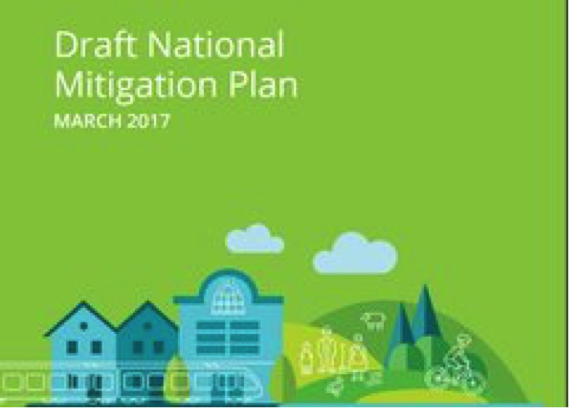
The Government has published its draft National Mitigation Plan on how it intends to reduce the mitigation plan.pngharmful emissions that contribute to climate change. A requirement under our climate legislation, the Plan must establish how Ireland will reduce emissions from buildings, agriculture, transport, and energy production. Liam Murtagh looks at the response of Minister Naughten and climate campaign groups to its publication and also how you too can respond.

Climate change is already a major cause of severe weather events, famines and refugee crisis that are happening around the world. Governments, including our own, have a major role to play in efforts to reduce harmful emissions, but they can’t do it alone. All organisations and individuals have also have a role to play. Because of our high emissions from fossil fuels and agriculture Ireland is not going to meet its EU 2020 emissions reduction targets by a long way and as a result our country will face hefty fines. Targets for 2030 are also expected to be challenging for Ireland, so serious and concerted efforts now need to begin.    

 In publishing the draft National Mitigation Plan (NMP) the Minister for Communications, Climate Action and Environment, Denis Naughten T.D. said that it represents a “hugely important first step by this Government in enabling our transition to a low carbon, climate resilient and environmentally sustainable economy by 2050. Ireland faces significant challenges in reducing its greenhouse gas emissions …. It is vital now that interested stakeholders have their say as part of this public consultation to inform our ongoing work in finalising the Plan.” The Minister goes on to point out that the NMP is intended to become a living document, which is continually updated as ongoing analysis, dialogue and technological innovation generate more options.


RESPONSE FROM ENVIRONMENTAL GROUPS

The response from climate campaign group to the draft Plan was generally one of disappointment. Oisin Coughlan of Friends of the Earth said: “The first consultation on this plan was in 2012. And five years later they launch another consultation on options because they don’t want to take any decisions. Contrast the lack of concrete commitments in this plan to the National Recovery Plan in 2010 or the Action Plan for Jobs, or the plan for agricultural expansion.”

stop-climate-chaosThe lack of definite and planned actions in moving Ireland to a low carbon economy was also reflected in the comments of spokespeople for the Stop Climate Chaos Coalition. Cliona Sharkey, Policy Officer with Trócaire and a Coalition spokesperson said: “The Plan locks Irish society into regressive and unjust actions for the next five years. This will not only hurt our economy in the long-term as the impacts of climate change worsen, but will also have significant environmental and human costs, affecting the most, poorest communities here in Ireland and abroad’
It is also argued by many that practical projects that would make a difference to emissions and also benefit the economy would include the deep retrofitting of houses, the electrification of most of our transport system, creating more offshore windfarms and also supporting domestic solar energy generation. While the Minister is well intentioned and says he wants to bring the public with him it is felt by many that he could be doing with more support from his Ministerial colleagues on this issue.

NATIONAL DIALOGUE ON CLIMATE ACTION

A ‘National Dialogue’ announced by the Minister is to “provide an inclusive process to green schoolsengage and seek consensus across society on enabling the transition to a low carbon and climate resilient future.” There will be a range of national, regional and local initiatives. Among possible one mentioned were Public Participation Networks, Climate Gatherings, People Talk and Citizen Juries, The People’s Conversation, and Climate Justice: Evidence to Action. There are already plans to involve young people through the BT Young Scientist competition and the Green Schools Programme – and under it a ‘Climate Expo’ is planned for this autumn.

HAVE YOUR SAY

As well as participating in the National Dialogue people can also respond in writing to the draft National Mitigation Plan (on Climate Change). A series of questions to guide responses to the public consultation, are included as an annex to the draft Plan. To view the Plan see ‘Latest Consultations’ at http://www.dccae.gov.ie. The closing date for submissions is 26 April 2017.

Click here for April Noticeboard