20 million people face starvation and famine

The United Nations has warned that the world’s largest humanitarian crisis since the

Sob

Stephen O’Briens, United Nations Under-Secretary-General for Humanitarian Affairs and Emergency Relief Coordinator

Second World War is now unfolding. Across Yemen, South Sudan, Somalia and north east Nigeria more than 20 million people face starvation and famine. Many people including children are currently dying as a result of the crisis. The causes are a combination of conflict and drought. Crisis appeals to the public for donations have been made by many NGO aid agencies. These include Concern, Trócaire, Médecins Sans Frontières Ireland, Goal, Oxfam Ireland and Irish Red Cross.

Banning microbeads – have your say

Microbeads are small balls of plastic most commonly found in soaps, shower gels, toothpaste,

col

Collette McEntee


facial scrubs and abrasive cleaners. A public consultation has been launched on a proposed legislative ban on certain items containing these plastic beads. The public consultation process will close on 24 March 2017. In light of the potential ban, Collette McEntee quizzed friends and family to gauge the perception of the plastic ingredient and the environmental damage that results.

The threat of microbeaded products is not something to the fore of many minds and when I visited a branch of a well-known international pharmacy chain. I t proved difficult to find products without microbead content and staff were not fully aware of the potential risks.

Microbeads are hardly visible to the naked eye as they are smaller than 5mm, usually between 0.0004-1.24 mm wide. They flow straight from the bathroom drain into the sewer system. Wastewater treatment plants are not designed to filter out microbeads – they are not biodegradable and can affect marine life.

MICROBEADS IN THE FOOD CHAIN

microbeads

Microbeads on a fingertip

Not only the physical presence of plastic but the toxins that emanate are incredibly damaging too. All sorts of organisms living in or off the sea are mistakenly digesting the plastic debris for food. Once in the sea, creatures absorb/eat them and they are passed along the marine food chain. Perched at the top of this food chain, we, humans, absorb the microbeads from the food we eat.


Banning microbeads is not going to resolve the plastic pollution epidemic but it is a step in the right direction. For more than half of the global population, oceans are the principal source of food and so, plastic marine pollution is seriously damaging. Microbeads are part of a larger damaging sphere, traced back to land sources – plastic waste is dumped by industries, cities, ships and fisheries and finds its way into the sea via rivers etc.

The US has already banned microbeads, the UK are beginning a process to do so, and even Cosmetics Europe, the industry lobby in the EU, have recommended they be phased out. Once they’ve entered our water and ocean systems, microbeads are impossible to remove. Positive action on behalf of manufacturers has resulted in the increasing removal of microbeads from personal care products and there are biodegradable alternatives for microbead infused products. A wet face cloth is a sufficient and affordable exchange for a microbead exfoliator.

Undoubtedly, the argument that a ban posed a risk of economic loss to existing companies that use microbeads in their products, will arise. However, for the sake of a sustainable world, we must combat the use of harmful, long term damaging products in favour of biodegradable products. The ban is a step forward, toward a cleaner and more conscientious environment. Marine life and humans will have a reduced risk of plastic ingestion.

We, like animals and our environment, are not designed to take in these toxic micro-plastics. Natural and biodegradable alternatives are more than beneficial to our bodies, minds, pockets, land and sea. At risk of being borderline archaic – we should look back on the years, well before these consumer driven commodities and steal back the simple, cost effective and natural approach for ourselves and the earth’s health.

Simple actions such as washing your face and brushing your teeth with products containing microbeads are causing great, long term harm. It is our duty to reconsider the products we use and how we use them. For yourselves, marine life and those that come after you – beat the bead! By taking the time to properly consider the products we buy and by doing the survey, we are helping to halt the increasing plastic pollution of marine environments.

TAKE THE PUBLIC CONSULTATION SURVEY

The public consultation online survey initiated by the Minister Simon Convene has four sections under headings; 1) General, 2) Ban-Specific, 3) Consequences of Intervention and 4) Research and Evidence. It is a lengthy questionnaire and we encourage you to utilise the points in this article to fill out and submit a worthy entry toward a worthy cause. Please complete the online survey at http://www.housing.gov.ie/public-consultation-ban-microbeads or email your observations/comments to msfd@housing.gov.ie

There are many working, successful examples of movements and websites in favour of the micro-plastic ban. Transition Monaghan, of the global Transition Town movement, are one of Ireland’s many groups that can aid the awareness campaign. For a concise, broad overview of the international campaign against micro-plastic ingredients, check out ‘Beat the Microbead’ http://www.beatthemicrobead.org.

March noticeboard can be found here

Click here for events in April


Small Scale Land Use – Ben Law and Woodland Coppicing

Visit to renowned woodsman inspires Conan Connolly  

I’ve been an outdoor lover since I can remember. Growing up on my family’s smallholding in

conan.png

Conan Connolly

Magheracloone in the 1990’s, little did I know that the land based skills I was so keen to learn from my grandfather would be made virtually redundant by ‘progress’. These very skills, passed down through centuries of land working, and developed through the experimentation and ingenuity of our ancestors, are all but lost in rural Ireland today. Our connection with the wildlife and seasons, our skills of observation and ingenuity, of thinking outside the box, gone! Our ways of taking it easy, stopping for a chat with passers-by, gone! Our ways of working with the neighbours, sharing tools machinery and knowledge, all gone. It seems like the only thing that hasn’t gone is the hard work!

The way of life of rural people has been completely transformed by destructive national and EU strategies and policies on how we manage our land. These policies have undermined the production of healthy, affordable produce by forcing rural people to intensify and compete with each other. This seemingly small and uncontrollable factor has left rural communities in Ireland decimated. We all intuitively know that small farms and coops create employment. We know they can protect and even enhance cherished landscapes and provide local sustainable and varied food if managed and supported correctly. The unfortunate thing is we don’t seem to have been able to do anything to help ourselves succumbing to this “progress”. I am very glad to see among the rural people of this area of England a though real awareness here that small-scale, ecological land use is at the heart of their rural culture and communities. They knew this way of life is good healthy and sustainable, and they’ve kept it.

I had the pleasure to visit the woodsman and master craftsman, Ben Law in the past few

ben-law-conan

Ben Law, of Prickly Nut Wood, explains “Laying a Hedge” with these special pegs he’s made.

weeks. His knowledge and passion for his work inspired me to write this article. He is a shining example of how small-scale, ecological land use can work. His case demonstrates how simple ingenuity and creativity can enhance the landscape, build community, protect dying crafts and provide local sustainable and varied food (and drink!). Ben has been managing the woodland areas at Prickly Nut Wood for over 20 years. Ben started off trading his labour for 8 acres of woodland. He transformed and improved his plot so expertly that now he looks after nearly 100 acres for his neighbours. The wood is primarily coppice woodland of sweet chestnut and some mixed coppice – hazel, ash and field maple with oak standards. There is also an 80 tree cider and juice orchard and a larch plantation.

COPPICING

Coppice management is the oldest known form of woodland management, by cutting broadleaf trees during their winter dormant phase, the trees do not die but send up vibrant new shoots which grow on to become poles which are sustainably harvested for a wide range of products. When we were there we got the chance to help with some of the harvesting, I think he likes to “share” the heavy work! The area of trees Ben is currently coppicing will be coppiced next again in thirteen years’ time.

coppice.png

The periodic coppicing process allows new light into the woodland floor stimulating growth of flowering plants and in turn food for butterfly and bees. He says “today’s management provides timber for products, whilst also ensuring increased bio-diversity for future generations”. Through his desire to see buildings constructed from local, sustainable materials, Ben has also pioneered roundwood timber framing. As it was in a special area of scientific interest it took ten years to get planning permission for Ben to build his self-sufficient straw bale woodland cottage on his land. Ben has built his own and other houses, shops, school buildings from the local supply of renewable coppiced timber.

I realise that many see living on the land as a chore and a ‘dead end career’. “Go get yourself an education”, they say. “Get off the land and away from the back breaking toil and stress.” I never saw farming as a chore until I stopped and looked back. When I see how we farm in Ireland, doing as we’re told by policy makers and market owners, I now get why it is seen as a burden. When I went to get that university education (also doing as I was told) little did I realise that it would lead me back to Permaculture.

Channel Four’s Grand Designs followed Ben’s build. It’s available at http://www.channel4.com/programmes/grand-designs/on-demand/41975-012

Conan is outgoing Secretary of Transition Monaghan. He has a Bachelor of Arts in Civil, Structural and Environmental Engineering from TCD. He is currently completing a Certificate in Permaculture Design with ShiftBristol, England.

March noticeboard can be found here 

‘Every Blooming Thing’

Every Blooming Thing’ was held last Saturday 4th of March, as a fringe event of the ongoing Castleblayney Drama Festival. Held in the beautifully refurbished Gate Lodge on the grounds of Hope Castle, the event went swimmingly thanks to our very own Liam Murtagh of Transition Monaghan at the helm.

Liam opened by talking about the evolution of man and nature. It appears that alongside the great technological advances we have seen in the last century or two, comes an unwelcome disconnection from the natural world. An afternoon such as this is a perfect chance to reflect and reawaken some of that consciousness we seem to have lost.
Continue reading

Students invited to tell ‘The Story of Your Stuff’

Our Environmental Protection Agency (EPA) has teamed up with young photographer and musicstory video director, Christian Tierney to launch an exciting new competition for secondary schools today themed ‘The Story of Your Stuff’Students are invited to choose an everyday object such as a pen, mobile phone or a water bottle and use a visual medium to illustrate its lifecycle, where it came from, how you use it and more importantly, where it’s going to end up!

The competition is open to secondary school students up to and including 18 years. Students might decide to use video, a storyboard, a comic book illustration or in another format. The prize is: €500 for the winning entry and €500 plus a video workshop with Christian Tierney for the school. All information about the competition can be found on the http://www.thestoryofyourstuff.ie. The closing date for the submission of entries is 30th March.

bottle

The Story of a plastic water bottle is given as an example

The Story of Your Stuff is all about thinking about where our ‘stuff’ comes from and becoming more aware of the life cycle of products and the transformations they go through along the way. By becoming more aware of the story of stuff we begin to understand why using less is best approach. Recycling and using recyclable materials on a daily basis is also important. The EPA’s web resource Irelands Environment provides the best source of information for students to research their entry.


No doubt the EPA competition was inspired by The Story of Stuff, a short storyofanimated 2007 documentary from the US about the lifecycle of material goods. The documentary is critical of excessive consumerism and promotes sustainability. Filmmaker Annie Leonard wrote and narrated the film and it has been viewed millions of times. It can be viewed on YouTube.

Events in March can be found here

Experience ‘Every Blooming Thing’ in Castleblayney!

Connect with nature at fringe event of drama festival

Reflections on ‘nature and the arts’ is the theme of this unique event which takes place in Hope Castle Lodge, Castle Square, Castleblayney on Saturday, 4 March from 2pm to 5pm. The afternoon will include a focus on the natural treasure that is the Lough Muckno estate. The way in which nature can influence the visual arts and the spoken / written word will also be a theme at the event. The presenters on the afternoon will include Billy Flynn, Alison Bole and Michael Harris. The event will be chaired by Liam Murtagh from the Transition Monaghan group. Joe Hanratty of the Drama Festival Committee will also talk about the setting for the event.    

hope lodge.pngThe restored Hope Castle Lodge at the entrance to Lough Muckno Park will be the venue for the ‘Every Blooming Thing’ event’

SPRINGWATCH IN CASTLEBLAYNEY

As part of the afternoon’s event, ecologist Billy Flynn will lead a one-hour nature walk

2

Billy Flynn, Ecologist

from the venue to the shore of Lough Muckno and the Black Island. He will help us discover the wealth that nature provides us with at our doorstep as the spring season bursts on the scene. Separately Billy has been advising Castleblayney Tidy Towns Committee and last year in association with the Group he produced a 3 Year Tidy Towns Plan for Castleblayney.


springwatch

The ‘Springwatch’ walk during the event will include a visit to the shoreline of Lough Muckno and to the woodland floor on the Black Island.  

FINDING THE HEART IN STONE

From the visual arts dimension, Monaghan based sculptor Alison Bole will revea

stone

‘Energy’ by Alison Bole

l how nature influences her work – she will show us some us some samples of her work to illustrate how it emerges in her work. One of Alison’s sculptures entitled ‘Energy’ – depicting the “energy, enthusiasm and vision of voluntary organisations” stands at the front of the Community Enterprise Centre in Castleblayney. It was erected there in 2001 to mark the UN International Year of the Volunteer.


alison.pngMonaghan based sculptor Alison Bole will be one of the presenters
NATURE SPEAKING THROUGH POETRY

The title of the event was inspired by some lines in Patrick Kavanagh’s poem Inniskeen Road: July Evening –

“…I am king
Of banks and stones and every blooming thing”

Poets have long been inspired to tune their lyrics to the variations in landscape, the

mh

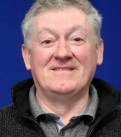
Michael Harris, Mullyash 

changes in season, and the natural features around them. The various challenges now facing the natural world, poetry can play an important role in highlighting the interconnectedness of us as humans and the natural world around us. Michael Harris will share some of his own poems and those of others to illustrate this link. Michael is from Mullyash, Castleblayney and he is currently based in London.

Anyone attending the event is advised to wear warm and rainproof clothing and suitable footwear for the walk. Admission is €5 at the door. See ‘Fringe Events’ at http://www.castleblayneydramafestival.ie.

Small Scale Land Use – Ben Law and Woodland Coppicing

by Conan Connolly


I’ve been an outdoor lover since I can remember. Growing up on my family’s smallholding in Magheracloone in the 1990’s, little did I know that the land based skills I was so keen to learn from my grandfather would be made virtually redundant by “progress”. These very skills, passed down through centuries of land working, and developed through the experimentation and ingenuity of our ancestors, are all but lost in rural Ireland today. Our connection with the wildlife and seasons, our skills of observation and ingenuity, of thinking outside the box, gone! Our ways of taking it easy, stopping for a chat with passers by, gone! Our ways of working with the neighbours, sharing tools machinery and knowledge, all gone. It seems like the only thing that hasn’t gone is the hard work! The way of life of rural people has been completely transformed by destructive national and EU strategies and policies on how we manage our land. These policies have undermined the production of healthy, affordable produce by forcing rural people to intensify and compete with each other. This seemingly small and uncontrollable factor has left rural communities in Ireland decimated. We all intuitively know that small farms and coops create employment. We know they can protect and even enhance cherished landscapes and provide local sustainable and varied food if managed and supported correctly. The unfortunate thing is we don’t seem to have been able to do anything to help ourselves succumbing to this “progress”. I am very glad to see among the rural people of this area of England a though real awareness here that small-scale, ecological land use is at the heart of their rural culture and communities. They knew this way of life is good healthy and sustainable, and they’ve kept it.

I had the pleasure to visit the woodsman and master craftsman, Ben Law in the past few weeks. His knowledge and passion for his work inspired me to write this article. He is a shining example of how small-scale, ecological land use can work. His case demonstrates how simple ingenuity and creativity can enhance the landscape, build community, protect dying crafts and provide local sustainable and varied food (and drink!). Ben has been managing the woodland areas at Prickly Nut Wood for over 20 years. Ben started off trading his labour for 8 acres of woodland. He transformed and improved his plot so expertly that now he looks after nearly 100 acres for his neighbours. The wood is primarily coppice woodland of sweet chestnut and some mixed coppice – hazel, ash and field maple with oak standards. There is also an 80 tree cider and juice orchard and a larch plantation.

Coppice management is the oldest known form of woodland management, by cutting broadleaf trees during their winter dormant phase, the trees do not die but send up vibrant new shoots which grow on to become poles which are sustainably harvested for a wide range of products. When we were there we got the chance to help with some of the harvesting, I think he likes to “share” the heavy work! The area of trees Ben is currently coppicing will be coppiced next again in thirty years time. The periodic coppicing process allows new light into the woodland floor stimulating growth of flowering plants and in turn food for butterfly and bees. He says “today’s management provides timber for products, whilst also ensuring increased bio-diversity for future generations”. Through his desire to see buildings constructed from local, sustainable materials, Ben has also pioneered roundwood timber framing.  As it was in a special area of scientific interest it took ten years to get planning permission for Ben to build his self-sufficient straw bale woodland cottage on his land. Ben has built his own and other houses, shops, school buildings from the local supply of renewable coppiced timber.

I realise that many see living on the land as a chore and a “dead end career”. “Go get yourself an education”, they say. “Get off the land and away from the back breaking toil and stress.” I never saw farming as a chore until I stopped and looked back. When I see how we farm in Ireland, doing as we’re told by policy makers and market owners, I now get why it is seen as a burden. When I went to get that university education (also doing as I was told) little did I realise that it would lead me back to Permaculture.

Channel Four’s Grand Designs followed Ben’s build. It’s available at http://www.channel4.com/programmes/grand-designs/on-demand/41975-012

Conan is outgoing Secretary of Transition Monaghan. He has a Bachelor of Arts in Civil, Structural and Environmental Engineering from TCD. He is currently completing a Certificate in Permaculture Design with ShiftBristol.

‘Every Blooming Thing’ (Fringe Event, Castleblayney Drama Festival)

This event will take place on Saturday, 4 March, 2pm – 5pm in the Gate Lodge, Castle Square, Castleblayney. The event

mh

Michael Harris from Mullyash is a presenter

will be chaired by Liam Murtagh from the Transition Monaghan group. Joe Hanratty of the Drama Festival Committee will speak about the setting for the event. The afternoon event is being organised as a fringe event of this year’s Castleblayney Drama Festival.  For further details see http://www.castleblayneydramafestival.ie


A ‘Forest School’ for Monaghan Children?

f1

Dermot McNally of Transition Monaghan looks at our increasing detachment from nature as a result of our modern lifestyles which focus strongly on consumerism, urbanisation and automation, and have led to concern for our physical, emotional and mental health. Thankfully, pro-active reaction has led to the formation of many groups and activities to reinstate our connection with the surrounding natural world. In this article, Dermot explores the concept of ‘Forest Schools’ and how it could be applied in County Monaghan.

There is no doubt that today’s children are missing out on old fashioned outdoor fun and adventure. Could ‘forest schooling’ use nature as the place for learning as well as a playground for society’s youngest?


Continue reading