
Last year, Jennifer Mc Aree of Transition Monaghan moved to Delft in the Netherlands to live
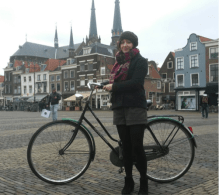
Jennifer Mc Aree goes Dutch in Delft!
and work. The Dutch are widely known for their advanced environmental protection and sustainability practices. With a population of nearly 17 million in an area roughly half the size of the island of Ireland, the Netherlands may be tiny but it is highly urbanised and densely populated. This brings with it many challenges, but also plenty of opportunities for innovation and transformation. In this article Jennifer focuses on sustainable Dutch transport practices.
BICYCLES
You can’t mention the Netherlands without talking about bikes, so I’ll start there. Bicycles are everywhere. Everybody has one and they are an iconic symbol of the country. Cyclists are kings, and cars and pedestrians must obey them at every turn. The bike lanes here are fantastic – wide, defined and often separate from the roads. Cars are obliged to slow down and/or stop for cyclists within cities, while pedestrians must watch out for them at their peril. Many tourists learn this the hard way!
I bought a bike the day I arrived in Delft. They can range from cheap, second-hand bangers (like mine) to very expensive, top of the range models (including electric versions). Dutch bikes are heavy, sturdy and built for longevity, with no gears and back-pedalling often serves as the braking method. Cyclists here are fearless, fast and confident; after all they begin cycling as toddlers. There is no age, race or class distinction within cycling – everyone uses their bikes to get around. The climate is similar to Ireland’s but this doesn’t deter the Dutch from cycling. People seem to be healthier here; few are overweight or obese. Parents often bring their small children around on cargo bikes (these have carrier boxes attached to the front). Of course, the very flat landscape really complements cycling here – there are no hills, unlike Monaghan!
The Netherlands was not always so bicycle friendly however. While cycling was a typical form of transport until after World War II, the introduction of cheaper cars and oil in the 1950s, coupled with strong economic growth, meant the number of cars multiplied at a staggering rate. With the arrival of the 1973 oil crisis, along with a huge increase in road fatalities, particularly involving children, communities rose up by staging large anti-car protests throughout the country, urging the government to take action. The campaign’s slogan was “Stop de Kindermoord” (“Stop the Child Murder”). It worked. The government began to plan and construct segregated cycle paths, which made it safer for cyclists, while simultaneously encouraging more people to take up cycling again. Plus, cycling is virtually free and requires no petrol or diesel!
TRAINS
Another huge part of Dutch life is the train. Over 600,000 people use the trains daily, primarily on the commute to and from work. Commuters often cycle to the station and park their bike for free in the vast bicycle parking facilities that cater for thousands of bikes – best not forget where you’ve parked yours! Trains run mostly on time, but when they don’t there is chaos (the Dutch know how to complain!). It is possible to reach almost anywhere you want to go by rail. Journeys for all trains, trams and buses can be paid for with the same travel card. There is joined-up thinking in terms of public transport – train, bus and metro stops are located in the same stations for ease of making connections. Amazingly, since 1st January 2017 all electric trains (the majority) in the Netherlands have been running on 100% wind energy.
CARS
There are still plenty of cars in the Netherlands. After all there are almost 17 million people packed into this tiny country, and much of the young working population lives in the Randstad megalopolis area, which comprises the four largest cities of Amsterdam, Rotterdam, The Hague and Utrecht. Traffic jams are a problem in this region, although they are mostly limited to the outskirts of cities. Main streets have few to no cars and underground parking is common. There is also constantly a move towards improving public transport and drivers are encouraged to purchase electric cars through financial incentives. Furthermore, there is a proposal to ban sales of new petrol and diesel cars from 2025 onwards.
So far I have really enjoyed my experience in this small, yet pioneering country – and I’m learning a lot. I could fill pages on Dutch transport alone. Next time, I’ll move on to the many renewable energy advancements happening here.
A list of events and notices on in February can be found here
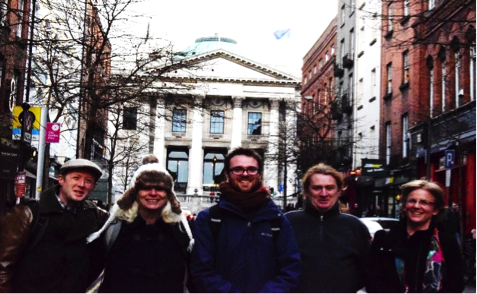

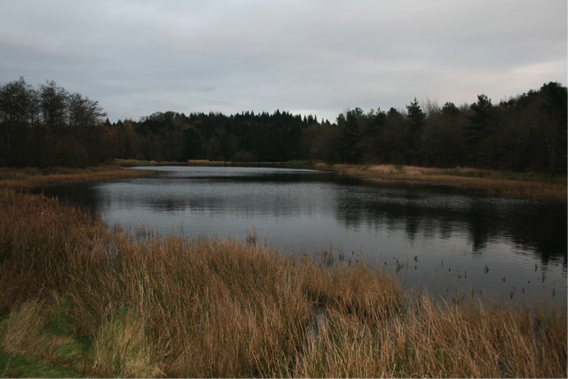
 Pictured above is Rossmore Park. Trees are the lungs of the earth and provide natural sanctuaries.
  across Ireland on the day. In Monaghan, our Transition will be planting 100 trees, with a mix of native ‘woodland’ and ‘hedgerow’ trees. We will be joined by other local groups on the day, including the Tidy Towns, Men’s Sheds and the Allotment Society. In particular, we welcome new volunteers to lend a hand in the planting. All you need are weather proof clothes and a pair of sturdy shoes or boots. If you have a spade, this is a plus, but if not we will provide some. We will announce the precise locations in next week’s noticeboard and on our Facebook page. For further information, please email transitionmonaghan@gmail.com or call 086 865 2724.
 Éamonn Meehan sees the appointment of a climate change sceptic – Scott Pruitt – to the key position of head of the Environmental Protection Agency and his hostility towards science and enthusiastic embrace of coal and oil as a “nightmare scenario for anybody who cares about the future of the planet”. He says that Trump has promised to “cancel the Paris Agreement on climate change Agreement”. The deal has been structured in such a way that it “would take four years for any country to back out, but that has not stopped calls from his supporters to follow through on his pledge.”
 l take. It also makes it easier if we consider what an expert in this ‘field’ says. In the New Year newsletter from the Organic Centre, Manager Hans Wieland says that he had his “ear to the ground” and so he has come up with the following predictions for 2017.
 Transition Monaghan