Teresa Wins Green Business Award for Eco Farm / Tourism Facility by the Erne

teresa


Teresa O’Hare, Orchard Acre Farm, Co Fermanagh was the recipient of the Green Small Organisation of the Year award at the 2016 Green Business Awards ceremony in Dublin.


Teresa O’Hare and her Orchard Acre Farm share a lot in common with ‘River Cottage’ of the Channel 4 series. Both have inspirational people at the helm – growing food, cooking it and sharing the skills while having fun in the process.  Teresa does this through a range of courses and events at her Fermanagh eco-tourism facility that even include hosting alternative hen parties. She has given numerous gardening talks including one in Monaghan to the Monaghan GIY Group. Her centre’s productive and attractive gardens and stunning eco barn are located between Lisnarick and Irvinestown, on the Kingfisher Cycle Trail, minutes from scenic Lough Erne and Enniskillen.

Orchard Acre Farm has won numerous awards – three of them in less than a year. On Thursday, 14 April last before an audience of almost 500 leading industry professionals at the Green Business Awards Ceremony in  Dublin, Teresa was the recipient of the Green Small Organisation of the Year award.  Talking about  her most recent award a very jubilant Teresa said; “Thanks is due to my family and the whole farm team that we are simply  the best small Green business in Ireland. We all take great pride in offering a high standard of  events, classes and demo’s, in cookery, food growing and craft all year round, whilst caring for the natural world around us.”

Teresa continued; “Not everybody chooses to come here because of our Eco credentials. They come because we meet their needs, such as bespoke training, a unique venue and gorgeous, simply presented fresh food. When they get here they can experience how being a Green Business is good for them and the  environment , good for social fabric of our  local community and good for the financial stability of the farm.”


The farm ethos is totally inclusive. Events and classes suit individuals, families and groups and the facility is fully wheelchair accessible.  The destination is listed as one of Northern Ireland’s Tourism’s Great Days Out. Further details on Orchard Acre Farm are available at http://www.orhchardacrefarm.co.uk. Tel 048 6862 1066.

orchard acre

The barn and garden at Orchard Acre Farm

Links to the May Noticeboard can be found here. The June Noticeboard can be found here

Climate Change: “Ireland fiddles as the world burns”

In the protracted negotiations to form a government, the issue of Ireland’s role in responding to the greatest challenge facing humanity – climate change – is not to the fore. Commenting on the climate issue, the conservation group An Taisce says that our high emissions means that, per person, we in Ireland are big contributors to the global climate problem and that we will soon face enormous fines by the EU of €600 million per year for missing our emission reduction targets. This is despite our ‘special case‘ plea to the EU and the fact that Acting Minister for the Environment Alan Kelly was in New York last week to sign the UN Climate Agreement drawn up in Paris last December.    

Increases in global temperature in 2015 and in the first three months of 2016 are being described by scientist as ‘off the charts’. Many developing countries are being hit hard by the resulting extreme weather events. Rising sea levels means that the sea is encroaching on many low-lying islands and coastal regions around the world. Last week, scientists have confirmed that 93% of Australia’s Great Barrier Reef has suffered a severe bleaching event, leaving much of the world’s largest living structure ‘dead or dying’. Meanwhile, more than 12% of Greenland’s massive ice pack began melting earlier this month, the earliest ‘summer’ melt ever recorded. We in Ireland are not escaping the impact of climate change. We have been victim to heavy rainfall and the devastation severe storms have wreaked during our recent winters. Unfortunately, with our increasing emissions, these storms, like Storm Desmond last year will only increase in ferocity and frequency.


Many climate scientists say that we are now in a climate emergency. Here in Ireland An Taisce is highly critical of Ireland’s response. The organisation has a climate change subcommittee that is chaired by Dr Barry McMullin of DCU and includes climate scientist John Sweeney of NUI Maynooth.

barry mcmullin

Dr Barry McMullin, Chair of An Taisce’s Climate Change Committee


In a statement An Taisce says: “We are missing EU targets that themselves fall far short of the immediate effort needed to match the far more challenging climate targets we agreed to at Paris. … Instead of the sharp reductions we are legally mandated to achieve, Irish agriculture is due to increase its emissions by 6-7%, while transport emissions are set to climb by between 10-16% versus their 2014 levels. An Taisce also highlights the adverse impact of other sources of emissions – the 20% increase in coal being used at Moneypoint power plant last year and 11% increase in Ireland’s aviation emissions in a single year.

John Gibbons a spokesperson for An Taisce said: “Our new Climate Act mandates a transition pathway to a low carbon future. Instead we are doing the exact opposite. We are choosing a path of short-term financial gain, intentionally adding to global impacts and undermining our future well-being. Why are we being so foolish?”

So what examples of positive steps are there? An Taisce points to the recent decision by the Dutch Parliament to phase out all new non-electric vehicles from its national fleet by 2025. The group says that Ireland needs to make such a decision and send out signals to the market that will further encourage industry to switch to zero or near-zero emissions technology. Such decisions would lead to emissions reduction and so reduce fines, leaving more money for hospitals and schools.

Concluding his remarks, John Gibbons said: “In an era of deepening international environmental crisis, Ireland is increasingly behaving like a ‘rogue state’, with politicians afraid to lead, many public officials afraid of change and a system in thrall to special interests. We as a nation are entitled to expect much better, for this generation and more especially, for the next.”

Further commentary by John Gibbons on the climate change issue is available at http://www.thinkorswim.ie.

Links to the May noticeboard can be found here.  The June Noticeboard is found here

What on Earth Can We Do for Earth Day 2016?

Tomorrow (Friday, 22 April) is Earth Day. It was first celebrated in 1970 and is now Earth earth dayDay is marked in almost 200 countries with events to demonstrate support for environmental protection and conservation. To coincide with Earth Day, the landmark Paris Agreement on Climate Change is scheduled to be signed tomorrow by the United States, China, and some 120 other countries. This signing satisfies a key requirement for the entry into force of the historic climate protection treaty.  One of events to mark Earth Day in Ireland will be an afternoon seminar in UCD on ‘Flooding and Climate Change’.

Earth Day comes at a time when nature is bursting forth in the northern hemisphere, while in the southern hemisphere Earth Day comes at harvest time. In Ireland our spring is a bit late this year, in spite of the fact that climate change has meant much higher than average monthly temperatures worldwide so far this year. Nevertheless the primroses have now eventually appeared to brighten our hedgerows, the aroma of wild garlic pervades our woodland, the swallows have returned to check out our barns and the tadpoles are swimming in our ponds.


Planting trees has been selected as the major international theme of Earth Day this year – The aim is to start on the first phase of planting 7.8 billion trees worldwide by 2020. Trees store carbon and worldwide, many more trees need to be planted to help slow the increasing pace of climate change.  Here in Ireland, a lot more land could be used to grow trees.

Those who don’t own land but have a garden could do a bit of tree planting this weekend. It is generally better to plant native trees such as oak or birch as opposed to non- native ones but account needs to be taken of the ultimate size of the tree and also if the soil is suitable for that tree.  Of course you could plant trees that have other benefits such as those that produce edible fruit (apple, plum etc.) or nut trees such as hazel. Bare-rooted trees are suitable for planting if they have not yet burst bud. Saplings that have been in pots for a year are also suitable for planting now.


Apart from tree planting there are many other activities that one could do in support of Earth Day.  Here are just a few suggestions:

  • Walk, cycle or take public transport instead of the travelling by car.
  • Help out with a local clean up, e.g. with a Tidy Towns Spring Clean effort.
  • Sow some vegetable seeds in your garden and then be able to enjoy eating your own vegetables – that have with no food miles – later this year.
  • Set up and use a compost bin in your back garden.
  • Decide to save energy by improving insulation levels in your home and look up the improved grants available under the Better Energy Homes scheme at http://www.seai.ie.
  • Become a citizen scientist on wildlife / biodiversity in County Monaghan. See http://www.biodiversityireland.ie or http://www.biology.ie.
  • Eat less meat
  • Stop using disposable plastic
  • Shop locally and if possible by local or Irish made produce
  • Donate to a charity that is helping those most in need around the world, e.g. by responding to the Equador Earthquake Appeal or the Migration Crisis Appeal by the Irish Red Cross (www.redcross.ie) or to the appeal by Concern to help with emergency food supplies in drought stricken Ethiopia and Malawi (www.concern.net)
  • Join an environmental organisation – preferably one that is campaigning on issues such as climate change and sustainability. See the list of member organisations of the Irish Environmental Network at http://www.ien.ie or come along to a meeting of Transition Monaghan. For details email transitionmonaghan@gmail.com.


For more information on Earth Day see http://www.earthday.org

Events on at end of April and in May can be found here

Woodland League Call for a Native ‘Treevolution’

“Must we wait another 100 years for native forest restoration” is the question posed by the lobby group, Woodland League. Making a serious commitment to restore our native forests as a living legacy for future generations would, according to Andrew St Leger of the League, be a fitting way to honour the men and women of 1916.

woodland league.jpg

Andrew St Leger of the Woodland League

The Woodland League, a not-for-profit Non-Governmental Organisation is drawing attention to the state of our forests in 2016. According to the League, forests are a most precious and valuable natural resource and in Ireland this great asset was stripped by the Crown from the 1500’s and much neglected since 1922 by successive Irish governments.

The League notes that in 2016 only 0.002% of our land area consists of ancient woodlands, and goes on to say that these ancient woodlands are “without management plans to conserve and protect them”.  Ireland has the lowest tree cover in the EU at 11%, and with only 1.25% native species, the least natural forest cover. Most of the forest estate is made up of “exotic conifers, of industrial tree farms reliant on hazardous chemicals to grow and heavy machines for clear-felling.”

Andrew  St Leger reminds us that in relation to Coillte forestry, the McCarthy Report of 2011  stated, “Its forest estate is very fragmented, consisting of 6,500 separate properties of which about half are considered commercial, one quarter potentially commercial with investment and one quarter have no commercial value”.

Numerous studies have shown the negative impacts of this forestry model on water and soil, as well as their contribution to flooding and silting up of rivers and streams.  The Woodland League spokesperson says that we need major reform of the current stagnant forestry policy that “only benefits the few”. He goes on to call for the State to commit to “a new community oriented model focused on transforming the unproductive areas, (where appropriate back to mixed native forests …as well as ensuring funding for the management and restoration of our ancient woodlands.

The Woodland League also wish to see a National Public Works plan drawn up to target flooding, biodiversity enhancement, river restoration, local fuel wood production for mini grid small scale energy projects, wood crafts, furniture making, training, recreation, meaningful employment, etc., creating viable useful community woodlands of mainly mixed native species.

Andrew St Ledger goes on to say that it is “time to stop pumping more public funding into this outdated tree farming model, and start investing in a forestry policy suited for the future with multiple benefits for all”. The funding for this new policy need not come from the public purse at all; provision already exists within the EU Rural Development funds whereby approx 60% of the funding measures relate to the type of sustainable forestry we are seeking.

If the Woodland League call is responded to we will make progress in reaching our EU and UN commitments to increase our forest cover to reach the EU average of 30%. We will also contribute to our climate change pledges to store more carbon in our forests.

The Woodland League invoke the words  of the Omagh poet Alice Milligan (1865 – 1953) a prominent member of the Gaelic League, an organisation instrumental in preparing the country for independence via restoration and awareness of the rich cultural and natural heritage.

Fallen in Eireann are all our leafy Forests,

The oaks lie buried under a bog land mould.
Only in legend dim are they remembered,
Only in ancient books their fame is told.
But seers who dream of times to come,
Have promised forests will rise,
Where perished these.
And of this desolate land,
It shall be spoken.
In Tirconnell of the territories,
There are trees.

Alice Milligan, 1908.

Events in April can be found here

Bread – Like Takeaway for Ducks

‘Feeding the ducks’ with leftover bread has been a traditional pastime for generations. Recently, wildlife conservationists in the UK have started a campaign against this seemingly harmless practice. Jennifer Mc Aree of Transition Monaghan looked into why the campaign was launched and if we really have to stop feeding ducks altogether.

ducks             Feeding the ducks (and swans) is familiar to us all    Source: Jennifer Mc Aree                       

We’re all familiar with the idyllic scene. Families at the lakeside tearing up bits of stale bread and throwing them into the water, watching while excited ducks swoop in and gobble up the pieces with their little beaks in a flash. It’s that seemingly innocent pastime we have all enjoyed at some point in our lives, especially as children.

In recent times however conservationists have been striving to warn the public that such well-intentioned activity is not so harmless after all. The UK’s Canal and River Trust launched a campaign twelve months ago pleading with people not to feed ducks bread. They reported that in England and Wales alone, 6 million loaves were fed to ducks in 2014. To date the Trust has made great progress, with an estimated 80,000 less loaves being chucked into lakes and rivers, but they are still struggling to spread the message.

Bread is like junk food for ducks. It’s the equivalent of us humans feasting on greasy takeaways from the chip shop every day. Birds are not wired to eat bread on a regular basis (many would argue that people aren’t either, especially the white variety – but that’s a topic for another day). Bread is devoid of the nutrients ducks and other bird species can obtain from their regular diet. It fills them up quickly and because it is so plentiful, overpopulation has become an issue in certain areas. Bread causes ducks to gain weight quickly and easily and discourages them to search for their own natural food sources. Excessive bread intake over time can also stimulate the onset of a horrible condition called ‘angel wing’, leading to deformity of the birds’ wings and affecting their ability to fly.

Ducks and other waterfowl such as swans and waterhens often defecate in the area where they are fed and uneaten food can drift to the edges or base of lakes. Thus, bacteria can build up rapidly, incubating diseases for birds and fish, causing algal blooms and attracting rats. Wet, uneaten bread also supports a mould called aspergillus. If this enters birds’ lungs it can prove fatal.

The good news is that we don’t have to stop feeding ducks completely! But we must change the type and quantity of food we give them and where. Conservationists recommend moving around the lake/river/canal and feeding the birds at different points, while limiting food to small amounts. The following list suggests what is safe for ducks to eat:

  • Oats, wheat or barley
  • Defrosted peas
  • Cracked corn
  • Rice (cooked or uncooked)
  • Birdseed
  • Grapes
  • Earthworms/mealworms
  • Chopped lettuce or other greens/salad mixes
  • Chopped vegetable trimmings or peels
  • Duck pellets

Here’s what you should avoid feeding ducks (most of which we should steer clear of too!):

  • Bread
  • Chips
  • Crackers and biscuits
  • Popcorn
  • Sugary food – sweets, chocolate

So, feeding the ducks is fine when we follow a few simple guidelines. Bonding with nature is a good thing and should be encouraged from a young age if we are to appreciate and conserve all the wonderful wildlife we still have. In this relentlessly busy digital world we now inhabit, it is a simple way to relax and take stock.

*Did you know? Mallard ducks are the most common duck species in Ireland. They are present all year round, but come to winter here in greater numbers from Iceland, Scandinavia and other parts of Northern Europe. The male (drake) is the more glamorous of the two sexes with his green head, bright yellow beak and multi-coloured feathers. During the summer moult however his colours tend to fade. The female (hen) is dowdier, with mottled brown feathers. She tends to be louder than her male counterpart however, and makes the famous ‘quack’, while he has a softer call. (No sarcastic comments here please).

April events can be found here

TTIP- Transatlantic Trade and Investment Partnership: The Prostitution of Ireland

The Transatlantic Trade and Investment Partnership (TTIP) involves ongoing talks on trade between the EU and the USA. If passed it could have some very serious negative repercussions for Europeans, including the Irish. Many people don’t know of TTIP’s existence however, due to the secretive discussions that take place around it. Janette Lambe of Transition Monaghan explains the issues in more detail.

TTIP – Some of you may already be aware of it but worryingly, others may have never heard of it. For the latter:  TTIP stands for the Transatlantic Trade and Investment Partnership which has been in discussion between trade representatives of the EU (including Ireland) and the US since 2013. If you have not heard of TTIP it may be because all discussions take place in covert.

uplift

  Anti-TTIP protestors outside the Dáil.  Source: uplift.ie/ttip

The most commonly mentioned aim of the partnership is to loosen trade barriers between the US and EU. According to TTIP advocates this would boost our economy by increasing international business and in turn create more jobs. However, Ireland already has a very healthy trade relationship with the US, so why the need for a trade agreement?

TTIP has a very sinister flip-side. If passed it leads to the standardisation of regulations in areas such as the environment, food quality, government policies, health care, employees’ rights etc. European standards would be lowered to meet those of The US.

In Europe and in Ireland especially, we pride ourselves on our rigorous food safety and health regulations. Stateside however, it is not uncommon to find chlorinated chicken on the supermarket shelves or meat pumped full of cancer-causing hormones. An overwhelming 70% of US food is genetically modified. European food standards keep GM foods to a minimum.

The American meat industry processed 33.2 million cattle in 2013. In contrast Ireland currently only has the capacity to process 1.1 million per annum. If TTIP goes ahead, it is probable that our beef industry will be stifled by the American beef market. Also the sheer volume of beef the US can process is an indication of the emphasis on quantity, not quality there. It also raises questions about the level of compassion shown towards the vast majority of livestock that are slaughtered.

Another objective of TTIP is the establishment of Investor-State Dispute Settlements (ISDS) which permits international corporations to sue governments if their policies inhibit the potential for corporate profit. The ruthlessness of ISDS has been witnessed in various parts of the world including Uruguay (under the similar Trade in Services Agreement – TISA). As part of a decision to increase health awareness, the Uruguayan government enlarged the health warning graphics on cigarette packaging. ‘Philip Morris USA’, the American tobacco corporation is now suing the Uruguayan government for millions of dollars, as the enlarged health warnings discourage potential purchasers of ‘Philip Morris’ brands. In effect this is suing an elected government for trying to promote better health to its populace. Since then Uruguay has left TISA after strong protests from its citizens.

TTIP would have detrimental effects on our environment. If Ireland agrees to the partnership, the probability of fracking will become imminent. Ireland has the second smallest forest coverage in Europe and fracking would have the potential to destroy what natural beauty we have left. Our water would be at high risk of gas contamination, natural habitats could be obliterated and our democratic nation would be powerless to prevent it. To change environmental policy would inhibit corporate profit and to inhibit corporate profit is to be sued. Where is the democracy in that?

I am both perplexed and saddened by the Irish government’s show of support for TTIP.

To quote the noble words of Seathrún Céitinn:

“A Fhódhla phráis…                                                            “Oh brazen Ireland…

Deór níor fágad I gclár do bhrollaigh mhínghil    not a drop was left in the surface of your smooth white bosom

Nár dheólsad ál gach cránach coigríche.”           That wasn’t sucked by the litter of every foreign sow “

These words were written in the 1700s. Three centuries later and little has changed!

This is merely the ‘tip’ of the iceberg. There is a plethora of TTIP material online. There are also many online petitions you can sign to show your opposition. I urge you to write letters to TDs, start a petition, write an article – make your voice heard. Help us hold on to our democracy. As we are being reminded daily through this year’s 1916 centenary celebrations, we fought for it for long enough.


March and April noticeboards can be found here and here


What a load of Rubbish!

Transition Monaghan member Dearbhla Lenehan writes about the new pay-by-weight waste collection system due to come into effect later this year and how this could have a knock on effect on illegal dumping in the county.

A planned pay-by-weight waste collection system is proposlittered to come into effect in July this year.  This new system has a higher charge per kg of waste destined for landfill, with lower charges for compostable and recyclable waste.  This is designed to increase recycling rates and reduce the amount of waste being sent to landfill, however, there are concerns that the increased bill for those who refuse to change their ways could result in increased cases of illegal dumping.

Illegal dumping – Source: Monaghan                                                                                                                   County Council Litter Management Plan

A study by the Department of Environment found that this is a very effective method for waste prevention and recycling and that in Dun Laoghaire-Rathdown immediately after the introduction of this system there was a 20-25% reduction in the amount of waste.  It is believed that this new system will divert up to 440,000 tonnes of rubbish from landfills every year.

Many of the items we currently send to landfill sites are recyclable and take years, decades or even centuries to decay in a landfill site.  For example, a normal aluminum can if recycled will be back on our shelves within 60 days however it can take 500 years for it to  decompose in a landfill site.  Plastic bags can be recycled and turned into composite lumber which can then be used in wooden structures like door frames, window frames and outdoor decks to name a few.  Recycled plastic bags can also be used to make resin that is then used to produce new plastic bags, crates, pallets, containers and pipes.  Unfortunately, a lot of our plastic bags end up in landfill sites and can take up to 100 years to degrade.Hopefully this new pay-by-weight system will encourage users to recycle more.


In November 2015, Cllr. Padraig McNally expressed fears that the prevalence of illegal dumping will only be exacerbated by the introduction of the pay-per-weight waste disposal system.  County Monaghan already has many cases of illegal dumping and the Council spends approximately €1 million every year cleaning litter up off our streets.  Monaghan has been deemed moderately littered in the 2015 Irish Business Against Litter survey, dropping nearly 20 places from finishing 12th in 2014 to finishing 31st last year.  Cllr Paudge Connolly believes the main reason for our drop in position was due to littering on private property in the town, which the council has no control over.

In a bid to tackle the litter problem along the N2 road, CCTV cameras have been installed to deter dumping and catch the culprits.  In one litter picking operation organised by Monaghan County Council and undertaken by volunteers last year, three tonnes of waste were collected on the Castleblayney bypass.  That’s the equivalent of three years of household waste!

Not only is illegal littering extremely unsightly and often accompanied by a pungent smell, it is also damaging to our environment.  Improper dumping can pollute wildlife habitats and lead to the death of fish, birds and small animals.  Some of the waste we dispose of is toxic if consumed by animals and if these toxins end up in water bodies they can kill off aquatic life.  Broken glass or rusty nails found on footpaths and roads can also be a significant hazard,especially for children.

There is currently an on-the-spot fine of €150 for leaving or throwing litter in a public place and a maximum fine of €3000 if convicted by the District Court of a litter offence. If you would like to report littering / illegal dumping please contact the Environment Section of Monaghan County Council in confidence on Freephone 1800 2000 14 or email: litter@monaghancoco.ie with exact details of the location of the litter or illegal dumping.  Alternatively, you can report it to the 24 hour National Environmental Complaints line on 1850 365 121 who will pass the information on to the local authority, the Gardaí or the Environmental Protection Agency.

March and April noticeboards can be found here and here

Tree Week (6th – 13th March): Celebrating and Planting Trees for a Sustainable Future

ESB Tree Week, organised by the Tree Council of Ireland  is a week long programme of events to tree councilcelebrate trees. To be part of ESB Tree Week, the Tree Council of Ireland invites individuals and groups  to organise one or more events for the week. Tree Week runs from Sunday, 6 March until Sunday, 13 March and is sponsored by the ESB in association with Coillte.
 

In Ireland we need a lot more trees planted for their economic, environmental and amenity benefits. With greenhouse gas emissons and climate change becoming a major issue,  growing more trees can help  storig carbon. Tree week can bring  a focus on trees at a time when many more people venture out of doors after the winter.

As well as tree planting ceremonies, there are a range of events of events that can be organised. These include forest and woodland walks, nature trails, workshops, woodturning displays, talks, tree climbing, broadcasts, launches, poetry readings, exhibitions,  competitions and tree planting events where communities are challenged to plant a target number of trees on a designated local site over a fixed time period. You can register your event so that other people can come and join you!  See http://www.treecouncil.ie.

In schools, typical activities for tree week might be planting a tree, drawing pictures or making leaf prints or bark rubbings of trees, read or write poems or stories about trees, learning  how to measure the height and spread of a tree and producing  a class drama about trees. Organisations such as local residents association, tidy towns groups, youth clubs, sports clubs or other local organisation could get their members involved in a tree planting or tree maintenance project such as a clean-up of a local woodland in the local area. Individuals could organise a community tree-planting event or organise a walk or trail to showcase local trees.

Monaghan County Council Support Tree Week

Monaghan County Council will have a number of saplings (mixed native species) to give to community projects during Tree Week. Contact Fionnuala Mulligan, tel 047 73720 email fmulligan@monaghancoco.ie. To see events already planned to take place in Co Monaghan see listing of events at http://www.treecouncil.ie.

tree week

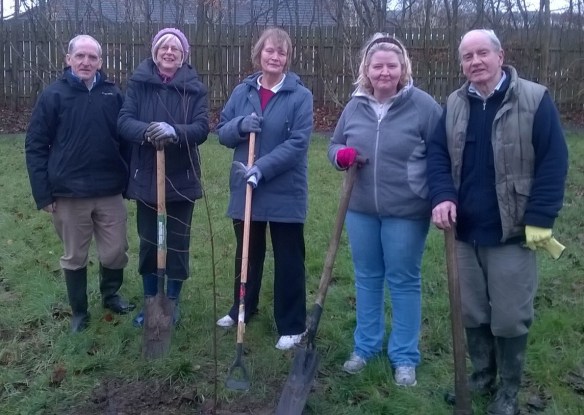
Planting native trees in Castleblayney recently were members of Castleblayney Community Gardeners. From left: Liam Murtagh, Máire Breheny, Eilish Stewart, Dympna Fee and Francis McElroy.

Events in March can be found here

Climate Change should not have been the ‘Cinderella’ Issue of the Election

“A quite extraordinary effort at reality denial for this crunch issue to have been completely john Gibbonsoverlooked by all the main parties as well as the mainstream media” This view of the treatment of the climate issue in the election debates up to this week was voiced by An Taisce’s spokesperson John Gibbons. This week we focus on his views and also on how some other environmentalists view the election.         
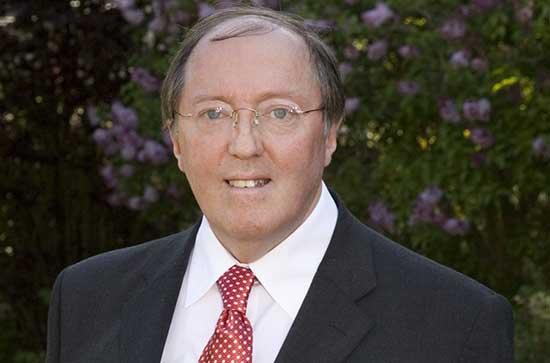
 

                                                                                                                                   John Gibbons, climate change                                                                                                                        writer and spokesperson for An Taisce

We have had the two flagship Leaders’ Debates, hosted by TV3 and RTE. In both debates, climate change – the biggest issue facing humanity – was ignored by the presenters and by the politicians made no mention of climate change or environmental issues.  As RTE had flagged its first Leaders’ Debate as being about the “issues that really matter” John Gibbons says that the fact that RTE ignored the issue “speaks volumes for the station’s deepening crisis in both the quality and paucity of its climate coverage.” The climate change issue was also not one that was put to the candidates at the RTE Election Debate that took place at the Facebook headquarters on Sunday night.


As An Taisce’s spokesperson on climate, John Gibbons points out that while the outgoing government makes “much play of having introduced a Climate Act, its real priorities were made clear with the announcement this week that the Department of Communications, Energy and Natural Resources has just awarded 14 new licences for offshore oil and gas drilling. Given the imperative for all economies to rapidly decarbonise their energy systems in order to avoid the IPCC’s projected ‘severe, pervasive and irreversible’ impacts of climate change, how does the Irish government justify more drilling for oil and gas at the very time we need to fully commit to a low-to-zero carbon energy future?”


The climate change elements of various manifestos have been considered in further detail by John Gibbons. (See News & Events at http://www.antaisce.ie). Elsewhere environmental scientist Cara Augustenborg has published on her own website an in-depth analysis she has undertaken of the climate and climate related commitments in the various manifestos.  (See News at http://www.caraaugustenborg.com).   While some positive commitments on climate were identified in many of the manifestos there were also significant gaps and even contradictions in quite a few of them.


Many environmental groups including An Taisce have called on the political parties to make various commitments on implementing specific climate and environmental policies when elected. One of these groups is the Irish Forum on Natural Capital.  The Forum says “We are losing nature’s services: stable climate, productive soils, clean water, pollinators etc. We need to sustain what sustains us”. The Forum is calling for the next Government to take an integrated approach to managing nature’s capital and ensure our commitment to account for natural capital by 2020 is met.

In John Gibbons’ own blog (www.thinkorswim.ie) he assesses the performance of the outgoing Government on the climate challenge. His ‘Climate Report Card’ comments conclude as follows “Little real engagement on climate. Promised little but delivered even less… Avoided a ‘fail’ by scraping in Climate Act”.

As we head towards the election of TDs and then the election of a Taoiseach it is important that the words of the Taoiseach when speaking at the United Nations Secretary General’s Climate Change Summit in New York in September 2014 are recalled: “The hand of the future beckons, the clock ticks and we have no time to waste…Global warming is a stark reality that can only be dealt with by a collective global response. We are all interdependent and interconnected … we share a common humanity… and each of us must play our part.” John Gibbons concludes as follows:  “We have no time to waste if political rhetoric is to be translated into real action commensurate with the existential crisis posed by climate change. Supporting parties who are sleepwalking into the catastrophic reality of climate change is probably the riskiest step any voter can take next Friday”.

(This above article was written in advance of the RTE One TV election debate on Tuesday, 23 February)

March event can be found here

Election 2016: Climate Scientists Call for a Citizens’ Convention on Climate Change

Last week a group of 29 academics, which includes climate scientists, came together to call on our political parties to back the setting up of a Citizens’ Convention for a Post-Carbon Ireland. They have also asked members of the public to give their support to the call by signing an online petition available on the website http://www.postcarbonireland.org

John sweeny

Climate scientist, Professor John Sweeney of NUI Maynooth is one of the 29 academics in Ireland calling for a ‘Citizens Convention for a Post-Carbon Ireland’


Post-Carbon Ireland is an initiative of this group of leading Irish academics to raise the critical issue of climate action during the 2016 general election campaign. In the view of the academics their proposal for a Citizens’ Convention for a Post-Carbon Ireland would involve a sustained, citizen-led, national discourse on the challenges that climate change poses to our society, and how we can and will respond.

They remind us that since pre-industrial times, our world has warmed by a global average of almost 1°C, due primarily to greenhouse gas pollution from human activities. This has already triggered serious planetary-scale climate disruption, and is having devastating humanitarian impacts on vulnerable communities in diverse geographical regions. The scientists give us hope in that they say that we are “not powerless”. They continue: “We can still act: both to limit the speed and ultimate severity of global climate impacts, and to brace our own society for the potentially drastic shocks ahead due to the climate disruptions we have already initiated. This will require urgent and radical societal transformation. That can only happen with the willing engagement and support of the people. We need a genuine, sustained process that allows every single citizen and community in Ireland to fully consider the range and nature of the changes we face, and to advance policies and actions that are commensurate with them. Only in this way can we hope to create the unity and solidarity that is essential to create a strong, resilient, and genuinely sustainable society. We need a Citizens’ Convention for a Post-Carbon Ireland.”

HOW WILL IT BE DELIVERED

The group has already written to many political parties asking for their positions on their proposal in order to maximise the opportunity for effective climate action regardless of which parties form the next government.   Updates will be published on the Post-Carbon Ireland website as politicians respond.

The academics are appealing to sign the online petition on http://www.postcarbonireland.org in support of the call for the Citizens Convention. Next week they will deliver the full list of signatories from the petition. The Group’s website has a video of the recent launch of the initiative and also an open letter addressed to all parties and candidates in General Election 2016. The letter ends with a quotation from a blog ‘The Climate Psychologist’ which includes a reference to the Climate Agreement in Paris in December last.   

“By comparison with the Climate Change threat, every other national issue now pales into insignificance: post Paris, doing ‘our best’ is no longer answer enough — it is finally time to do what is necessary”

March events can be found here