The Questions to Ask Politicians on the Most Urgent Issue of our Times – Climate Change

2015 was the hottest year ever recorded, with many countries including Ireland experiencing extreme weather events on a level never seen before. Friends of the Earth and Trocaire have launched campaigns to encourage us to put questions to our politicians on their commitment to taking action on climate change and so set us on a path to a zero-carbon future.      
act

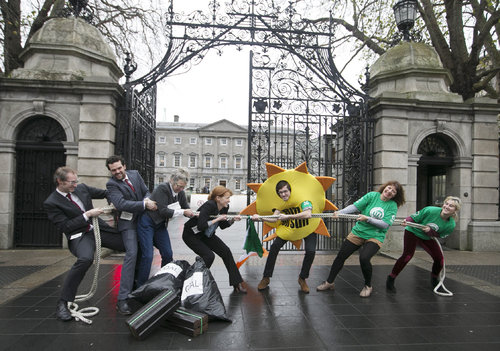
Activists outside Leinster House illustrate the ‘tug-of-war’ between fossil fuels and renewables for the future of Irish energy policy


“Nobody ever mentions climate change on the doorstep”. This is what Oisin Coughlan of Friends of the Earth says he regularly hears from politicians.  Given that climate change is the biggest threat facing humanity, he says that when politicians are canvassing us for our votes we should ensure that we question them on what their policy is on addressing the challenge of climate change.

Oisin Coughlan says that by us mentioning flooding, fracking, or Ireland doing its fair share, on the doorstep or even just saying we’re concerned, means the TDs in the next Dáil will be that bit more likely to listen to organisations campaigning for climate action. He says that if you get into a conversation with politicians you can remind them that the recent Paris Climate Agreement and the Government’s new National Energy Policy that followed a few days later calling for a zero carbon future, means moving to a fossil-free, community-centred energy system, starting now. He goes on to suggest six questions that we could ask our constituency candidates.

Will you / your party:

  1. Ban fracking in Ireland?
  2. Put in place a payment for solar electricity so households and communities can get paid for the power they feed into the grid?
  3. Make a plan to stop burning peat for electricity by 2020 and coal well before 2025?
  4. Set up one-stop-shops in every county, like the Tipperary Energy Agency, to help households and communities to save energy and own renewable generation projects?
  5. Set up a financial support scheme, like the old SSIA’s, to help people invest in upgrading their homes to cut energy waste (Labour is promising one for first-time buyers, will you extend it to anyone retrofitting their home)?
  6. Make it the law that local communities have to be offered 20% ownership of developer-led energy projects, as happens in Denmark?

Oisin Coughlan says that a ‘yes’ to these six questions would be encouraging – and if these policies are implemented it would put us on path to a zero carbon future. Politicians will also face questions at an election husting event on Wednesday, 17 February at 5.45pm in Wynn’s Hotel. The event is being organised by Dublin Young Friends of the Earth Ireland and the Irish Environmental Network.


COLUMBAN ECOLOGICAL INSTITUTE’S QUESTIONS

The Columban Ecological Institute in Dalgan Park, Navan has developed a similar set of questions for us to ask politicians, as those compiled by Friends of the Earth. Writer and theologian Fr Sean McDonagh has been at the forefront of the Institute’s work. Included in the Institute’s questions is a specific question on how politicians can reconcile our commitments, on the one hand to reduce greenhouse gas emissions and on the other hand to increase the national cattle herd of 7.1 million cattle by 300,000 by 2025, as set out in the Governments ‘Food 2025’ Plan. The Institute points out that methane from cattle is even more damaging than carbon as a greenhouse gas and that agriculture already contributes one third of Ireland’s emissions.

TROCAIRE’S QUESTIONS AND VIDEO

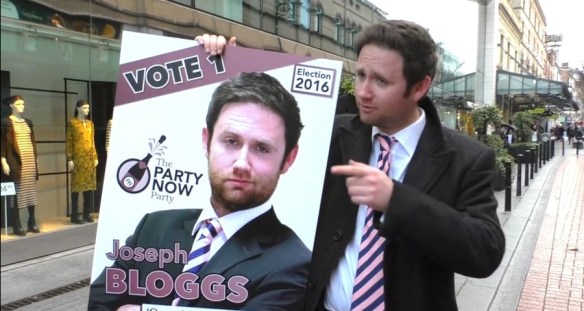
Trocaire’s campaign slogan is ‘Vote for Justice in 2016 – Tell election candidates we need action on climate change’. The two questions they suggest that we ask politicians are: 1. Will you immediately take action to phase out polluting fossil fuels? 2. Will you commit to Ireland signing up to a Financial Transaction Tax? (To pay for urgent climate action and also to fund public services here in Ireland, at no extra cost to citizens. See http://www.robinhoodtax.ie). A humourous part of Trocaire’s campaign, but also one that highlights the serious issue of ‘short-termism’ is a spoof party political promotion video by Joseph Bloggs of the ‘Party Now’ Party. To view the video see ‘Get Involved  / Election 2016’ at http://www.trocaire.ie
trocaire

Trocaire’s spoof video, featuring Joseph Bloggs of the ‘Party Now’ Party, has a powerful message
February events can be found here
Eye Opening RTE Programme on Living Longer and Healthier Lives

Last week Dr Lara Dungan presented an excellent and revealing  programme in the Eco Eye series.  She discovered that where and how we live, travel and work, the air we breathe, the food we eat, even the packaging that our food comes in, all combine to have a huge impact on our health.  She also suggested ways that we can protect ourselves and our children from everyday environmental pollution.

l.jpg


Environmental pollutants cause 13 million deaths worldwide each year and in Ireland it costs our health system €2 billion a year. The programme focused on the effects of these pollutants such as air pollution and man-made chemicals and also examined the environmental causes of the obesity epidemic in Ireland.

Dr Lara Dungan, Eco Eye presenter  

The one billion cars in the world are not just contributing to climate change. They spew out noxious gases and particulates. In the programme, experts from Trinity College pointed out that the air pollution from cars contributes to asthma, lung cancer and heart disease. The petrol and more especially the diesel car pollute the air for the driver, cyclists and pedestrians. The conclusion was that we need to reduce the number of vehicles on our roads, use them less and use lower emission cars and of course introduce more electric cars.

The programme also looked at another form of air pollution – one that causes over 1000 deaths per year in Ireland. This pollution is caused by burning solid fuels in our fireplaces. The worst air quality is in our smaller towns – higher than in Dublin.  People lighting solid fuel fires in the evenings pollute the air in their neighbourhood and also within their houses. While it is still legal to burn smoky coal in towns of less than 15,000,   a total countrywide ban on smoky coal is coming into effect later this year. Burning peat and wood can have similar effects on the local air as smoky coal.

If we reduce our burning by 40% – would save more than 500 hundred lives every year and help people who have asthma and similar conditions. A non-polluting option for householders that was suggested was the installation of heat pumps. Retrofitting houses to ensure higher levels of insulation and so lower the requirement for smoky fires can also help.

Exposure to man-made chemicals can have some serious adverse impacts on our health. The programme revealed that a 2014 WHO study linked endocrine or hormone disrupting chemicals to numerous diseases and disorders including breast and prostate cancer, IQ loss, genital malformation, and obesity. We are exposed to 110 of these in food packaging, household and cosmetic products. Professor Vyvyan Howard told presenter Lara Dungan that we get these chemicals in food, toothpaste, cosmetics, and household cleaning agents. He went on to point out that in the 1960ss a woman had a one in twenty chance of developing breast cancer. Now unfortunately it is a one in eight chance. He said that exposure to low doses of these chemicals in the foetal period is likely to be significantly increase the risk of developing breast cancer. Professor Howard pointed out that chemicals in pesticides find their way into our bodies. He recommends that if we can we should eat natural and organic produce. In relation to food packaging he said that half of tin food cans have a lacquer on the inside that can leach into the food.

On the subject of cosmetics, Lara Dungan told us that when women use them, they apply up to168 chemicals to their bodies.   Not all cosmetics contain these chemicals. Exposure to chemicals in our environment we were told is costing Ireland over €5 billion a year in health costs. This excludes the human cost. The presenter emphasied  importance of tighter restrictions to protect us from these endocrine or hormone disrupting chemicals.

The programme concluded on the role of the environment in contributing to obesity. Professor Donal O’ Shea told us that fifty years ago we were the “lightest” country in Europe but we now are on course to be the “fattest” country in Europe by 2030. The environment of high fat, high salt and high sugar food, the take-aways he pointed out as the major contributors to the problem. He said it is predicted that one third of our population  will have Type 2 Diabetes by 2050 – currently 25% of our 3 year olds are overweight or obese. Prof O’Shea emphasised that we really have to make walking to school, cycling to school and active transport to work a reality as is the case in the Netherlands and Finland.

Presenter Lara Dungan’s overall conclusion was that to protect public health we need to protect the environment and that it is inot just mportant for our health,  it also makes economic sense. We look forward to other programmes in the Eco Eye series which air on RTE One on Tuesdays at 7pm. The programme is produced by Duncan Stewart and is available to watch back on RTE Player.

Click here for February events

Proposed Changes to the Wildlife Act Will Further Threaten Ireland’s Birds and Bees

Just before Christmas it was announced that Heather Humphreys, TD and Minister for Arts, Heritage and the Gaeltacht was to introduce significant changes to the current Wildlife Act in time for the launch of the Heritage Bill 2016. Jennifer Mc Aree of Transition Monaghan believes such changes will allow further destruction of Ireland’s biodiversity.

hedge.jpg

Hedgerows in County Monaghan:  corridors and habitats for wildlife

As the law stands, under Section 40 of the Wildlife Act 1976, the cutting of hedgerows and burning of vegetation is prohibited between 1st March and 31st August each year. The proposed changes would mean that hedgerow cutting would be allowed throughout the month of March, while upland and bogland scrub and vegetation could be burned throughout the month of August.

The Irish Farmers’ Association (IFA), Wicklow Uplands Council and other lobby groups argue that the current Section 40 of the Wildlife Act is too strict as it prevents farmers from maintaining their farms and can lead to land abandonment in hilly areas. Under pressure from such organisations, Minister Humphreys decided to propose extending cutting and burning practices into March and August. Despite opposition from conservationists and the Seanad, the Bill has made it through to the Dáil. If passed, this would exacerbate Ireland’s record of violating EU wildlife legislation, with potential legal implications.

In response, Birdwatch Ireland, An Taisce, the Irish Wildlife Trust and the Hedgelayers Association of Ireland came together to launch the ‘No to more Slash and Burn’ campaign, encouraging people to sign an online petition asking the Minister to abandon her decision. They say that the change to the hedge-cutting dates will lead to further declines in populations of  Yellowhammer, Linnet and Greenfinch birds and reduce essential food supplies for pollinators such as bees.  A third of our pollinators are threatened with extinction. Ms. Humphreys insists that the proposed changes will be introduced on a pilot basis over two years and strictly controlled, even though the current regulations are consistently breached as they now stand.

Exceptions to Section 40 are already permitted for various public safety and agricultural purposes. Non-compliance stems from weak policing due to a lack of wildlife rangers employed by the National Parks and Wildlife Service (NPWS), confusion over the exact prohibited timeframe and a shortage of biodiversity officers in local authorities. Many citizens are also oblivious to the existing legislation so that any suspicious behaviour often goes unreported.

Hedgerow cutting has been carried out for generations to dissuade overgrowth and ensure public safety on roads. Hedges provide a natural barrier between lands and help to prevent soil erosion. They serve as superb habitats and green corridors for several bird species (e.g. wrens, robins, song thrushes and greenfinches) and pollinators (e.g. bees and butterflies). Food sources such as berries and insects are abundant along hedges, meaning birds can thrive when left alone. Hedge-cutting, especially with today’s robust mechanical machinery, has the potential to do much damage. Birdwatch Ireland recommends that hedges be tightly cut in February before most birds start nesting and then lightly trimmed throughout the summer months.

The burning of vegetation on uplands and boglands has been practised traditionally to maintain farmland and prevent scrub encroachment. It also ensures that a healthy mix of biodiversity can be maintained by allowing various habitats to host many species of birds, insects and small mammals. Scrubland bird species include warblers, linnets and yellow hammers. Their nesting sites and food sources can be devastated if burning occurs too soon or spreads out of control, which happens easily. The red grouse for example, has declined by 70% in the last 40 years, partially due to mismanaged burning and other farming practices.

So how can you help? Firstly, sign the online petition at my.uplift.ie/petitions/no-to-more-slash-and-burn. Report suspicious cutting or burning activity to the NPWS or the local council. You could go a step further by becoming a ‘citizen scientist’. This means you can look out for various plant and animal species, and record any sightings on the National Biodiversity Data Centre website at http://www.biodiversityireland.ie. It gives great advice on how to identify certain species and all findings will go towards recording and protecting our vulnerable wildlife. There is currently a severe lack of data on Ireland’s biodiversity. Nature is often overlooked until it is harmed – but we can all do our bit before even more damage is done.

Events on in February can be found here

Fracking in North Monaghan will be Prohibited if Bill before Dáil is Passed

A few years ago, amid much concern locally, North Monaghan was identified as part of a border area where fracking (hydraulic fracturing for shale gas) was planned.  Last month, Richard Boyd Barrett TD introduced a Bill to the Dáil which, if passed, would completely ban fracking in the Republic of Ireland. This week Transition Monaghan member Dearbhla Lenehan examines the fracking issue.

d

Dearbhla Lenehan

Richard Boyd Barrett’s ‘Prohibition of Hydraulic Fracturing Bill 2015’ to the Dáil was co-drafted by An Taisce’s Assumpta O’Broin and Friends of the Earth‘s Kate Ruddock. It prohibits any undertaking, permit or license to explore, prospect or extract shale gas using fracking or any other method in Ireland.  Hydraulic fracturing (fracking) is a method to extract gas from shale rock by drilling and injecting fluids composed of water, sand and chemicals at a high pressure to fracture the shale rock and release natural gas.

Unfortunately, in the U.S. where this technique is used regularly to extract gas, there have been cases where chemicals and contaminants have leaked into the ground water supply, affecting the local drinking water and the surrounding environment.  In some areas mild earthquakes have been attributed to fracking activity.   In addition to local effects, environmental groups point the use of fracked gas or oil contributes to greenhouse gas emissions and climate change.

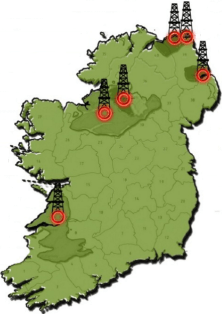
In 2011 there was controversy surrounding the granting of gas exploration licenses to Tamboran Resources and Enegi Oil Plc to search for commercial gas in the Northwest Carboniferous Basin (also known as the Lough Allen Basin) and the Clare Basin.  The Lough Allen basin covers and area of 800 square kilometers and includes parts of Monaghan, Cavan, Donegal, Fermanagh, Leitrim, Mayo, Sligo, Tyrone and Roscommon.  The Clare Basin encompasses parts of Clare, Cork, Limerick and Kerry.  In Northern Ireland after some initial exploration work by fracking companies the Minister for the Environment, Mark H Durkan announced a plan to ban fracking last year.

frack

Proposed Fracking Regions (source –frackingfreeireland.org)

At present the Irish Government has agreed not to issue further licences until an EPA-led research study on the ‘Environmental Impacts of Unconventional Gas Exploration and Extraction’ is completed and considered.  This study is due for publication in late 2016. Good Energies Alliance Ireland (GEAI) along with other anti-fracking campaigners initiated a ‘stop the study’ campaign in September 2015.  This ultimately led to the drafting of the bill Richard Boyd Barrett presented to the Dáil in December 2015.  GEAI say the current EPA study is discredited and should be stopped as the Oireachtas has been misled about who is undertaking the study.  They were led to believe that Queen’s University Belfast was conducting an independent study; however, they have played no part in the research since October 2014.  GEAI claims that the majority of the research is being carried out by a group led by CDM Smith, a US pro-fracking consultancy that provides services to the oil and gas industry and Amec Foster Wheeler – an oil/gas industry consultant whose clients include BP, Shell and ExxonMobil to name a few. As a result the anti-fracking group says that this study is not independent as intended and should be stopped immediately.  They state that the research “is not looking at whether fracking should be permitted; instead it is looking at how fracking can be rolled out” and “the Irish taxpayer is giving a subsidy of €1.5 million to the oil and gas industry for this study.”

TD Richard Boyd Barrett believes there is no need for an EPA report “to tell us that if we bring up shale gas through hydraulic fracturing, we will add to fossil fuel use and will increase carbon emissions.”  He called on the government to “take bold action to prevent further climate change and reduce fossil fuel by banning fracking”.  He also pointed to the Government’s recent commitment in a White Paper on energy to cut emissions by up to 95% by 2050 and to achieve this, two-thirds of the world’s known oil and gas reserves must stay in the ground. The Green Party has also indicated its opposition to fracking in Ireland.

The recent drop in oil and gas prices is likely to mean that the drive to develop fracking may be delayed by the oil and gas companies. In order to move to decarbonising our economies it does not make sense for us to drill for shale gas. The Minister for Energy, Mr Alex White TD recently wrote; “I find it hard to envisage a policy decision to introduce fracking, given that we are going for a low-carbon energy system in which oil and gas are gradually curtailed and, in the longer term, eliminated”. While this may well be the view of the Minister, the upcoming election may mean that there will be a new Minister for Energy and also that progress of the Bill to prevent fracking may not progress through the Dáil. Nevertheless, it reminds the Government that many environmental groups, communities and politicians do not want fracking.

For more information on the campaign against fracking in Ireland check the following websites: http://www.frackingfreeireland.org;  http://www.goodenergiesalliance.com;  http://www.loveleitrim.org;  www.notforshale.com.

January and February events can be found here and here
Leaving the Rat Race to Enjoy the Simple Life in ‘Bealtaine Cottage’

Monaghan’s Dermot McNally was interested in discovering people who have found interesting ways of living more simply and sustainably. He writes about his visit last autumn to the inspirational Bealtaine Cottage in Co Roscommon where he met Colette O’Neill. Colette left the city behind to embrace the ‘good life’ in rural Ireland.

cottage

Colette O’Neill’s Bealtaine Cottage in Co Roscommon

Colette O’Neill, a sixty something Omagh native, is the friendly and informative owner of Bealtaine Cottage, located just outside Keadue in North Roscommon. In 2004 Colette was tired of the pace of London life and took the brave decision to move back to Ireland to pursue the ‘Good Life’ – to live as she puts it, as “lightly and sustainably” as possible. In doing so Colette set herself an immense challenge; to take a derelict cottage on a north facing slope of three acres of wet, rushy land and create (without the help of friends or any family nearby) a self-sustaining smallholding designed and constructed on permaculture principles. Having had my curiosity aroused after I stumbled across her informative website, I visited Colette in early October to see firsthand what she had created.

Colette is a gracious host, offering tea and homemade flap jacks on arrival to her cosy cottage. She explained her philosophy for living in simple terms and she was soon pointing out many of the simple but clever ways she lives lightly; for instance she uses a ‘compost toilet’ within her home; all toilet waste simply falls down into a bed of shredded Red Cedar leaves and the toilet user sprinkles an additional handful down after each visit. Normal toilet paper is used and the toilet bucket, which is housed within a very dainty looking wooden frame, topped with normal toilet seat, is emptied regularly. The sweet scent of red cedar smothers all smells or odours. This waste is disposed of outside into large domestic bins lined with a thick bed of red cedar mulch and over the course of 12 months composts nicely into a mulch for weed suppression and young saplings.

Bealtaine Cottage is a treasure trove of re-loved items of furniture and homeware. For instance, floors are covered in a vibrant mosaic; the tiles are the offcuts destined for the bin that her friendly local tile fitter gives her. A further note to all home enthusiasts out there – Colette fits the tile herself and is a great advocate of learning by doing! Her home is heated through a wooden stove with back boiler and Colette gets all her fuel from her trees so no purchase of oil or coal. She also embraces all and any practical technology; she’s a dab hand at e-commerce and sells seeds and other farm produce online.

Now, to say the land was initially wet and rushy may sound like an exaggeration but the before and after pictures on her website prove otherwise. Equally, when I visited and stood within her site looking out into the adjoining fields, the difference couldn’t have been more apparent. The adjoining fields were wet, barren and rushy – growth in hedgerows was stunted and there was a muted silence hanging over the land with little sign of life. In comparison, her 3 acres were an oasis of lush green growth and thriving with the sounds of birds, bees and all the insects you’d associate with a rich flowering garden. Bealtaine is the quintessential ‘forest garden’ with a host of edible and useful plants and trees.

If tidy, pristine gardens are your ‘thing’, then a ‘forest garden’ may not be for you – Colette uses the chop and drop method to keep her garden in shape. Pathways through the forested area, which were maintained in the early years using a traditional lawnmower, are now bedded in a thick mound of moss and humus from the fallen leaves above. Within the confines of the 3 acres she excavated two ponds, the first to act as a repository for silt and light earth which moves down from the hills behind her home, and the second to receive the run-off water from the first; drains which follow the contours of the land are used to channel the flow of the water. The first pond is boggy and reedy, the second is clear and wide and each facilitates different but complimentary biodiversity.

Her immense labour of love has included planting over 1,000 deciduous trees including two large orchards, as well as many perennials and bushes. As part of the improvements she added a 20ft polytunnel which allows her to extend the growing season. She also tries to minimise labour input where possible and she follows the ‘no-dig’ method of growing vegetables and planting where possible. In a nutshell this involves covering an area for six to twelve months to kill down all weeds and then plants directly on top with no digging – the planted area is then covered with some of the compost from her cold compost piles.

Colette clearly enjoys the work involved and maintains that it’s a path that anyone can follow, if they truly want a simple, wholesome life spent in large parts outdoors. To conclude then, a visit to her wonderful website is mandatory and a visit to the meet Colette in person is highly recommended. See: http://www.bealtainecottage.com

Click here and here for a list of events on in January and February

Extreme Weather Heralds New Year as Global Goals Go ‘Live’

The past month has seen extreme weather events here and in many parts of the world. Liam Murtagh explores the issues of flooding, extreme weather events and climate change. He also looks at the significance of the UN’s Sustainable Development Goals (Global Goals) which came into effect on New Year’s Day.

flood 

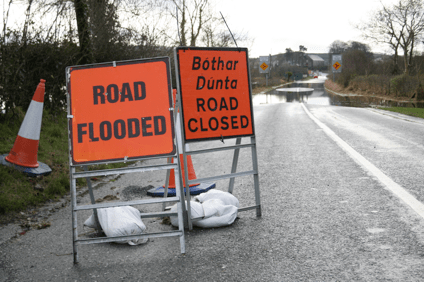
Oram to Castleblayney road – one of the many roads closed during recent flooding

The wettest December on record and a series of five storms so far this winter has left many people in Ireland reeling from the impact. Flooded houses, businesses and farmland have caused many people stress, inconvenience and financial loss. Many others have been marooned in their homes, with travelling out by car not an option.

Bad planning decisions and inappropriate land use have in many cases made the problems worse. Extreme weather events are linked to climate change and it is obvious now that there needs to be a rethink in terms of where houses and business premises are built in future and the capacity of existing infrastructure to cope with floods on the scale we are likely to experience.

Just a few weeks ago the Environmental Protection Agency (EPA) released their latest report on the impact of climate change on Ireland. It outlined how ‘heavy rainfall events are projected to increase during winter and autumn’ and how the frequency of storms will decrease but their intensity will increase. Shortly afterwards the Environmental Pillar (NGO) called on the government to bring in substantive land use changes to protect communities from increasingly frequent high rainfall events. They highlighted the need to restore wetlands, bogs, native woodlands and hedgerows as they can play a hugely important role in both preventing flooding and dealing with climate change. Dredging a long stretch of a river may alleviate flooding on that stretch but can often lead to flooding further downstream.

The Government’s CFRAM (Catchment Flood Risk Assessment and Management) process which has been underway for the past few years is running a year behind schedule and is coming too late for those affected by floods this winter. While CFRAM flood risk assessments have now been undertaken and flood maps drawn up for high risk areas, the actual draft Flood Risk Management Plans won’t go out to consultation until later this year. Implementation will follow. In Co Monaghan a set of flood maps for four ‘Areas for Further Assessment (AFAs)’ have been drawn up. The four areas are Monaghan Town, Carrickmacross, Ballybay and Inniskeen. See http://www.cfram.ie for details.

Extreme Weather Globally in 2015

The ‘El Niño’ warm ocean effect from the Pacific combined with climate change has led to extreme weather events globally in 2015. Severe floods hit many parts of South America while typhoons in the US and the Philippines resulted in much destruction, with dozens killed and many being made homeless. There has been an unprecedented ‘heat wave’ in the Arctic at the end of December causing temperatures in the North Pole to spike above freezing point. Climate change is already driving profound shifts in the Arctic ecosystem. Extreme heat waves in Pakistan and the Middle East killed thousands. A drought currently being experienced in Ethiopia and other parts of Africa means that millions are in need of emergency food aid. One of the effects of climate change is that it is partly the cause in the increase in refugee numbers arriving in Europe from Africa and the Middle East.

For the first time in recorded history, global levels of carbon dioxide (CO2) in the atmosphere averaged more than 400 parts per million (ppm) for an entire month in 2015. Scientists have warned that, in order to achieve safe levels, CO2 must be brought down to a maximum of 350ppm. Whether the Paris Climate Deal agrees in Decemember will keep warming to below 1.5C or even below 2C remains to be seen. It all depends of the implementation of the substantial reductions in emissions that are necessary. Everyone has a role to play – from large companies to us as individuals. This means reducing the production / use of fossil fuels and also reducing emissions of methane from livestock. Although Ireland is a small country, our emissions per person are among the highest in the world and we are likely to miss by 6% the EU 2020 targets of a 20% reduction in emissions as compared to 2005. We have a big challenge ahead.

Significance of Sustainable Development Goals

The 17 Sustainable Development Goals (Global Goals) agreed at the United Nations in September last, cover a wide range of areas and address the many causes of poverty, injustice and damage to our planet. The significance of the agreement on Goals is immense even though it was underreported in the media. Never before have the world’s countries come together to agree such a comprehensive agenda. Irish officials at the UN helped to ensure their passing and now they have just come into ‘effect’ – on New Year’s Day. The Global Goals apply to both developed and developing countries, and are as relevant to Ireland as to any other country. The Goals are backed up by 169 targets – the graphic below shows the main areas that the Goals address.

sus dev

One key Goal is that of ending global poverty by 2030. Many people might think this is over ambitious or even unrealistic. Unfortunately Ireland’s aid to the Developing World in 2015 has fallen to 0.4% of GDP. The target set back 14 years ago was 0.7% of GDP but it was never reached. This situation does not help in ensuring that resources are in place to support the implementation of the Sustainable Development Goals.

One of Ireland’s strengths is its number of Development Aid workers and volunteers spread throughout the world. Many of them work in difficult conditions and their great contribution in empowering communities is to be commended. Development education has a key role to play and in this regard the ‘Insight Programme’ of Drogheda based NGO Deveopment Perspectives will be arranging for 42 people to go to Tanzania for 3 weeks later this year. Places are currently available. See http://www.developmentperspectives.ie.

Transition Monaghan plan to run a number of events in 2016 relating to sustainability. If you would like to join in the planning of these events and initiatives please email us at transitionmonaghan@gmail.com.

January events guide can be found here

Waging War on Waste – at Christmas and Beyond


Jen McSreeJennifer McAree, an Environmental Scientist and member of Transition Monaghan says we can have a happy Christmas and at the same time reduce the vast amount of waste that we generate at this time of year.

Jennifer McAree –

loves Christmas but hates waste

Christmas 2015 is here and most of us have already stocked up on food and gifts for the season of merriment and indulgence. And what a build-up it’s been – Christmas begins in August in the retail world these days. There was no escaping the temptation, even if we all knew it was too soon.

According to a recent study, the Irish are the biggest spenders in Europe per capita at Christmas, splurging on average over €550 per person on gifts alone. The average budget of EU countries is approximately €250. Should we pat ourselves on the back for being generous or stand back and wonder at the extravagance? How much do we actually need? And is this pressure to spend coming from ubiquitous media advertising and recent American blow-in trends like ‘Black Friday’?

Growth is viewed by many as a good thing but when our economy tilts on how much people spend on ‘things’, it can be easy to get caught up in buying more. Many of the items we covet and buy require large amounts of resources and energy before they reach our stores. Food has been grown, watered, packaged and transported, sometimes thousands of miles. Products have been derived from natural or chemical sources, often made by labourers in a foreign land and shipped or flown in to fill floor space.

Nobody likes a Scrooge, but it’s healthy to question our actions and motives sometimes. We’re bombarded with so many tempting images and displays in the lead up to the big day that it can be difficult to view Christmas as anything other than a pleasure-seeking fest. After the holidays are over and we return to everyday life, what is it we really cherish? The swanky new iPhone and gimmicky gift sets or the memorable meet-ups with friends and family after months of separation?

A fantastic recent two-part series on BBC One highlighted our current consumer patterns called ‘Hugh’s War on Waste’, featuring celebrity chef Hugh Fearnley-Whitingstall. Britain wastes more food than any other European country, but Ireland is not far behind in per capita terms – and we share many of the same large supermarket chains. For example the Irish dispose of one million tonnes of food annually (i.e. 22 million wheelie bins). One third of this comes from households alone, with the average home wasting €700 worth of food each year.

Hugh challenged residents in an ordinary English neighbourhood to waste less and recycle more efficiently over several weeks. It encouraged a sea change in their behaviour and attitudes. He also demonstrated how many clothes we buy and discard in the contemporary world of fast fashion, revealing that it takes a shocking 10 minutes for people to dispose of seven tonnes of clothes (i.e. 10,000 garments) in Britain.

Sometimes it can seem pointless to make positive changes to our shopping and waste behaviour when we believe many others can’t be bothered. But where does all this ‘stuff’ go once we’re finished with it? Out of sight is out of mind – but not out of our environment. Thus our landfills are reaching full capacity despite impressive recycling figures.

It’s never too late to begin doing things differently. The New Year is a chance for everyone to begin afresh and approach our everyday buying and binning behaviour in a better way. For now, below are a few tips to get you started. (Suggestions inspired by ‘Eco Congregation Ireland’. For a full list see http://www.ecocongregationireland.com):

  • Buy organic, locally-produced food where you can
  • Buy local produced crafts
  • Recycle used cards
  • Steer clear of plastic if possible – recycle if not
  • Give vouchers for a meal out or cinema/theatre/concert tickets
  • Use a compost bin for all fruit & vegetable waste
  • Recycle real trees after Christmas
  • Consider buying rechargeable batteries instead of regular ones
  • Buy well-made, durable toys and gifts
  • Make a donation to a charity

The list of events for January can be found here

White Paper on Energy

The Environmental Pillar which is made up of 28 national environmental groups has welcomed the publication this week by the Minister for Energy of the White Paper on Energy. The Group says that the White Paper outlines a vision for an emission free future and is a first step in a road towards the end of the use of fossil fuels. With over 90 actions listed to achieve Ireland’s energy transition the document is broad in scope but the Environment Pillar says that it needs to be flexible enough to deliver zero emissions far sooner than the 2100 target. To read the White Paper on Energy see http://www.dcenr.gov.ie.

Transition Monaghan Chairperson Leaves Role

michealMícheál Callaghan, Chairperson of Transition Monaghan has withdrawn from his role as he has been nominated by the Green Party as their Dáil candidate for the Cavan- Monaghan constituency. Mícheál has been an integral part of Transition Monaghan from the very start having co-found the group (then known as Monaghan Ecological Group) back in 2011.  He has been a driver for many of the events and workshops we have held over the years and has contributed a number of articles to our ‘Sustainability Matters’ column in the Northern Standard newspaper.

Mícheál’s work ethic and enthusiasm  will be greatly missed but we at Transition Monaghan wish Mícheál the very best in his election campaign.

Paris Climate Conference: Implications for All of Us

The recently concluded UN climate change talks in Paris (COP21), which have been surrounded by much hype, have provoked widely diverging opinions. Transition Monaghan member, Mícheál Callaghan, was one of thousands of activists who travelled to Paris for the final days of the COP. He gives his views on the deal as well as well as possible next steps.

micheal


I was part of a delegation of Irish activists who travelled to Paris for the final days of the Conference of the Parties (COP). We felt it was important to travel and take part in actions and demonstrations to highlight the importance of a climate deal.

Mícheál Callaghan

Thousands of people from all walks of life made the journey, and in their coming together there was a sense of a unified and powerful climate justice movement. What was striking was that people of all ages were in attendance, reflecting the fact that climate change is an inter–generational issue.

Despite the ‘State of Emergency’, a number of demonstrations were facilitated by the French police. It was a privilege to have been involved in the ‘Red Lines’ action on Saturday morning. Over 15,000 people took to the streets to demand climate justice. With chants of ‘We are unstoppable, another world is possible’, it felt more like a celebration of a strengthening movement, rather than a traditional ‘protest’. Chants, banners and samba drums, created a euphoric atmosphere. The positivity of the throngs highlighted that even faced with huge global threats such as climate change and terrorism, people can unite for the common good.

MIXED OUTCOMES

“By comparison to what it could have been it’s a miracle. By comparison to what it should have been it’s a disaster.” British journalist George Monbiot aptly captures the spectrum of opinion on COP21.

The deal, aims to keep temperature rises well below 2 degrees, and as close to possible to 1.5 degrees. While this is a huge step in the right direction, the commitments made by individual countries as part of the agreement, would lead to temperature increases closer to 3 degrees. There is still huge work to be done to ensure that countries increase their pledges to meet the target of the Paris Agreement.

Some of the strongest criticism for the deal comes from its failure to adequately protect those most affected by climate change, in the developing world. As with many international agreements there is no mechanism to impose liability or sanctions on countries who do not meet their targets, meaning good – will, co – operation and civil society pressure will play an important role. 

WHERE TO NEXT?

First, the agreement to keep temperature changes as close to 1.5 degrees as possible will require a concerted effort by leaders from politics, business and civil society. It will need a shift in direction in all policy areas. Ireland will be bound by the EU’s commitment to reduce emissions by 40% by 2030. In doing so we have the opportunity to re-invent our economy and society, by providing sustainable jobs in agriculture (in particular organic and crop based farming), forestry, retro-fitting all buildings to make them more liveable and protecting our natural habitats, especially peatlands.

Secondly, the mass mobilisation of activists in Paris is only the beginning of a strengthening and determined movement for a better future. If world leaders do not step up to the mark, they can expect to be held to account by civil society. The Paris agreement has provided the opportunity for us to win the most important struggle of our time.

For further information on how you can become involved in playing your part in building a fossil fuel free Co. Monaghan, keep an eye on http://www.transitionmonaghan.org

December and January events can be found here and here respectively.