Initiatives to Avert or Prepare us for a Climate Crisis & Build Up Resilience

This week we look at events concerning the climate change issue and the need to be prepared for the challenges it poses for this and future generations. We report on our activities at the recent Taste of Monaghan festival and look ahead to the U3A (University of the Third Age) Climate Change conference in Monaghan on Friday, 23 October and to the ‘Convergence 2015’ events around Ireland on the theme of co-operatives and sustainable livelihoods. Finally we consider the response of major NGOs to the recent ‘climate’ legislation in Ireland in the context of the upcoming and crucial Climate Talks in Paris.
 taste of mon

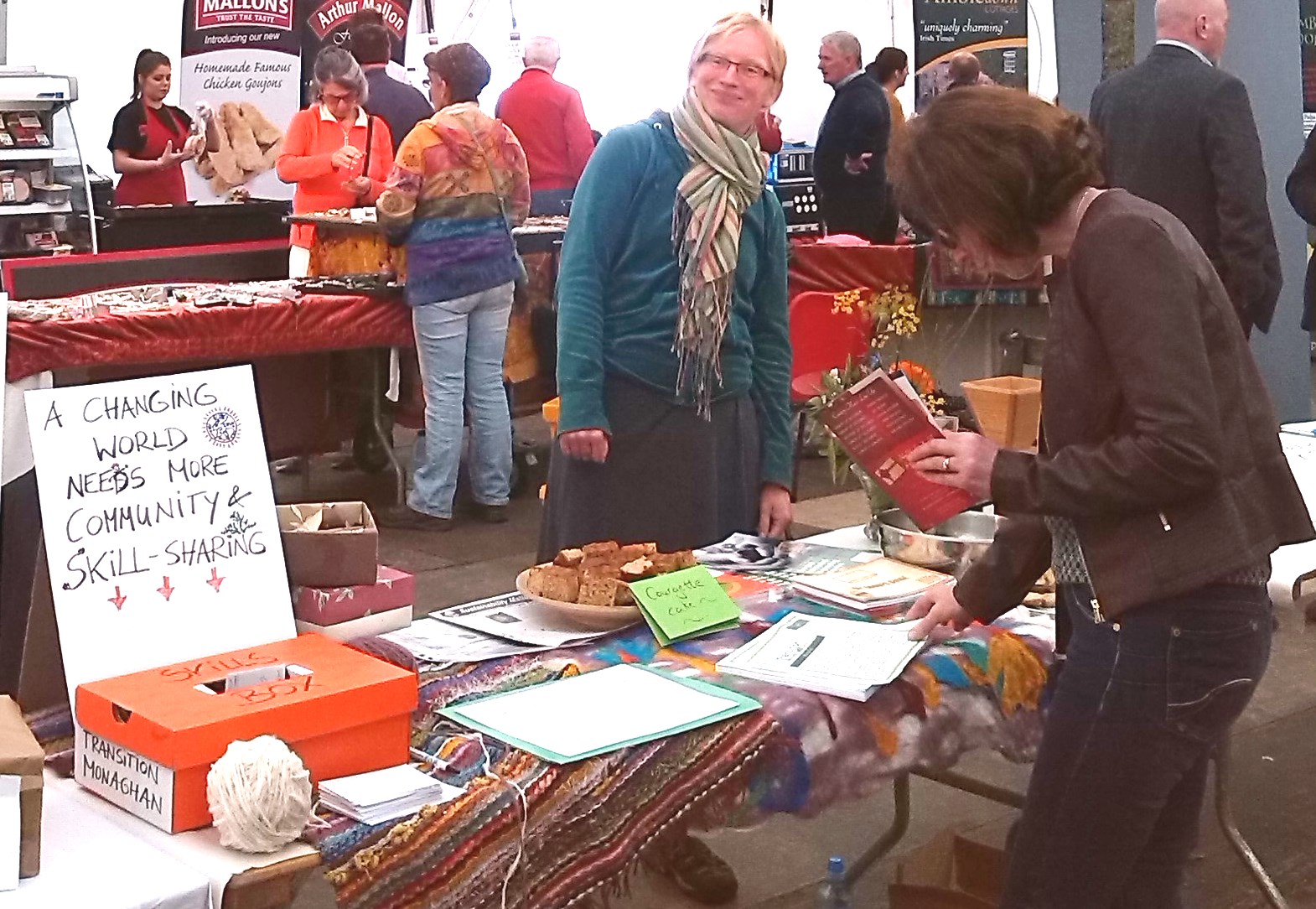
The Transition Monaghan stall at the recent Taste of Monaghan Festival

Transition at ‘Taste of Monaghan’

At our stall at the Taste of Monaghan Festival we used the opportunity to talk to many different people and display information about our group and other local initiatives like  GIY (Grow it Yourself). In a changing world there is a need for more community and skill-sharing and one of our main aims as a local sustainability group is to support and facilitate such initiatives.

We also showed some traditional skills and products like knitting socks and squares and examples of handmade bags and scarves from recycled materials. On the food side we invited visitors to sample our locally made sour-dough wholemeal bread, quince jam, spelt cookies and courgette cake. These hand made products were so popular that quite a few visitors asked where to buy them or wanted the recipes. A huge success was the hand operated grain mill which over the course of the day produced 600 gr of wholemeal flour that could be used for two breads the next day. We also did a survey on what people think or feel when they hear the term ‘Climate Change’. The survey results will publish here in the near future.

Our ‘skills box’, which was a collection point for local skills on offer/sought after, acted as a starting point for developing skill-sharing events, courses, networks and/or online-projects. It generated a lot of interest and we now have a great range of skills offered by members of the local community that are available to be shared among us. They range from green wood-working to beauty and make-up and from foreign languages to knitting / crochet.

Inter – generational climate conference in Monaghan

In Monaghan, a major conference on climate change is being organised for Friday, 23 October in the Four Seasons Hotel. The organisers – U3A (University of the Third Age) – have a great line up of speakers. These include Fr Seán McDonagh (theologian and author on climate change), Oisín Coughlan (Director, Friends of the Earth), Lorna Gold (Policy Director, Trócaire). There will also be activists of all ages, with representation from older and younger people’s environmental groups. It is open to members of the public, for a fee of €20, which includes a light lunch and tea / coffee. For further details and registration visit monaghanu3a.com

‘Convergence’ Festival of co – operatives and collaboration

‘Convergence 2015’ events will focus on providing ‘sustainable livelihoods’. They will take place across the island of Ireland between Tuesday, 19 & Saturday, 31 October The events vary in format and cover topics such as community ownership; co-housing; community share options; renewable energy co-operatives; co-working; community owned pubs and shops; buyers’ clubs; artist and food co-ops and the emerging collaborative economy. For details see http://www.cultivate.ie

Reaction to ‘Climate Bill’

Last week the Climate Action and Low Carbon Bill 2015 passed Dáil Éireann. This is the culmination of many years of campaigning by Irish environmental groups. It received a cautious welcome from environmental NGOs, who had called for stricter targets in legislation. The Environmental Pillar, an advocacy coalition of 28 Irish Environmental NGOs, is now calling on the Government to put in place a solid plan to cut greenhouse gas emissions across Ireland’s economy. The transition and mitigation plan, which will set out emissions reductions, is not due to be revealed for 18 months after the bill is passed. This is a long delay, and takes some of the political attention away from climate change in the upcoming election.

Trocaire, while welcoming the legislation, is calling on the Government to adhere to the principle of climate justice and to make a strong climate finance commitment to support vulnerable communities in the developing world who are already disproportionately impacted by climate change.

Preparing for Paris ClimateSummit

We need to ensure that our politicians take the climate issue seriously at national, EU and UN level especially in the run up to the all-important Climate Change summit in Paris, this December. On Sunday, 29 November, the eve of the Paris summit, you can show your concern by joining a peaceful march in Dublin being organised by the ‘Stop Climate Chaos’ network.  Find out more on the ‘Dublin Climate March’ Facebook page, or keep an eye on this column. If you are interested in travelling from Monaghan to the march, please e-mail  transitionmonaghan@gmail.com. Depending on numbers interested, we may organise a bus to attend.

A Monaghan View of Naomi Klein’s Film on Climate Change ‘This Changes Everything’

Recently hundreds of people gathered under a clear night sky in Dublin’s Merrion Square for the premiere of the film, ‘This Changes Everything’. Transition Monaghan members Mícheál Callaghan, Conan Connolly and Jennifer McAree were in attendance.  Here they review this landmark film on climate change.

The film is based on the much acclaimed book of the same name, by world – renowned author and activist, Naomi Klein. In the making of the book and film, Klein discusses how she had to address her own ‘climate denial’. For Klein, it wasn’t so much that she denied that climate change was happening, but more so a denial on how it would impact our way of life. For Klein, she went through a realisation that climate change does and will change everything, if it is unabated, and that it is up to everyone to become active in trying to stop it. However, while the science is stark, that we are running out of time to secure a viable future for the planet, ‘This Changes Everything’ attempts to galvanise grass – roots activists in a bid to re – write our prevailing economic and social narrative which in creating our environmental crisis, has also led to chronic social and economic inequality around the world.

The film itself was shot on five continents and featured struggles of various grassroots organisations against dirty energy projects. The common thread between many of these campaigners was not that they fitted the stereotype of environmentalists or ecologists, but that many of them were ordinary people who suddenly came face to face with fossil fuel energy projects which threatened their existence in places they had lived their whole lives. For example, Klein visits one native Canadian (First Nations) community in Alberta, whose peaceful existence has been severely disrupted by intensive drilling for a particularly dirty oil, known as tar sands. The film encapsulated health difficulties they faced, as well as battles for information regarding the project. In particularly poignant scene, members of the community are visibly upset and frustrated at the fact that they are refused entry into an area which their community had inhabited and visited for thousands of years.

The film also features a community in Greece who are fighting against the destruction of their natural environment. In the aftermath of the 2008 economic crisis, short – term drilling and mining projects are being justified on economic reasons, despite the evidence that the planet must move away from dirty energy in order to prevent future economic and social strife.

Importantly, however, the film also shows that an alternative is possible. Towards the end of the film, focus shifts to clean energy projects, which have been particularly successful, for example, wind energy in Germany, where towns and villages control and benefit from their own power supply. At the end of the film, there was a call for all those in attendance to take up the call for climate action in Ireland. Slowly, but surely grassroots action is gaining momentum around the world. Thanks to the work of activists and ordinary citizens, universities, schools and churches across the world are removing their investments from fossil fuels. Recently, acclaimed academic and author, Noam Chomsky, stated his support for the divestment group at Queen’s University Belfast.

On the 29th of November, people across the world will gather, in solidarity with those worst affected by climate change, in the global climate march. Last year over 400,000 people took to the streets, the largest number ever to demand action on climate change. It is hoped that this year even more people will do the same. You can join in the march in Dublin on the 29th of Novebmer. Details of this will be publicised in this column and on our facebook page in the coming weeks. Finally, this December, world leaders will gather in Paris in an attempt to finally sign a new global agreement on climate change, that will compel states to cut their emissions to help stabilise the earth’s climate. While, there have been some positive moves by the USA and China, the view among the NGO community is that pledges made are still too small to stay below the critical 2 degrees Celsius threshold of warming. Therefore, everyone in Co. Monaghan can play an important role in ensuring strong action from Ireland, by attending events, marches, and most importantly asking politicians and public representatives to take strong action on climate change. If you would like more information on how you can get involved in activism in the lead up to the Paris conference, or if you would like to find out what Transition Monaghan plans to do, please see transitionmonaghan.org or email transitionmonaghan@gmail.com.

Reflections on the Refugee Crisis

srSr. Lena Deevy, a member of the Little Sisters of the Assumption is a former Executive Director of the Irish International Immigrant Centre in Boston. She was among the recipients of the first annual Presidential Distinguished Service Award for the Irish Abroad. Sr. Lena has been active in many international peace and justice initiatives and campaigns. Originally from Co Laois but now  living near Carrickmacross, she continues her peace and justice work and is focusing in particular on the current refugee crisis. This week we invited Sr. Lena to reflect  on our role in responding to the crisis. She writes…

Daily we are reminded of the numbers of men, women & children fleeing the war in Syria.  We struggle to come up with an appropriate response we can manage.   We applaud the great work of the Irish Naval service in rescuing thousands of individuals from certain death at sea but we could play a greater role in the resettlement of refugees. As a country and as people our responses fluctuate  from a great compassion, generosity  and wanting to help,  to a  fear of being ‘taken over’ by people whose ethnicity, language, customs, and religious traditions are different,  and a fear that it will impact negatively on our  services for our own ‘vulnerable’ people.

Pope Francis has called on every parish and religious community to accommodate one refugee family and recently we were reminded by our President that “there are times in our life when we have to decide to do what is right”.   I believe that time is now.   We Irish are compassionate and caring and can respond with generosity. The collective outpouring of generosity and concern expressed by thousands of individuals in response to appeals for help proves this. In our own county,  Monaghan Credit Unions are helping to fund the cost of items needed by refugee families and unaccompanied minors as they reach Milan in Italy. Monaghan Institute has set up a collection point for goods to delivered to Syrian refugees who are camped at Calais in France. These initiatives are commendable.

Jean Claude Juncker, Head of the European Commission reminded us that it should not require a punch in the moral solar plexus to remember our past.  He went on to say: “Imagine for a second if it were you, your children in your arms, the world you know torn apart around you. There is no price you would not pay, no wall you would not climb, and no sea you would not go to sea in, no border you would not cross.”

I suggest that perhaps our fears around the issue are unfounded and instead of seeing migrants or refugees as a ‘problem’ and a financial liability we view them as an opportunity to be our best selves as a compassionate and generous people and in the process gain financially and culturally. Imagine a town where much of the buildings are boarded up and the younger population have emigrated and the local people are disheartened.   Welcoming refugees could be mutually beneficial.   Yes, our way of life may be disrupted but it could also be enriched by sharing our culture and customs with ‘strangers’ and telling our stories, inviting them to be part of our GAA games, cultural nights etc. We would expand our knowledge of others cultures and customs and in turn we learn about the life of migrants and their fears, hopes and dreams.

However for this to happen, a different ‘mind set’ needs to be brought to the resettlement programmes.  Local communities and agencies need to be involved at all levels and the hopes and fears of the refugees need to be respected.   Additional resources need to be invested into communities to provide culturally appropriate services, and ways to welcome people.   With thoughtful and planned local integration programme refugees could bring much needed lifeblood and indeed economic stimulus to small towns.

Ireland needs to be part of the solution — it needs to promote a unified compassionate response.   The numbers are daunting but we can do more. We can lobby, pray and work for the safety and care of the refugees in their search for acceptance and that the EU, the UN, and world leaders will be inspired in their efforts to bring about a successful and peaceful resolution to the conflict.

Last week, I and a group of individuals from six other religious orders, members of the Irish branch of Vivat International, an international peace and justice NGO with consultative status at the UN, highlighted via a national newspaper the fact that we are deeply concerned about this worsening humanitarian crisis.  You can also play your part by contacting your local Oireachtas representatives and asking them if they will lobby so that the Government will:

  • Communicate fully with NGO’s, local communities, and relevant agencies when refugees are being housed in an area.
  • Ensure that resources needed to help the homeless are not diverted to the refugee crisis.
  • Ensure that families and individuals in ‘Direct Provision’ for years are fast tracked out of Direct Provision.
  • Continue the great work of the Irish Navy Service in saving lives in the Mediterranean
  • Call on the European Commission to be a strong voice for refugees and migrants at a European level and for a united EU response
  • Encourage and support lasting solutions by world powers to tackle the conflicts and the climate crisis that lead to refugees fleeing their own countries.

All-Ireland Plan to Save our Bees & Other Pollinators

The recent launch of the All-Ireland Pollinator Plan identifies actions to help protect pollinators and the livelihoods of farmers who rely on their invaluable pollination service. In recent years the decline of our wild flowers has been decimating our bees and pollinating insects. This Plan which aims to help our bees and other pollinating insects to flourish has been agreed by 68 organisations and makes Ireland one of the first countries in Europe to have such a strategy.

Pic 1

When we think of pollinating insects we usually think of the honey bees but there are many other bees and insects that pollinate our crops and plants. Most of them are declining in numbers in recent years which if it continues would be disastrous for many crops and wild plants and ultimately for humanity and the planet.

This new Pollinator Plan identifies actions that can be taken on farmland, public land and private land to deal with the problem. These actions include creating pollinator highways along our transport routes, making our public parks pollinator friendly and encouraging the public to see their gardens as potential pit-stops for our busy bees. It is also about raising awareness on pollinators and how to protect them. With the support of organisations                        A swarm of honey bees gather         like An Taisce Green-Schools, it aims                        on a tree branch in                             to ensure that everyone, from schoolchildren to Castleblayney earlier this year.         farmers, gardeners, local authorities and businesses,                                                            knows what pollinators need and which simple cost-                                                              effective actions they can take to help. The Plan will                                                              also support Ireland’s bee-keepers in keeping our                                                                  Honeybees healthy.

“Unfortunately, Irish pollinators are in decline, with one third of our 98 bee species threatened with extinction,” said Dr Úna Fitzpatrick from the National Biodiversity Data Centre, who chaired the Plan steering group. She added “bees are declining because we’ve drastically reduced the areas where they can nest and the amount of food our landscape provides for them.” If you’re a pollinator, finding enough food is the biggest challenge you have to face. Fertiliser application has resulted in increased crop yields, but in strong declines in wild flowers in managed field and in adjacent semi-natural habitats. Our tendency to tidy up the landscape rather than allowing wildflowers to grow along roadsides, field margins, and in parks and gardens is also playing a big part in fewer of these resources being available. The Pollinator Plan is not just about protecting bees but also about protecting the livelihood of farmers and growers who rely on their ‘free’ pollinator service, which allows consumers to buy Irish fruit and vegetables at an affordable price. This service is worth over £7 million per annum for apples in Northern Ireland, and €3.9 million for oilseed rape in the Republic of Ireland.

It’s not just crops; about three-quarters of our wild plants also require insect pollinators. Without pollinators the Irish landscape would be a very different and much less beautiful place. The value of

pollination to tourism and branding our produce abroad is enormous, but has never been assessed in a monetary sense. Dr Jane Stout, Associate Professor in Botany at Trinity College Dublin, who co-chaired the group, added: “If we want pollinators to be available to pollinate our crops and wild plants for future generations we need to manage the landscape in a more sustainable way and create a joined-up network of diverse and flower-rich habitats as well as reduce our use of chemical insecticides. This doesn’t just mean in the countryside, but in our towns and villages as well.” Responsibility for delivering the 81 actions has been shared out between the supporting organisations, which include the Department of Agriculture, Food & the Marine, Department of Agriculture and Rural Development, Teagasc, Bord Bía, Northern Ireland Environment Agency, Heritage Council, Fáilte Ireland, An Taisce Green Schools, Tidy Towns and Federation of Irish Beekeepers’ Associations,.

The National Biodiversity Data Centre will track success in the Plan by measuring increases in the abundance and diversity of pollinators within the Irish landscape as the 81 actions are implemented. For details of the Plan and practical tips to help our pollinators see http://www.biodiversityireland.ie/pollinator-plan.

Pic 2

              A typical insect / bee hotel is a home for pollinators and a great educational           resource for children

In our own county the initiative to develop Monaghan as a biodiversity town will involve helping to make the area in and around Monaghan town more suitable for pollinating insects. This will involve planting apple trees and wild flowers and so will complement the Pollinator Plan. For details see http://www.monaghantownbiodiversity.com. The challenge of addressing the decline of bees globally will be one that local man Philip McCabe will be tackling in his new role as President of Apimondia, the International Federation of Beekeepers’ Associations.

‘The True Cost’ of the Clothes we Wear

When was the last time you bought a cheap t-shirt in a high street store and thought about its origin or how it was made? Jenniftrue coster McAree of Transition Monaghan reviews a ground-breaking documentary film called ‘The True Cost’ that pulls back the curtain on the untold story and asks us to consider, ‘who really pays the price for our clothing?’
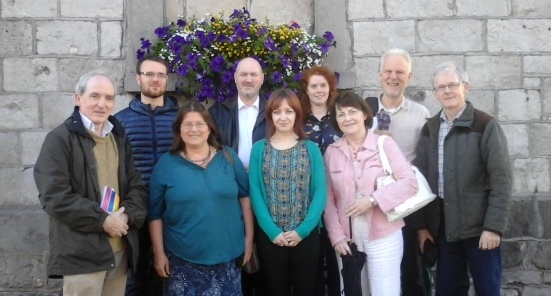
Photo courtesy: ‘True Cost’

I watched this documentary recently on Netflix. I have an interest in both fashion and sustainability, so the film’s message of the disconnection between the act of buying my clothes and their source really hit home. Most of us don’t think about the origin of the clothes we buy. We are delighted to bag a bargain €20 pair of jeans, but the person making them might receive under 50c for the privilege.

Ninety-seven per cent of our clothes are now made overseas. There are 40 million garment workers worldwide and of these, 85% are women. The ‘True Cost’ film focused on Bangladesh, India and Cambodia, where labour costs are low and weak worker protection and environmental laws exist.

Conditions in garment factories were highlighted in April 2013 when the ‘Rana Plaza’ complex collapsed in Dhaka, Bangladesh, killing 1,133 people and injuring 2,500. Many were employed to produce clothes for stores like H&M and Primark (Penneys). We have become de-sensitised to the term ‘sweatshop’, but it really comes to life on screen. On a trip to Bangladesh some years ago, creators of the film saw that each employee worked very long days and was under strict instructions to make up to one hundred pieces an hour. They had two toilet breaks per day and if anyone fell ill and missed work they were fired and replaced immediately.

Personal stories were told throughout the film. An intelligent young Bangladeshi woman works hard to survive and raise her little girl. She cannot afford child-care and by taking her daughter to the factory she exposes her to harsh chemicals, so she must leave her with relatives in the countryside for good. Villages in India have been ruined with chemicals running directly into water supplies from the dyeing processes. Numerous local residents have suffered from cancer and other diseases which it is claimed is related to these chemicals. In the countryside, heavy spraying of pesticides on cotton crops has led to many children being born with horrific life-long complications.

In Cambodia, garment workers tried to protest peacefully about their paltry wages and conditions, but some were attacked and even killed by police in the process. Large fashion multinationals say they have no control over foreign workers’ circumstances, but that they are trying. An example of a company that is recognised as a pioneer in Fair Trade and environmentally sustainable fashion is the UK based company ‘People Tree’. Unfortunately few such alternative companies exist, but the fashion world is starting to take note in some quarters.

This documentary was hard to watch but it has catalysed a change in my buying behaviour. I have since avoided high street shops where possible, look at labels and follow websites such as www.ethicalconsumer.org. Clothes made in European countries like Portugal and Romania are more likely to be ethically produced and organic cotton is best. I visit charity shops more often and plan to take a sewing course in order to make and mend by myself! If you do one thing this week, be sure to watch ‘The True Cost’ on Netflix, download it or buy the DVD from http://www.truecostmovie.com.

Clogher Justice, Peace & Integrity of Creation Group Launched Bishop MacDaid urges action on the refugee crisis

clogher

Pictured at the launch of the Clogher Justice, Peace & Integrity of Creation Group in Enniskillen were: front row (left to right) Ann Molloy, Neville Armstrong, Fr Joe McVeigh, Patricia McKeever, Bishop Liam MacDaid (who launched the Group), Andrea McManus and Sr Mary Kate Hagan. Back row: Sr Nellie McLaughlin, Paddy Gilgunn, Liam Murtagh and Dermot McCarron.

The Clogher Justice, Peace and Integrity of Creation Group is a new diocesan based group that aims to highlight issues of social injustice at home and abroad and undertake or support local responses. In launching the Group, Bishop Liam McDaid said that he believed that the Group will “help all of us in this beautiful part of our world to be more aware of our responsibilities with regard to justice and human rights and the protection of Creation”.

The formation of Justice, Peace and Integrity of Creation Groups in each diocese is being encouraged by Catholic bishops nationally. Members of Clogher Group come from Counties Monaghan, Fermanagh and Donegal. The Chairperson is Patricia McKeever and the Secretary of the Group is Neville Armstrong. The Group was convened by Fr Joe McVeigh and support in its development was provided by Roisin O’Hara of Trocaire. The launch on Thursday, 3 September took

place at the premises of Waterways Ireland in Enniskillen and was very well attended. Among the various speakers was Dean Kenny Hall of the Church of Ireland, who in his address wished the initiative well, saying that its objectives are ones that are shared by all Christian churches.

The Group will focus initially on the issue of climate justice and also on the homelessness issue. In his address Bishop McDaid referred to the current refugee crisis. “We have all been shocked and moved to seek appropriate action when we are brought face to face with the plight of refugees in different parts of our world…. We realise that we all need to be disposed to search ourselves and to urge our governments to search for the causes of this distress and to take whatever steps are necessary to create a situation in our world where the gifts of creation are shared in such a way that justice can be seen in action and we never witness the horror of a mother and child found washed up dead on a shoreline trying to escape from a situation which should not exist”.

The Clogher Justice, Peace and Integrity of Creation Group plans to develop initiatives that will involve parish groups and, in particular, younger people throughout the diocese. For further information on the Group, email clogherjpic@gmail.com

Transition Monaghan AGM: New Members Sought for Innovative Projects

Pictured above are some of those who attended the recent Transition Monaghan AGM.   Front row (left to right): Liam Murtagh, Margaret Palmer, Jennifer McAree, Susanah McKeon, John McKeon.  Back row:  Mícheál Callaghan, Michael Connolly, Dearbhla Lenehan and Ollan Herr.

Pictured above are some of those who attended the recent Transition Monaghan AGM. Front row (left to right): Liam Murtagh, Margaret Palmer, Jennifer McAree, Susanah McKeon, John McKeon. Back row: Mícheál Callaghan, Michael Connolly, Dearbhla Lenehan and Ollan Herr.

On Saturday last Transition Monaghan elected their new committee for 2015 – 2016 at their AGM in Monaghan town. The group also reflected on a busy year and discussed a number of innovative sustainability projects planned for the coming year. Mícheál Callaghan who was re-elected Chairperson says that anyone who is interested in joining the Group to become involved in a project would be welcomed by the group.

The new committee is comprised of Mícheál Callaghan (Chairperson), Conan Connolly (Secretary) and Michael Connolly (Treasurer). Transition Monaghan is a county wide voluntary initiative which seeks to promote sustainability and well–being in Co. Monaghan. As well as this weekly column, we run a number of events throughout the year, such as our cost efficient home event last year. We have just received a grant from Monaghan County Council to take part in their 2016 commemorations next year. We will begin work shortly on organising an event which looks at how various groups can improve the quality of life in Monghan over the next 100 years, with various sustainability challenges in mind, such as climate change. We will also focus heavily on updating our website and reaching out to new members over the coming years. Membership is free, and we always welcome new input and ideas. If you feel that you have an idea to suggest, or some time to give to the group over the coming year we would love to hear from you. In particular, we would welcome any volunteers with expertise in PR and web – design, as well as anyone with a background in the arts or culture who may have ideas for creative campaigns and event. You can get in touch with us on transitionmonaghan@gmail.com

Mobilising for Paris Climate Conference

The Climate Conference (COP21) in Paris this December represents an important moment in the struggle to tackle climate change. For two weeks (30 November – 11 December) leaders and teams of negotiators will be locked away in negotiations to hammer out a new global deal on climate change. Here in Ireland the ‘Stop Climate Chaos’ coalition is planning to facilitate a group of people to travel to Paris to participate in activities on 11 & 12 December. As part of the mobilising of young people An Taisce proposes to create a ‘National Youth Forum for Engagement with Climate Change’. They are seeking crowdfunding support, i.e. donations in order to help support the initiative. For details on the above see ‘Latest News’ at www.antaisce.org

Thought for the Week

Earth Overshoot Day fell on 13 August and it’s getting earlier each year. Humanity has already used up 100 per cent of the resources ‘budget’ produced by the Earth this year, which means that any consumption from now on represents an unsustainable burden on the planet , i.e. mainly in the form of biodiversity loss and the effects of climate change. ‘Earth Overshoot Day’, the moment when humanity exceeds nature’s budget for the year was reached six days earlier than in 2014. The Global Footprint Network (GFN) sustainability think-tank tells us that humanity lived within the Earth’s means up until 1970 but, driven largely by carbon emissions, it has been steadily increasing the debt ever since. See http://www.earthovershootday.org.

Transition Monaghan Group’s Invitation to AGM

Transition Monaghan will hold their Annual General Meeting on Saturday, 29 August in the meeting room of Andy’s Bar & Restaurant, Monaghan, at 3pm. Chairperson of the group, Mícheál Callaghan says that everyone is welcome to the AGM and that the event is intended to provide an opportunity to learn more about the work of Transition Monaghan and to see if they wish to be involved. He outlines below the type of activities the group undertakes.

Transition Monaghan was founded in March 2013, and is part of the worldwide Transition Town movement, founded in Kinsale, which aims to promote local sustainability and boost well – being in communities. As well as our regular column Northern Standard column, we hold regular events which promote aspects of sustainable living, and we also collaborate with other community groups on local projects. In spring of this year, we organised a free public event, ‘Your cost efficient home’, which featured presentations on how to reduce energy usage and reduce bills in the household. Last year we ran an ‘Introduction to Permaculture’ course, which looked at ways of designing sustainable systems for gardening, home energy usage and other aspects of life. We hope to run a sustainability skills seminar or festival in the near future. Currently we are collaborating with Monaghan Tidy Towns on a biodiversity project in and around Monaghan town.

We are always open to new ideas – including fun ones! – and welcome new volunteer input. ‘With the all-important climate change conference this year in Paris and our natural world being put under ever greater pressure there has never been a better or more important time to be involved in promoting sustainability. Further information about Transition Monaghan can be found on our Facebook page or our website http://www.transitionmonaghan.org. Queries may be emailed to transitionmonaghan@gmail.com.

Spud Tasting Competition This Weekend in Carrickmacross

Untitled1

This Saturday, Carrickmacross will see its very own spud tasting competition (An Spud Off Mór) take place in John Joe Cunningham’s at 1pm. Potatoes can be boiled or steamed, without any added ingredients, and will be blind test tasted by a panel of tasters. The idea is to promote ‘growing your own’ and to have a fun competition that encourages everyone to ‘savour the flavour’ of local potatoes. Anyone from South Monaghan wishing to enter their spuds should contact Conan on 086 064 1864. Further details on entry and criteria are available at http://www.transitionmonaghan.org.

                                                                 Conan Connolly is inviting people to enter                                                                           or just come along to this Saturday’s                                                                spud tasting competition in Carrickmacross.