Upcoming events & notices for February

Eco-Congregation Ireland event: Climate scientist Prof John Sweeney of NUI Maynooth will be keynote speaker in Regional Cultural Centre in Letterkenny on Friday, 13 February at 7.30pm. See www.ecocongregationireland.com

.Climate Conversations 2015:Bringing People Together for a New Understanding on Climate Change’ – a series of proposed events in Ireland in early 2015. See www.climategathering.org

Climate Change and the Well-Being of the Community: Weekend of 6 – 8 February.  Scottish ecologist Dr Alastair McIntosh will be keynote speaker at ‘Reinhabiting the Earth’ Spring Conference at  Drumalis, Larne, Co Antrim. See www.ecocongregationireland.com or www.drumalis.co.uk.

Afri Féile Bríde 2015, ’Occupy the Imagination’ (Workshop): Saturday, 7 February (11am -5pm) in the Solas Bhríde Centre, Kildare town.  See http://www.afri.ie.

Your Views Sought on Future Retail Development in Co Monaghan:  To give your views, please complete Monaghan Co Council’s online survey by Thursday 11 February. To access it, see ‘News & Events’ at http://www.monaghan.ie/en/home.

Talk on Climate Change (Eco-Congregation Ireland event): Friday, 13 February at 7.30pm in Regional Cultural Centre, Letterkennny.  Speaker: climate scientist Prof John Sweeney of NUI Maynooth. See www.ecocongregationireland.com.

Recycling Arts & Crafts Workshops for Children on Valentine’s Day: Monaghan Town Library  on Saturday, 14 February. Booking essential. Tel 047-81830. Limited places available for the free workshops.

Fossil Fuel Divestment Day (Dublin): Saturday, 14 February. See Fossil Fuel Divestment Gathering – Dublin on Facebook.

Trocaire Primary / Postprimary Classroom Resources for Lent 2015. The theme is climate change and how it is affecting communities around the world. See www.trocaire.org/education/lent2015

Organic Centre in 2015: The Centre’s seed / course catalogue for 2015 is now available. Courses commence on Saturday, 21 February. Some special events to mark the Centre’s 20th anniversary are planned for 2015. See www.theorganiccentre.ie.

Ecology Sunday ‘Salute to Spring @ Navan’: Sunday, 22 February (11am – 3pm) at Navan Centre & Fort, Armagh. A free ‘drop in’ event celebrating the arrival of Spring including  looking at flowers, plants, insects and bird calls. Take a ‘plant identification’ walk and even get to plant your own seeds and bulbs.

Springtime Walks & Talks at the Botanic Gardens: see ‘Events’ at http://www.botanicgardens.ie.

Events at Armagh Planetarium: (1) Electric Half Term, 16-21 February, 10am-5pm. Digital Theatre & Magic Science hands-on workshop (2) Stargazer, Saturday, 28 February 12.30-3pm with Mark Thompson of BBC Stargazing LIVE. See http://www.armaghplanet.com.

Fruit & Nut Tree – Sales & Pruning / Grafting Spring Courses: The Sustainability Institute, Westport, Co. Mayo. See www.fruitandnut.ie

Eco Eye: The new series on RTE 1 is broadcast on Tuesdays at 7pm. Catch up on them on the RTE Player and on YouTube.  See http://www.earthhorizon.ie.

NOTICES FOR BUSINESSES, PUBLIC BODIES, NGOs & JOBSEEKERS

Energy Management Training for Management  / Staff of Schools & Colleges. Workshop 1 on Tuesday, 3 February and Workshop 2 on Tuesday, 10 March in Louth – Meath Eduction Centre. See ‘Energy Managment Course’ at www.energyineducation.ie

2015 IrBEA National Bioenergy Conference: Wednesday, 4 February in Dublin. Theme: ‘From Bioenergy Plan …to Action?’ See www.irbea.ie

STEM Project – Business Networking: Sustainability Project’s closing event on Thursday, 12 February at 10am in Armagh City Hotel. Keynote Speaker:  Susan Hayes, Managing Director of Hayes Culleton – “The Positive Economist”. See ‘Events’ at www.stemproject.com

Irish Renewable Energy Summit: Thursday, 19 February in Dublin. See www.energyireland.ie

Introduction to Organic Production (Fetac Level 5): 10, 18, 24 March & 1 April (10am-5pm) Teagasc, Ballyhaise, Co Cavan. See ‘Events’ at http://www.teagasc.ie.
Climate Bill: Will it be an adequate response?

This week the long awaited Climate Bill was published by the Government. It came a few days after NASA confirmed that 2014 was the hottest year since records began. The Bill sets out the intention of the Government to move Ireland to a low carbon economy by 2050.  The lack of specific targets for emission reductions in this proposed law has been criticised by many environmental groups. This week has also seen Pope Francis highlighting the issue of climate change. Here in Ireland the issue was also highlighted by a visit to Dublin by world famous climate scientist Dr Michael Mann.

The Minister for the Environment, Alan Kelly TD said that the Climate Bill will involve ‘National Mitigation Plans’ which will set out how our national greenhouse gas emissions are to be reduced. There will also be a ‘National Adaptation Framework’ which will outline the national strategy for adapting to climate change. The news was welcomed by the Government parties. A feature of the Bill will also be the setting up of an expert advisory council which will advise and make recommendations to the Minister for the Environment. This feature has been one of the criticism made by Oisin Coughlan of Friends of the Earth who said: “The Bill does not include a definition of low carbon, it doesn’t guarantee the independence of the Council, and it doesn’t include the principles of climate justice,” Climate scientist Professor John Sweeney of NUI Maynooth said: “The clock is ticking, alarm bells are ringing … but we’re pressing the snooze button”.   


In the past week, Pope Francis visited the Philippines. Just over a year ago Typhoon Haiyan caused widespread devastation and loss of life through a region of the Philippines.  The severity of the typhoon was attributed by many to the changing global climate. In a comment as he set out on his trip, Pope Francis said:  “I don’t know if it is all (man’s fault) but the majority is, for the most part, it is man who continuously slaps down nature.” Later this year the Pope plans to issue a major encyclical on climate change.

This week also saw the visit to Ireland of renowned climate scientist Dr Michael Mann of Penn State University. He is the originator of ‘The Hockey Stick’ – a simple, easy-to-understand graph which he and his colleagues constructed to depict changes in Earth’s temperature back to 1000 AD and which clearly highlights the current upward trend. His lecture in Trinity College outlined how he has responded to the disinformation that has been generated by the campaign to deny the reality of climate change. Commenting on the Climate Bill Dr Mann said that it was a “good starting point for debate”.

The warming of the planet is being caused largely by our use of fossil fuels – oil, coal, peat and gas. The ‘Fossil Fuel Divestment’ campaign takes the fossil fuel industry to task for its involvement in the climate crisis. The climate organisation 350.org is calling for organisations and in particular for universities and churches to divest from fossil fuels. On Saturday, 14 February, towns and cities across the world, including Dublin, will host events as part of Global Divestment Day.  More details on the event will be available in the coming weeks.


Decline of our rural towns and villages needs to be addressed – An Taisce

An Taisce, The National Trust for Ireland has called on the Government to take rural settlement seriously in the upcoming review of the National Spatial Strategy 2002 -2020. The organisation points to what it terms as the ongoing ‘suburbanisation of rural Ireland’ and the consequent decline of our rural towns and villages.

An Taisce has published five principles for sustainable rural settlement which they say should be taken into account in the upcoming review of the Spatial Strategy.

  1. A strong network of thriving towns and villages is fundamental for rural development.
  2. Scattered housing in unserviced locations should be restricted and instead directed to rural towns and villages.
  3. Implement a ‘Serviced Sites Initiative’ in rural towns and villages as an alternative to scattered housing.
  4. Rural Ireland is a critical resource for a post-carbon world.
  5. Manage the economic, social and environmental legacy of scattered housing.

An Taisce says that none of these principles are radical as they are all supported by numerous national planning policy documents but they have not been properly applied in practice. The organisation claims that evidence clearly shows that the highly dispersed settlement patterns that have been allowed to take hold are extremely costly and this has stored up significant social, economic and environmental problems that are to the long-term detriment of rural communities and the rural economy. For more on this initiative and on the work of An Taisce see http://www.antaisce.org.

South Monaghan ‘An Spud Off Mór’

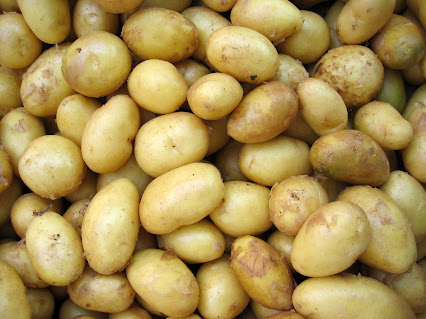
Transition Monaghan are organising a spud tasting competition for the South Monaghan area. The ‘Spud off’ will consist of blind tastings of home grown potatoes, from growers in the South Monaghan area and will take place during the summer.

The event is being organised by Transition Monaghan member Conan Connolly, to promote growing  your own food, and to create a bit of friendly rivalry between potato growers. The competition is modeled on a ‘Spud Off’ run in Co. Kerry, which recently featured on RTE television. The competition is open to anyone living in the Castleblayney & Carrickmacross electoral areas comprising of  the following parishes: Annaghmullen, Ballybay, Carrickmacross, Castleblayney, Corduff, Donaghmoyne, Inniskeen, Kilanny, Latton, Magheracloone.

Continue reading

Making the Monaghan – Brussels – Lima Connection

Two members of Transition Monaghan recently met with Irish MEPs while attending events in Brussels related to climate change, sustainability and Free Trade.

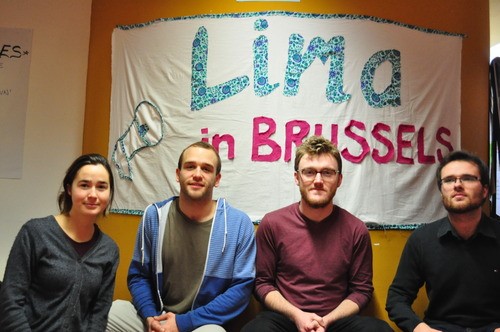
Selection of Attendees of ‘Lima in Brussels’ event (L-R): Ciara Kenny (Dublin), Áron Bányász (Hungary), Robert Wade (Dublin) and Mícheál Callaghan (Monaghan).

Selection of Attendees of ‘Lima in Brussels’ event (L-R): Ciara Kenny (Dublin), Áron Bányász (Hungary), Robert Wade (Dublin) and Mícheál Callaghan (Monaghan).

Conan Connolly was in attendance at an event organised by Alter EU to highlight the importance of transparency in lobbying. Lobbying is a huge part of the European political process, and it is estimated that there are around 30,000 lobbyists in Brussels, with most of them representing corporate interests. There is no real transparency in who gains access to the people who make important decisions that affect us all. The groups who attended the conference will work together to campaign for a mandatory and transparent register of lobbyists. While in Brussels, Connolly met with local MEP Matt Carthy.

 Mícheál Callaghan and other activists from Ireland attended a week of workshops, network building and demonstrations in Brussels organised by Young Friends of the Earth Europe, to coincide with the Climate Talks in Peru.

As well as meeting with MEPs, the delegates at the youth conference, discussed measures to build the climate movement in Europe in the run up to the important Climate Talks in Paris in 2015. The delegates also took part in several demonstrations to raise awareness in Brussels and in the European media on a range of issues including climate change, the TTIP (Transatlantic Trade & Investment Partnership) and the murder and abuse of environmental activists in South America.

The discussions with MEPs focused on the need for Ireland and Europe to commit to strong climate targets, in tandem with efforts to support incentives for more sustainable employment. Concern was also expressed about the possible implications of the TTIP, the proposed trade deal between the USA and the EU. TTIP, which is largely being discussed behind closed doors. TTIP aims to remove all regulatory barriers between the United States and Europe. It also proposes to create a new tribunal to allow corporations to sue nations which aim to impose stricter standards which could be seen as breaching the agreement. The concern is that TTIP might lead to the widespread privatisation of public services which could have negative implications for environmental and farming standards. The delegates feIt that is vital that citizens, Non-Government Organisations and politicians take a strong stance on this serious issue. The MEP’s who met with the Irish delegation were: Lynn Boylan, Máiread Mc Guinness and Marian Harkin.

All participants travelled by land, to minimise emissions, with the Irish delegation taking a train from the ferry terminal in Holyhead (Wales), via the channel tunnel, to Brussels. The Irish delegation was the single largest delegation present.

Weblinks: Analysis of COP 20 Climate Change Talks:  www.foei.org.

Transatlantic Trade Investment Partnership: www.ttip.ie.

Young Friends of the Earth Europe Conference: limainbrussels.tumblr.com.


Outcome of Lima Climate Conference

After extending the deadline by two days, delegates on Sunday finally agreed an outcome from the Lima Climate Conference, which will serve to build towards a legally binding agreement at next year’s talks in Paris. The deal has received a mix of reactions. Officials and diplomats have branded it a success, saying that it provides a unified text to work from, however activists and environmentalists have said it is too vague on commitments and leaves too much to do in the run up to next year’s talks. The deal does not mention specific reduction agreements, simply stating that each country must submit emission reduction plans by next year, based on what they can achieve. The distinction between developed and developing countries in previous agreements is gone, in the sense that each country will now be required to aim for some level of reductions. No pledge is given for extra ‘technical assistance’ to help developing countries adapt, however, the commitment by developed nations to the Green Climate Fund, has been re- stated. Overall, it seems that this text is once again at odds with what science states is needed to avoid dangerous warming of 2 degrees Celsius, and it will be up to civil society to pressure governments to be more ambitious in the run up to next year’s talks.

Making the Monaghan – Brussels – Lima Connection

Two members of Transition Monaghan recently met with Irish MEPs while attending events in Brussels related to climate change, sustainability and Free Trade.

Selection of Attendees of ‘Lima in Brussels’ event (L-R): Ciara Kenny (Dublin), Áron Bányász (Hungary), Robert Wade (Dublin) and Mícheál Callaghan (Monaghan).
Continue reading

Living Sustainably

After the recent extreme weather events experienced here and in Britain there is now a lot of focus on the need for all of us to live more sustainably so that we don’t have runaway climate change and other ecological and social catastrophes. Sustainable living involves finding the right balance between utilising resources and protecting the planet. Some of the key elements of sustainable living involves reducing our carbon footprint and this has implications for many aspects of our lives including   what we eat, the energy we use to heat our homes, our means of travel etc.  There are many training course and initiatives in which we can participate that will give us skills to live more sustainably. This week we look at some of these in Ireland.

Continue reading

Making the most of an uncertain future in Co. Monaghan

This Saturday (October 18), members & friends of Transition Monaghan will gather at Ballybay Wetlands Centre to discuss a road map for sustainability in Co. Monaghan. The focus of the sustainable future workshop, will be to focus on a number of key areas that Transition Monaghan, in collaboration with other groups and individuals, can direct their energies on to promote and achieve greater sustainability, in Co. Monaghan, over the coming years.

Ballybay Wetlands will host this Saturday’s event, Planning for an uncertain future in Co. Monaghan.

Ballybay Wetlands will host this Saturday’s event, Planning for an uncertain future in Co. Monaghan.

The brainstorming workshop, which will begin at 2pm, will focus on the aspects of our lives that are deemed necessary for prosperity and how we can reconcile those with the need for sustainability in the face of the great challenges of the 21st century, namely climate change & peak fossil fuels. Small group discussions will focus on how we can reconcile our human needs with those of nature to allow for a sustainable and prosperous future in Co. Monaghan. The goal will be to create an action plan, spanning the next number of years, for events and projects to be carried out by Transition Monaghan, in collaboration with others. The theme will be in line with the maxim of “Think Global, Act Local”, as any actions that we take will focus on how we, as a community can improve our situation in the context of global challenges. Discussions will bear in mind areas deemed necessary for human and planetary prosperity, including: water, food, energy, biodiversity & health.

The workshop, which begins at 2pm, will provide the opportunity for those with an interest or curiosity in environmental issues to meet and share ideas and opinions with one another. All ideas and contributions are highly valued, and these will form the basis for the creation of a realistic action plan for Transition Monaghan into the future. Tea and coffee will be provided and the event will end at 4pm. It should be an interesting and engaging afternoon, set in the beautiful surrounds of Ballybay Wetlands. If you would like further information please contact Mícheál at transitionmonaghan@gmail.com

“Let’s make the next 100 years the best of centuries”

The state of the climate – and what we might do about it

The well-known economist Nicholas Stern recently delivered a ‘TED’ talk entitled, ‘The State of the Climate and what we might do about it’.  He opens the talk with these words; “We are at a remarkable moment in time. We face over the next two decades two fundamental transformations [in the structure of economies /societies worldwide and in the planet’s climate] that will determine whether the next 100 years is the best of centuries or the worst of centuries.” His closing words are;Are we going to look our grandchildren in the eye and tell them that we understood the issues, that we recognised the dangers and the opportunities, and still we failed to act? Surely not. Let’s make the next 100 years the best of centuries.” The full 16 minute talk can be viewed online at www.ted.com.

Ban Ki-Moon, Secretary – General of the UN says: “Future generations will judge our actions on climate change”.   Last week at the UN Summit in New York on climate change, 120 government leaders each made 4 minute speeches. While no decisions were made at the summit, it has however highlighted the urgent need for agreement by these leaders to commit to major reductions in greenhouse gas emissions when the climate talks take place in Paris next year.

An article in the New York Times that was also published in the Observer newspaper on Sunday last says that in just 30 years millions of Americans will become climate refugees in their own country. Jennifer A Kingston’s report sets out  how American land and cities will be affected  by rising temperatures,  sparking huge population shifts to newly desirable locations further north like Detroit, the Pacific Northwest and Alaska. See online copy of the article at www.theguardian.com/environment.  Similar population shifts to those expected in the US are also likely to happen in Europe and in other parts of the world.

An EPA lecture to update us on climate change will take place in Dublin on this Monday, 6 October. On the same evening a talk focusing on people’s attitudes to climate change will be held in Trinity College. Here in Monaghan an event to highlight and discuss the issue of climate change will take place in the Hillgrove Hotel on Saturday, 11 October. See Noticeboard above for details of these events and how to book a place.

 Taking an Eco Tour of Ireland

Roz Kelly founder and owner of EcoActiveIreland.com recently decided to embark on an ‘eco tour of Ireland’. Roz says: “Ecotourism and nature related activities account for 20% of global tourism, a figure that is set to grow in the coming years”. She’s been visiting a range of ecotourism attractions and facilities nationwide and meeting the people involved such as at Rock Farm in Slane and The Three Towers Eco House & Organic Kitchen near Slieve Aughty, Co Galway.  Her tour is now near an end and to date she has been cycling, birdwatching, kayaking, surfing, glamping (glamorous camping), staying in an organic farm guesthouse and an ecocabin, experiencing a seaweed bath and visiting a cheesemaker, a natural perfumery and many other interesting places.

Roz is using a sponsored Opel Mokka ecocar for her travels. A bonus has been the fact that the countryside has been looking its best in the recent spell of early autumn sunshine.

The eco tour is being featured on RTE Radio One’s CountryWide programme on Saturday mornings. Roz is also blogging and tweeting about her tour. For more on her eco tour see www.ecoactive.com and Twitter at ‘ecoactiveirl’ and ‘ecoactive Ireland’ on Facebook. For other information on ecotourism see www.discoverireland.ie/Where-To-Stay/Features/Stay-Green and also www.ecotourism.ie.

Global Day of Action on Climate Change – 21 Sept 2014

The number of activists and citizens across the world challenging the fossil fuel industry and demanding radical action on climate change is increasing. In advance of the upcoming Climate Summit in New York, people are being urged – wherever in the world they are – to join in the People’s Climate Mobilisation for their Global Day of Action. Simultaneous marches and gatherings will take place in cities across the world, in order to send a clear and unavoidable signal to the world’s elite that action is urgently needed!

Climate March Sep 2014


The growing mobilisation of people across the globe against the climate crisis is being likened to the movements against racism in the USA or apartheid in South Africa, and in reality, a similar level of public outrage is required.

In Dublin, members of the public are invited to attend the Climate Picnic this Sunday afternoon 21 September from 12 – 2pm at the Band Stand, St. Stephen’s Green. Members of Transition Monaghan will be in attendance. Everyone is welcome to go along to what is expected to be an enjoyable event that includes music and circus performers. It should be an event that is positive and hopeful and that will make a difference for future generations.  The organisers advise those attending to bring a picnic, banners and friends!

The fossil fuel lobby is one of the most powerful and politically influential in the world. Only when it is seen as unacceptable to do business with them, will our politicians begin to take a step back from their influence. Public outcry over involvement of the tobacco industry in politics and health policy lead to a completely new direction being taken on smoking. The same is possible regarding fossil fuels and climate change, but it will need ‘buy in’ from the public. Bill Mc Kibbon, author and founder of 350.org  descried the fossil fuel industry as “a rogue industry. It’s an industry if whose business plan is followed to the letter, it will wreck the planet”.


Why does this affect us in Co. Monaghan?

Climate change will cause increased conflict worldwide over dwindling resources such as drinking water and land. In this century climate change refugees will be leaving in their millions from the countries most affected by the extreme weather events. This will also lead to increased conflict that will have considerable impacts worldwide.

Co Monaghan, like every other place on the planet, is being and will continue to be affected by climate change.   In the last number of years, we have seen many extreme and record breaking weather events. Last winter’s storms, which wreaked havoc for everyone, were part of the stormiest winters on record. Recent dry weather, has seen the transporation of vast quantities of water into communities around Ireland. As climate change continues to accelerate, these ‘extreme’ weather patterns will become the norm. In the short to medium term, the winters are expected to become wetter and windier and summers expected to become drier and warmer. If greenhouse gas emissions continue, the long term outlook is runaway climate change. This will affect the balance of nature and the biodiversity and ecology on which we depend.

Agriculture is an important part of the economic and social fabric of Monaghan. It is predicted that, if left unchecked, climate change will cost Irish agriculture up to €2 billion per annum. It is still entirely possible to avoid the worst case scenario and to put in place mitigation strategies for the disruption that we will face.

As individuals and communities we can take action to reduce our own carbon footprint and build our own resilience. However, we must also put pressure on our political and business leaders to take the action that we and our children deserve. This is the challenge of our time. Make sure your voice is heard!

Web links: 

www.peoplesclimate.org;

www.peoplesclimateireland.wordpress.com;

www.stopclimatechaos.ie; www.350.org;

www.watchdisruption.com