Save Food, Save Money!


Food waste costs the average Irish house holder somewhere between €700 and €1000 per year. This is according to “A Leftovers cookbook”, produced for last weekend’s Taste of Monaghan Festival as an initiative of the Environment Section Of Monaghan Co Council. Mícheál Callaghan, of Monaghan Ecological Group, reflects on aspects of food waste, as highlighted at the festival by local chefs, and suggests ways in which the ordinary householder can save money and reduce their impact on the environment by cutting down on food waste.

 Image

Logo of the Stop Food Waste Campaign, http://www.stopfoodwaste.ie

Quite often, when walking the aisles of the supermarket, we are overcome by the wide array of foods on display, in brightly coloured and well marketed displays. We can find ourselves buying food which we may not really need or want, the so – called impulse buy. If we buy food we don’t need, there is a greater chance that we will end up forgetting about it or throwing out. Not only does this cost us extra money, it also contributes unnecessarily to the carbon dioxide emitted by food our food system, in the form of food miles.

According to stopfoodwaste.ie, preventing food waste starts when you go shopping and continues at home. It urges people to know what they already have and need before they go shopping, make a list and try to stick to it, and also buy loose fruit and veg, as you are likely to buy more than you need when buying in bulk. It also urges us to pay attention to the ‘best before’ and ‘use by date’. If we look to the back of shelves we often find food with longer ‘best before’ dates. It is also important to understand the difference between best before and use by dates. Best before dates simply refer to quality, while use by dates refer to food safety. Therefore if a product is a day or two outside its ‘best before’ range, then it can still be eaten, though it might not be to the same quality as before, however after the use by date has expired, the food should generally not be consumed.

Even if we do find ourselves ending up with too much food or food that needs to be thrown out, there are more environmentally friendly was to do so than simply throwing the food in the black waste bin. Organic and uncooked food can be used to create compost, which can then can be turned into fertiliser for your vegetable patch or flower beds. Composters can be purchased from as little as €30 from the Recycling Centre. More information available at 047 80888. Another option is to have a wormery whereby worms turn your household waste into high quality compost. 

Food cloud is a new social enterprise, started by young Trinity Students, Iseult Ward and Aoibheann O’Brien, which aims to help businesses and supermarkets reduce their food waste by connecting them with charities and community groups that need food for their beneficiaries. They started this initiative after they learned that Ireland wastes over one million tonnes of food every year, while 600,000 people experience food poverty. Through their phone app, they connect businesses with charities to “help reduce food waste, reduce food poverty and to help restore that good old Irish community spirit based on shared food.”

Another key tip mentioned in “A Leftovers Cookbook”, is the idea of making delicious meals with leftover food. Once you have finished your Sunday roast, you can make a variety of dishes from the left overs. Below is a recipe, contained in the booklet, for Mango Chicken, made from the leftovers of a Chicken Roast.

Recipe

  • 12 oz left over chicken breast or thigh meat (Turkey also suitable)
  • 1 red or green pepper chopped
  • 4 oz mushrooms
  • Half jar Mango Chutney
  • Half Carton Cream or yoghurt

Method

  1. Chop Chickeny and put in a heatproof dish
  2. Add red / green pepper and mushrooms
  3. Lightly whip cream and add Mango Chutney or just add the yoghurt
  4. Pour over chicken and vegetables
  5. Bake in oven at 1800 for approximately 20 minutes or until cooked through
  6. Served with boiled rice or creamed potatoes

If you would like further information on how to reduce food waste visit http://www.stopfoodwaste.ie or go to the environment section of Monaghan County Council website at http://www.monaghan.ie/en/services/environment
Looking to the Past & Future in Castleblayney

On Saturday last the re-enactment of the Fair Day in Castleblayney recalled memories of Fair Days in the small towns of rural Ireland.  MEG member Liam Murtagh went along to the ‘Castleblayney 400’ event and saw a range of produce, crafts, services, games and working farm machinery from bygone days on display.   He now reflects on the importance of the production and use of local food produce into the future.      

The Fair Day which was held in glorious sunshine in Castleblayney on Saturday last brought an air of enjoyment and excitement to the town. It was a welcome development in what has been challenging times for both businesses and for many residents. For some it was tinged with some nostalgia as they remembered the Fair Days of the 1960s.

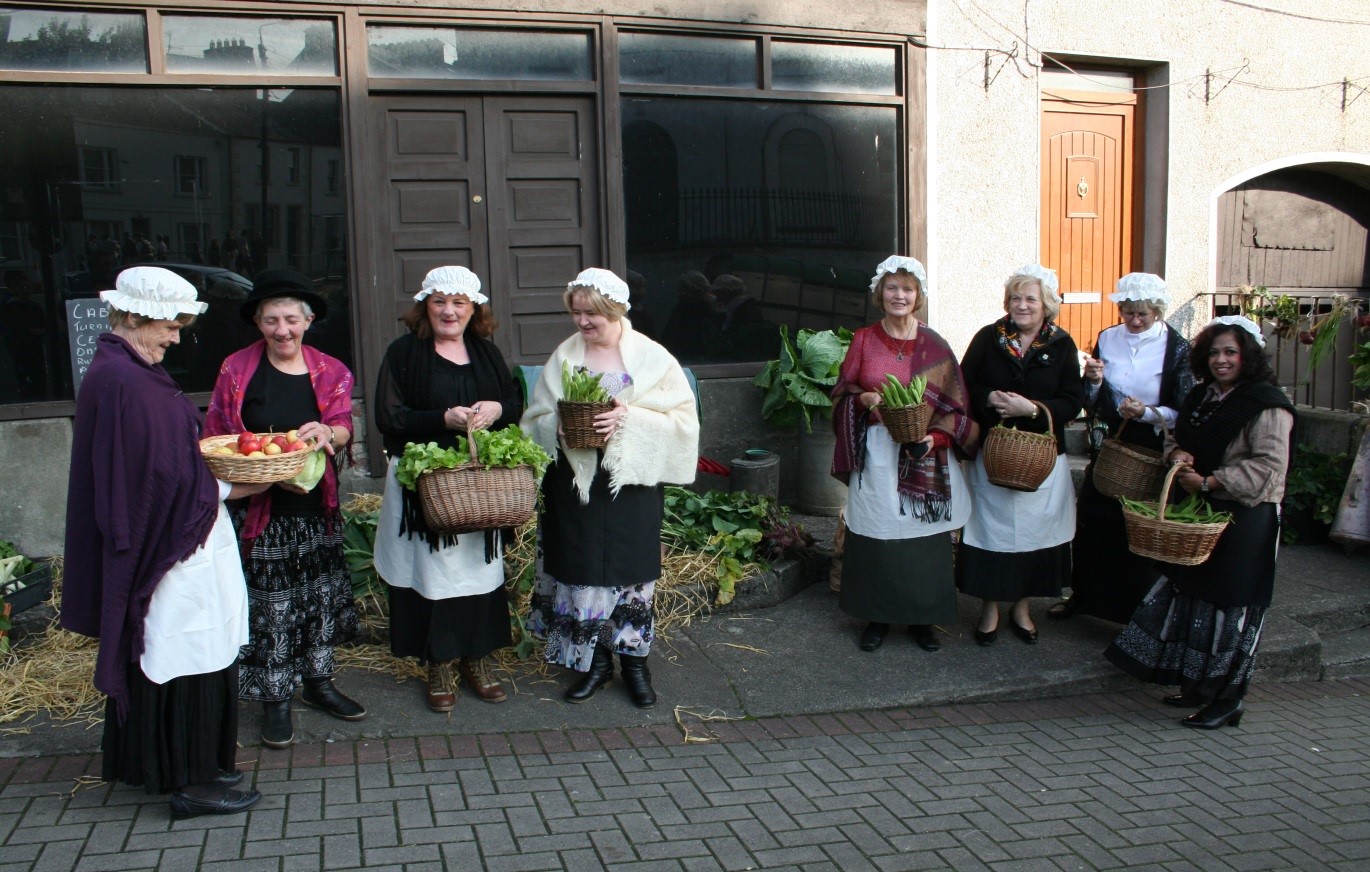
Pictured at the ‘Fair Day’ in Castleblayney were some members of Castleblayney Community Gardeners along with a customer.  The fruit and vegetables on display were grown in town’s community gardens or locally.

Pictured at the ‘Fair Day’ in Castleblayney were some members of Castleblayney Community Gardeners along with a customer. The fruit and vegetables on display were grown in town’s community gardens or locally.

On the Fair Day in Castleblayney up to the 1960s most of the food produce on sale on the street or in the shops came from the surrounding parishes. It was usually transported to the town by horse and cart and so virtually no oil or other fossil fuels were used in the growing and transporting of the produce. The work of growing crops involved long hours of physical toil on the land – tilling the land with horses and often working in adverse weather conditions. It was ‘organic food’ but such a term was not used in those days.  In the case of my own family, we cooperated with our neighbours at busy times such as at the digging of the potatoes and saving hay.   Incomes were small and erratic and emigration was commonplace.

 In the years since the 1960’s there has been a transformation in the way we grow and buy our food. The number of farmers who grow vegetables for sale or even for their own use is very few. While there are some Irish growers, much of our food travels thousands of kilometres.  Enormous amounts of oil are used to grow and transport both the food we grow here in Ireland and the food we import. The flavour of food that travels long distance is often of doubtful quality.  I find that the carrots or plums I pick from my own garden are always far superior to those on the supermarket shelves.

On the way home from the Fair Day I purchased a daily newspaper. The main headline read: ‘Human Influence on climate change a ‘clarion call’ to global community’. On the previous day, the latest report from the UN’s climate scientists had been published and there was in-depth coverage throughout the media. The challenge of climate change that faces the next generations will be enormous – many say now that it is not a question of averting climate change, it is a matter slowing its progress and allowing humanity to adapt to it.

Summers in Ireland will be warmer and drier, winters will be wetter and milder and  there will be an increase in the frequency of heavy rainfall events.  While this might all seem tolerable, we need to consider that what happens internationally will have a major impact on Ireland. The ‘Stop Climate Chaos’ group claims that Ireland could face an influx of climate change refugees from countries that will be severely affected or even wiped out by rising sea levels.

The role of addressing climate change is one for the UN, for governments, corporations, communities and individuals. Reducing emissions of greenhouse gases by cutting down on using oil is the main way to addressing the problem. As there are considerable amounts of greenhouse gasses produced in the modern agri industry this is an urgent need to address the issue. As individuals we can choose to eat foods that have a low carbon / low food kilometres rating – the lowest would be for food gown in our garden! In Co Monaghan the GIY movement and various community gardens and allotments projects are playing a role in both awareness raising and growing some food locally. Farmers Markets and initiatives such as this weekend’s ‘Taste of Monaghan’ help the marketing and sale of local food. The amount of local produce in supermarkets varies a lot but we can keep reminding them that we would like to have more fresh local produce available.

At a community level in this county, Monaghan Ecological Group  is seeking to harness the efforts of people here to undertake local climate change responses including awareness raising, skills sharing, and projects in the areas of local food, energy and currency – such as the LETS Trada one that was featured in a previous article.

For enquiries or comments please email monecogroup@gmail.com. Check out the Monaghan Ecological Group facebook page or website at http://monecogroup@wordpress.com

Wintering Waterbirds on their way – Can you help them along?

It’s the time of year that some birds leave our county and some others arrive here for a winter stay to join our resident bird population. MEG member Liam Murtagh says that some bird species are in significant decline and we can monitor what is happening locally by participating in various surveys organised by Birdwatch Ireland, like the 2013/2014 one on wintering waterbirds that is about to commence

Sunday the 22nd September brought us an ’Indian Summer’s’ day, and as it was the Autumn Equinox there were equal hours of daylight and darkness. The autumn colours are only beginning to appear in our countryside but many of summer visiting birds such as the Swallow are about to leave us to head south to warmer lands. While these birds leave us there are about one million winter visiting birds such as Whooper Swan and Curlews arriving here from latitudes further north. Both sets of migratory birds can cover thousands of miles. While one may marvel at the homing instinct of these birds and their ability to fly such vast distances we hear that there has been a 23% decline in long distance migratory birds in Europe over the past 30 years. The number of farmland birds is also in sharp decline across Europe. In Ireland the barn owl and the summer visiting corncrake are now very rare. There are various causes, but loss of habitat is one of the main ones.  It is just one aspect of the various aspects of biological diversity on the planet that are under threat.

The Curlew pictured above is a winter visitor to our wetlands. In the past we also had  resident Curlews breeding throughout Ireland but their numbers have been in significant decline in recent years. In 2012 only one breeding pair was recorded in Co Monaghan.

The Curlew pictured above is a winter visitor to our wetlands. In the past we also had resident Curlews breeding throughout Ireland but their numbers have been in significant decline in recent years. In 2012 only one breeding pair was recorded in Co Monaghan.

Ireland’s wetlands and their waterbirds are currently monitored as part of the Irish Wetland Bird Survey (I-WeBS) being organised by Birdwatch Ireland. The 20th season of the Survey is about to start and BirdWatch Ireland would very much welcome your help. I-WeBS is the nationwide scheme for monitoring non-breeding waterbirds – largely the swans, geese, ducks and wading birds – that migrate to Ireland each winter. Whether you are an experienced birdwatcher or interested in finding out how you can contribute to conservation, you can help. You can take on a site yourself or opt to learn the ropes from someone who already participates, but the organisers are always keen to bring new participants on board.

I-WeBS involves conducting counts of all waterbirds at wetland sites once per month from September to March on predefined count days. The counts are recorded on the count forms provided by the I-WeBS Office or entered onto the online data entry system at the end of each visit. Wetland sites range from small ponds and river stretches with small numbers of birds that can easily be can covered by one observer with a pair of binoculars to large complex estuaries that hold thousands of birds and require a team of experienced observers with telescopes.

If you would like to get involved, contact iwebs@birdwatch.ie  letting Birdwatch know where you are based and whether or not you have a telescope. They will find the right site for you. If you would like to be involved in a range of bird watching activities locally you could join the Monaghan branch of Birdwatch Ireland. See www.birdwatch.ie for contact details and also for details of other bird surveys conducted by Birdwatch Ireland.

Local Exchange Trading Scheme to Boost Local Trade & Resilience

Monaghan Ecological Group is working with local organisation, LETS TRADA to develop a Local Exchange Trading Scheme in Clones. Such a scheme would encourage local trade, keep people in work and contribute to building a resilient community. Mícheál Callaghan in discussion with Ciarán Fitzpatrick examines how this scheme will work and the benefits that it will bring to the Clones area.

 Image

The new logo for LETS Trada, Local Exchange Trading Scheme

In recent times, in Co. Monaghan, many trades people and those with valuable skills have found themselves out of jobs or on reduced pay, while many people who may like to have work done on their home, or acquire the skills of a professional, no longer have the disposable income to do so. All the while, they still have bills and mortgages to pay. A Local Exchange Trading  Scheme seeks to address the situation whereby people who wish to work, and those need the services of the professional cannot do so due to a lack of money.

LETS TRADA has established a Local Exchange Trading Scheme in the Monaghan / Cavan area which allows people to trade with each other without having to use EURO as a means of exchange or payment. Instead, people, who have a skill or service which they can offer, are registered on the LETS database. They can then trade with others in this system as normal, acquiring LETS Credit for their work. Those who have acquired LETS credit for work performed can then “spend” this credit against the services of others on the scheme. The idea being that with work being received and carried out, the over – all amount of credit in the system will balance out to zero. The system is monitored by a central account and those wishing to participate in the system must first register and agree to the terms and conditions laid out by LETS TRADA.

The idea of a Local Exchange Trading Scheme is not a new one, and there have been many successful schemes around the world. Such schemes and local currencies have enabled communities to ensure trade of important skills and services does not dry up in times of economic hardship. The scheme will initially focus on the trade of skills and services but, if successful, could develop to allow people to exchange goods, in similar fashion to a local currency.

Ciarán Fitzpatrick, founder of the scheme, believes that this will be of real benefit to the local economy in Co. Monaghan, saying that it will be of great advantage to “those who have found themselves time rich but money poor.” Fitzpatrick, who himself is a tradesman, with a young family, has said that the establishment of the scheme and the work he has been paid for in LETS credit has enabled him to move home from London, where he was working. He hopes that the development of the scheme will have a similar positive benefit for others in the area.

 LETS TRADA will have a stand at the Clones Canal Capers Festival  from 13 – 15 September, where you can speak to Ciarán and those involved in the scheme, find out more information and also get involved in this exciting new initiative! There will be an information night about the project in The Cassandra Hand Centre in Clones in early October, which will be open to the public and will provide a further opportunity to learn more about the scheme and how it could benefit you.

If you would like further information about LETS Trade please don’t hesitate to contact Ciarán on 0862753468 or letstrada@hotmail.com. You can also learn more by contacting Monaghan Ecological Group at monecogroup@gmail.com

Food for thought at “Celebrating Transition” at Ballybay Wetlands

Image

L – R: Liam Murtagh, Monaghan Ecological Group Committee Member, Mícheál Callaghan, co – founder, Davie Philip, Cultivate (Guest Speaker). Photo by Amie Hynes Fitzpatrick.

Over fifty people from across County Monaghan, and further afield, gathered, on Friday last, in Ballybay Wetlands Centre for “Celebrating Transition”, a social & networking evening organised by Monaghan Ecological Group. Attendees, who represented a wide range of organisations, discussed and shared ideas, participated in informative break – out sessions and enjoyed a locally sourced buffet. The goal of the evening was to introduce people to the work and ethos of Monaghan Ecological Group, bring together local organisations and individuals working in the area of local sustainability and create a platform from which to build a strong movement for a positive, resilient future for County Monaghan.

The evening opened with an overview of the history of the Ballybay Wetlands Centre and its current work from chairperson of Ballybay Development Association, Brian Norton. Mícheál Callaghan, co – founder of Monaghan Ecological Group, gave a welcome address, in which he gave an overview of the context in which Monaghan Ecological Group was founded, its current work, and ethos. He stated that it was a community based, Transition Initiative, which “works to strengthen the local economy, reduce our impact on the environment, and build community resilience.” It does this through running regular information and networking evening events, media work and practical local projects. He stated that the Group is part of the Transition Town Network, which was founded in 2005 in response to the interconnected social, economic and environmental problems we face today. He stressed that Monaghan Ecological Group is a new community led initiative that is continuously building relationships with local authorities, businesses, organisations and individuals, and that Monaghan Ecological Group “always welcomes new members and ideas.”

Image

L-R: Mícheál Callaghan, co – founder Monaghan Ecological Group; Mayor Seán Conlon, Monaghan County Council; Davie Philip, Cultivate (Guest Speaker). Photo by Amie Hynes Fitzpatrick.

Davie Philip, manager of the Community Resilience Programme at Cultivate, and co – founder of Sustainable Projects Ireland, gave a presentation on the evening which focused on the theme of resilience. He stated that the times we are living in present challenges on many levels, but that they also represent a “once in a species opportunity” for change and that we should not “let a good crisis go to waste”. His presentation began with a screening of his short film “Surfing the Waves of Change.” The video which states that our current lifestyles are under threat due to shrinking oil supplies and climate change, stresses the importance of resilience at personal, community and global level. He stated that resilience is the ability to withstand and respond to pressure and stress in times of change and upheaval. He spoke of the efforts of the Transition movement to build community resilience, through uniting people, building social capital and enabling communities to do more for themselves at local level. Davie, who is originally from Scotland, spoke of the importance of community support and said that the sense of community togetherness and pride of place and heritage, which is key to resilience, really struck him when he moved to Ireland. He said that groups such as Monaghan Ecological Group, GIY, Tidy Towns and other community organisations are key to harnessing this community spirit to bring about the kind of social change needed for a future with less oil. At the end of Davie’s presentation, his message was simple and clear: “Go for it!”

Following the presentation by Davie, participants had the opportunity to hear more about the ethos and projects of Monaghan Ecological Group in three, concurrent break – out sessions, which lasted for ten minutes. Mícheál Callaghan built upon the theme of resilience from Davie’s speech, and spoke about how the Transition ethos can be implemented in Monaghan. County Mayor, Seán Conlon, who attended this break out, encouraged people who have ideas for projects, to approach the local authorities, as they are very willing to help community initiatives. Ciarán Fitzpatrick, founder of LETS Trada and Monaghan Ecological Group member, gave an over view of how they are working to establish a Local Exchange Trading System in the Clones region. He stated that this system, which allows people to trade by building up LETS credit, without using Euro, would be a real asset in difficult economic times. Margaret Palmer, a local herbalist, gave an overview in the third break out session, of a project she hopes to roll out, which will capitalise on the health, economic and ecological benefits that herbal medicines and remedies can offer.

Monaghan Ecological Group is extremely grateful to everyone who attended the event and helped out in anyway. We would like to acknowledge the support it received from Monaghan County Council’s Community Development Fund 2013 and Wave Change Social Enterprise programme. All food on the night was generously made available by the following local producers and suppliers: Camphill, Ballybay; Mulberry Meadow Farm, Clontibret; Charley Meats, Monaghan; Bumble Beez, Monaghan. We are also very thankful for all the help we received from the staff at Ballybay Wetlands Centre in the run up to the event and on the evening itself.

OLYMPUS DIGITAL CAMERA

L-R: Dearbhla Lenehan, Monaghan Ecological Group co – founder; Margaret Palmer, Committee Member & Local Herbalist; Liam Murtagh, Committee Member. Photo by Amie Hynes Fitzpatrick

If you would like more information or would like to get involved with the work of Monaghan Ecological Group please contact Mícheál on 086 3483896 or e-mail monecogroup@gmail.com. You can keep up to date with its work and events on Facebook (Monaghan Ecological Group) and at http://www.monecogroup.wordpress.com

The Power of Local Food: 2013

Image

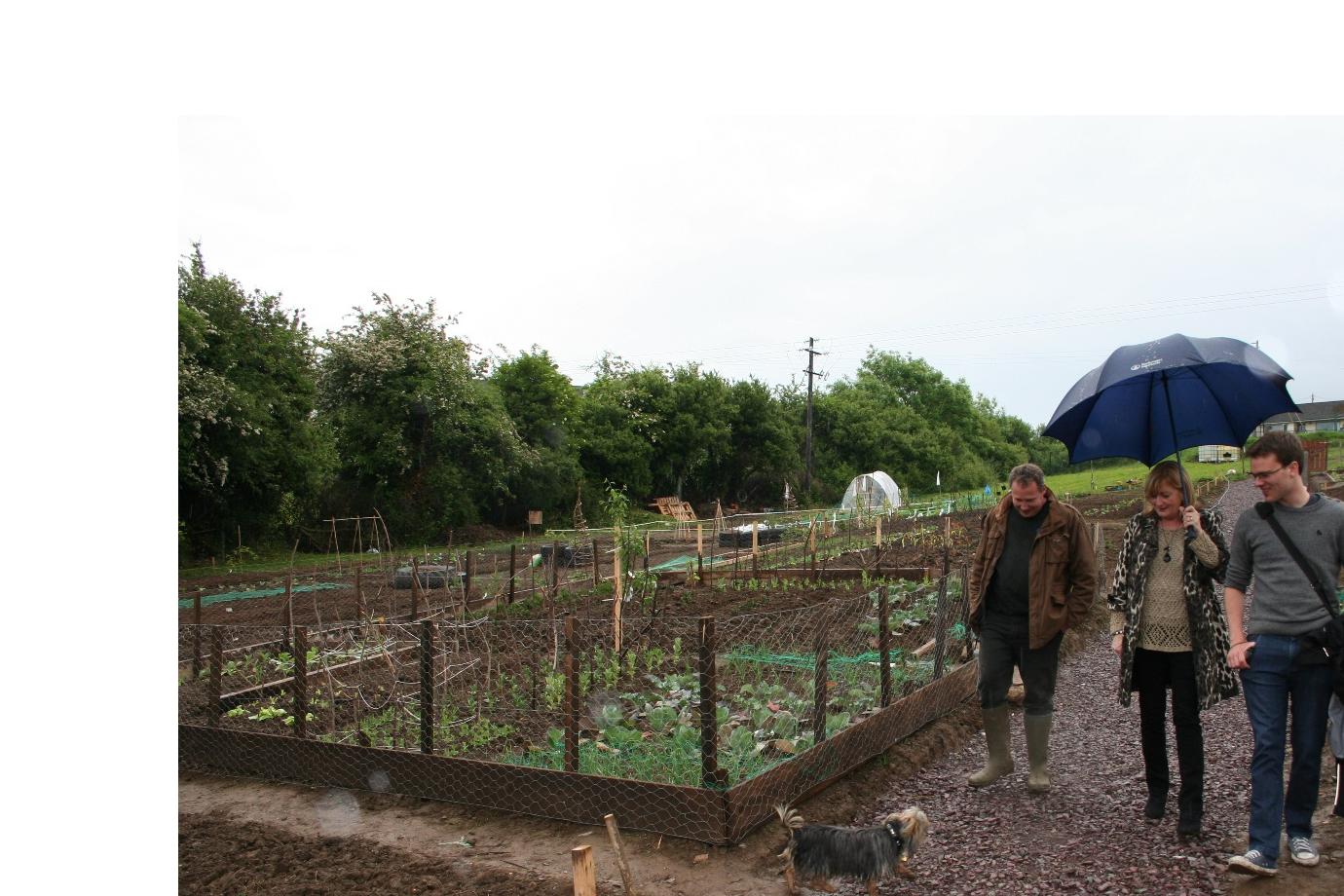
Michal O Hare, Monaghan Allotment Society; Verona McGettigan, Ballinode Tidy Towns, Mícheál Callaghan, MEG; on a recent visit to the newly developed allotments at Killygoan, Monaghan.

On a recent visit to the new allotments at Killygoan, Monaghan, Mícheál Callaghan of MEG, saw first hand the positive impact local food projects can have on local communities.

Continue reading

Successful evening at “Celebrating Transition” (Aug 2013)

Image

L – R: Liam Murtagh, Monaghan Ecological Group Committee Member, Mícheál Callaghan, co – founder, Davie Philip, Cultivate (Guest Speaker). Photo by Amie Hynes Fitzpatrick.

Over fifty people from across County Monaghan, and further afield, gathered, on Friday 23 August, in Ballybay Wetlands Centre for “Celebrating Transition”, a social & networking evening organised by Monaghan Ecological Group. Attendees, who represented a wide range of organisations, discussed and shared ideas, participated in informative break – out sessions and enjoyed a locally sourced buffet. The goal of the evening was to introduce people to the work and ethos of Monaghan Ecological Group, bring together local organisations and individuals working in the area of local sustainability and create a platform from which to build a strong movement for a positive, resilient future for County Monaghan.


Continue reading

Transition Monaghan (formerly) MEG in Action on Local and International Front

One hundred young activists from across Europe, USA, Canada and Nigeria gathered recently in Lofoten, Norway, to exchange skills, motivate each other and support the local community in their campaign to prevent oil drilling off the stunningly beautiful Lofoten coast. Their message was clear – ‘keep the oil in the soil!’ Mícheál Callaghan, of Monaghan Ecological Group attended the event and reflects on what was an inspiring week at the Young Friends of the Earth gathering in the Arctic Circle.

Norway

Some of the participants of the recent Young Friends of the Earth Europe Summer Camp in Lofoten, Norway, carrying  the banner “No Oil In The Arctic”. Included in this picture is Mícheál Callaghan, co – founder of Monaghan Ecological Group.

Continue reading

Monaghan Ecological Group in Action on Local and International Front

One hundred young activists from across Europe, USA, Canada and Nigeria gathered recently in Lofoten, Norway, to exchange skills, motivate each other and support the local community in their campaign to prevent oil drilling off the stunningly beautiful Lofoten coast. Their message was clear – ‘keep the oil in the soil!’ Mícheál Callaghan, of Monaghan Ecological Group attended the event and reflects on what was an inspiring week at the Young Friends of the Earth gathering in the Arctic Circle.

Norway

Some of the participants of the recent Young Friends of the Earth Europe Summer Camp in Lofoten, Norway, carrying  the banner “No Oil In The Arctic”. Included in this picture is Mícheál Callaghan, co – founder of Monaghan Ecological Group.

The various participants, all of whom are involved are involved in different projects and actions in their home countries, are united by one goal, that of a fossil free, positive future for the planet and its citizens. Norway, a country of just over 5 million people, contributes 2 per cent of global carbon emissions from its large oil industry.

As well as partaking in a variety of skill sharing and planning workshops, participants heard inspiring stories from committed activists in their struggles against the powerful fossil fuel industry. Environmental Rights Action, from Nigeria, spoke of the mass violations of human rights and environmental laws caused by the fossil fuel industry’s exploitation of natural resources in Nigeria. Despite having the 31st highest GDP in the world, Nigerians have a life expectancy of only 47 years. The oil industry there is huge, with locals seeing few of the benefits. Due to corruption, a lack of education and extreme poverty, companies pay little attention to regulations, many of which are not enforced, leading to serious environmental damage. Participants were told how Nigeria loses 500,000 barrels of oil per day in spills, equivalent to 1 Exxon Valdez per year.

Nnimo Bassey, former chair of Friends of the Earth International, gave an emotional and rousing speech on Friday evening. He recalled fondly, a recent visit to Ireland, where he was impressed by the actions of the local communities in Rossport and Leitrim who are engaged in campaigns to stop gas extraction and fracking. Bassey stated that given the present knowledge and gravity of the climate situation, a new drill site is akin to a crime scene and must be seen as a crime against nature and the planet.

While some may be critical of the long journeys participants had to take in order to reach Lofoten, overall the benefit outweighed the negatives in terms of the motivation generated and networks created throughout the week.  It was great to see and be part of a growing movement of young people from around the world, who are committed to taking action at every level to avoid the worst case scenario of climate change and secure a better future. I left the camp with new ideas, insights and a lot of inspiration, that just maybe, with collective action, it might be possible to take on the giants of the fossil fuel industry!

To read more about the summer camp and the work of Friends of the Earth Europe go to www.foeeurope.org.  If you would like to contribute to a more positive, low carbon future for Monaghan, why not get involved with Monaghan Ecological Group? Look us up on Facebook or contact monecogroup@gmail.com