In this article, John Gibbons discusses the biodiversity crisis that is currently unfolding as species after species is lost to extinction due to global warming. Based in Dublin, John has been writing and speaking about environmental and climate-related issues for the last decade and a half. He regularly contributes to Today FM, the Guardian, the Business Post, is the person behind the http://www.climatechange.ie website and maintains a blog at http://www.thinkorswim.ie.
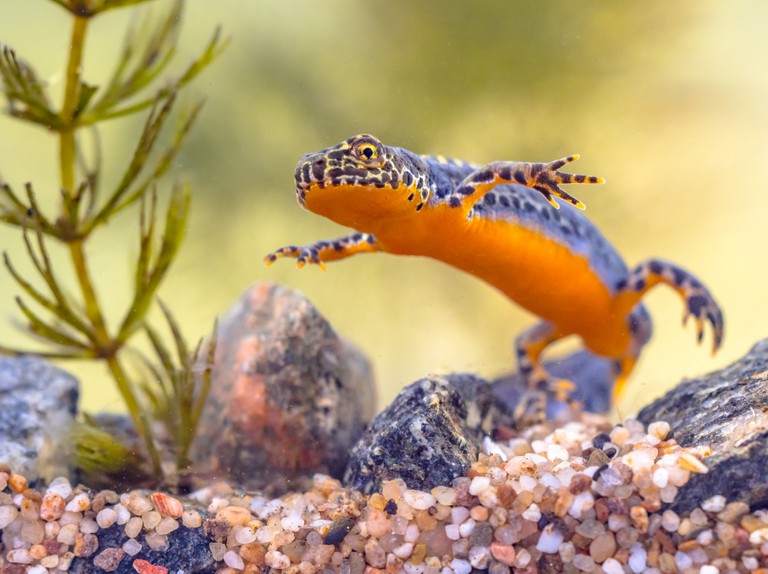
Scientists have found an invasive species of alpine newt in three counties in Ireland. The amphibian has been found in five different locations in Co Offaly, Co Tipperary and Co Down. The alpine newt has the potential to have a detrimental impact on local biodiversity by acting as competition to native species, and by transmitting a disease called chytrid to native amphibian species such as the Common Frog, Smooth Newt and Natterjack toad. Chytrid has driven many species of species to extinction in the tropics.
Members of Transition Monaghan took a trip to Lough Muckno to hear from “Friends of Lough Muckno” who shared their concerns about Monaghan County Councils Vision for developing the area. The Vision created by external consultants would result in a huge impact on the landscape and risk damage to already weakened habitats and water quality.
Liam Murtagh addresses the group and explaining the likely impacts of the “Vision”Continue reading →
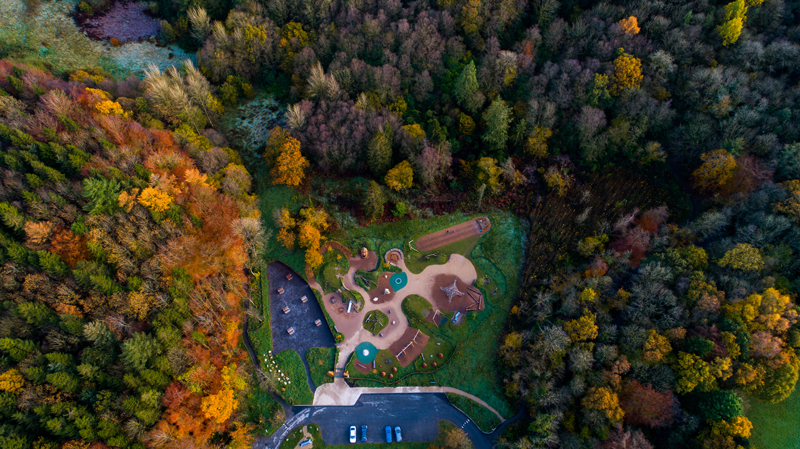
Renewable power, hidden lakes and tropical fruit! Many readers will be familiar with the fantastic playground, wooden giants and scenic walkways to be discovered in Rossmore Park. However, there’s even more to learn about this historic landscape if you have a closer look. Exploring and enjoying our own localities is an important aspect of the journey towards environmental sustainability: once we understand and are aware of what’s around us, we are more inclined to protect and preserve it. As an added bonus, you might be able to motivate the kids to go exploring (beyond the playground) if you promise hot chocolate to whoever can find the most points of interest, of which there are many. Dermot McNally takes us on a tour.
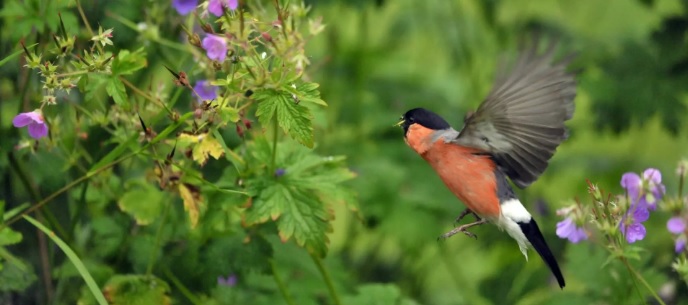
BirdWatch Ireland is the largest independent conservation organisation in Ireland. Established in 1968, this registered charity has in excess of 15,000 members and supporters, as well as a local network of over 30 branches nationwide. If you become a member of BirdWatch Ireland, you’ll receive a glossy quarterly magazine and invites to conservation events all over Ireland. Family membership includes a smaller magazine that’s dedicated to encouraging children to get involved in learning and appreciating nature. Despite the funding challenges posed by Covid, BirdWatch Ireland continues its mission, believing that their work is more vital than ever. This week Dermot McNally takes a look at some of the work going on at BirdWatch Ireland. All images courtesy of BirdWatch Ireland.
Magnetoreception is a sense which allows organisms to detect magnetic fields and use them to align themselves. This sensory system is used by a range of animals for orientation and navigation. The idea that animals perceive earth’s magnetic field was once dismissed as impossible by physicists and biologists – they argued that it is much too weak for an organism to detect and there are no biological mechanisms capable of converting magnetic-field information into electrical signals used by the nervous system. Over time, however, evidence showed that animals can perceive magnetic fields. It is now clear that many species utilise information in earth’s magnetic field to guide their movements over distances both large and small. What has remained mysterious is exactly how they do this.
South African Quantum Physicists, Betony Adams and Francesco Petruccione, share some current theories, including how birds use magnetoreception to navigate during long-distance migration. This article first appeared in ‘Quest: Science for South Africa’ in January 2022.
A group of Mute and Whooper Swans photographed in the Ballybay Wetlands. Whooper Swans (Eala Ghlórach) are migratory visitors to Ireland from Iceland, where they nest during the summer months. Photo credit: Fearghal Duffy.Continue reading →
THE TREE MAY BE DEAD BUT ITS WOOD STILL SUPPORTS LIFE
“Dead wood provides one of the two or three greatest resources for animal species in a natural forest ecosystem,” says Charles Elton in ‘The Pattern of Animal Communities’. Although it is quite often removed in an effort to keep things tidy and make space for living trees, dead wood is actually a vital element in woodland ecosystems. Wood decomposition is one of a woodland’s essential recycling processes and a natural part of every tree’s lifecycle. Dead and decaying wood also provides a nutrient-rich habitat for fungi, a nursery for beetle larvae and a larder for insectivorous birds and other animals. Incredibly, forests worldwide produce and decompose 150 billion tonnes of wood every year!This article is adapted from an article by the Woodland Trust that can be found on their website (www.woodlandtrust.co.uk).
WHY ARE THEY IMPORTANT AND WHAT’S HAPPENING TO THEM?
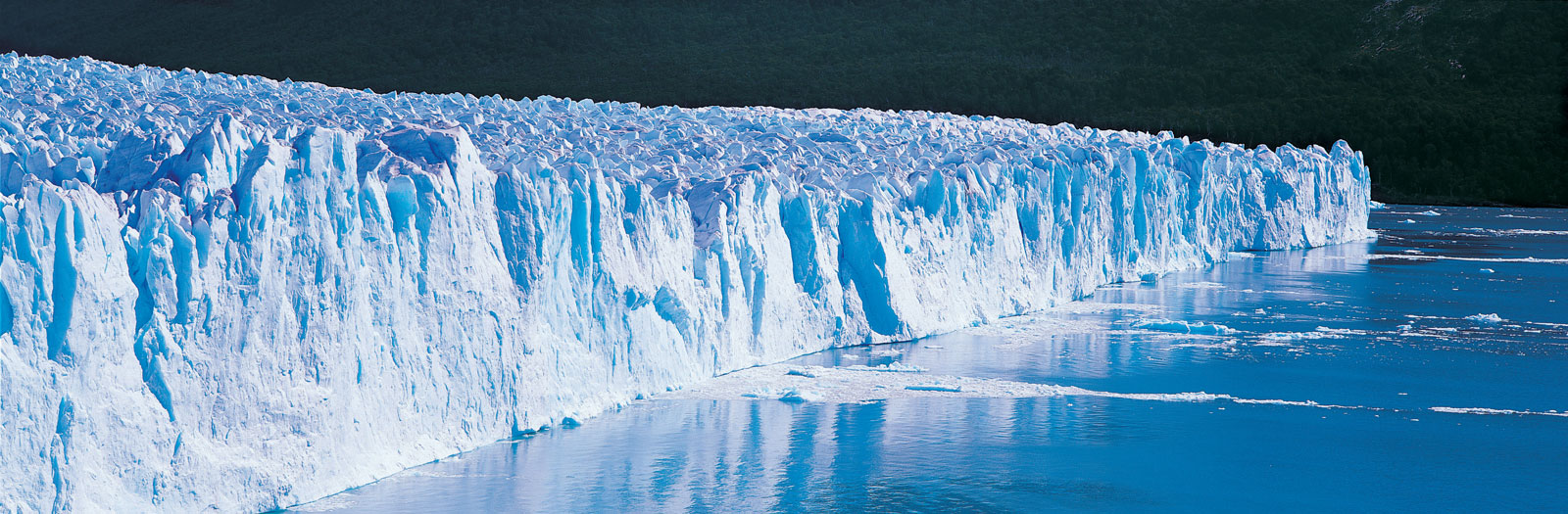
Greenland (near the North Pole) and Antarctica (South Pole) are home to most of the world’s glacial ice, including its only two ice sheets. Glaciers and ice sheets have been appearing in the news quite frequently in the past few years as they are increasingly unstable due to global warming. Just before Christmas it was reported that the Thwaites Glacier in the Antarctic, which is the widest glacier in the world and is sometimes referred to as the ‘Doomsday Glacier’, could collapse in as little as five years. Candice Moen has a closer look at our earth’s ice.
THE HISTORY OF ICE ON EARTH
There have been many ice ages on earth, most of them long before humans made their first appearance. These ice ages would have ranged from “comparatively mild” to “so severe that the entire Earth froze over for tens or even hundreds of millions of years”. Looking back over the history of these ice ages, the planet seems to have three main settings: ‘greenhouse’, when tropical temperatures extend to the poles and there are no ice sheets at all; ‘icehouse’, when there is some permanent ice, although its extent varies greatly; and ‘snowball’, in which the planet’s entire surface is frozen over. During the different greenhouse, icehouse and snowball there was ice present in various different locations across the earth’s surface.
The Barker home place near Derryvalley, Co Monaghan is enjoying a wonderful renaissance under the thoughtful stewardship of owner (and well known Toastmaster) Charlie Barker. A few intrepid members of Transition Monaghan took a visit to see and learn how diversification and respect for nature are paying dividends. Dermot McNally explains all.
Transition Monaghan are involved in a Water Quality awareness video project on Monaghan water quality. The project is led by Siolta Chroi, supported by Transition Monaghan and funded by LAWPRO). At this stage in late 2021, a lot of the footage has been taken and a few interviews have been done. There are a few more interviews to do before the footage can be edited to make the final video.






 Transition Monaghan