Cross Border Support for Renewable Energy & Sustainable Technology at CREST

Monaghan Ecological Group (MEG) is delighted to announce that two prominent members have taken up exciting new job roles with CREST (Centre for Renewable Energy & Sustainable Technologies), which is an innovative cross-border initiative to deliver a programme of technology development for small and micro business.

 CREST

 (Above) The layout of the Centre for Renewable Energy & Sustainable Technology Technologies, in Enniskillen, Co. Fermanagh.

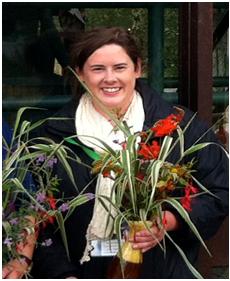
Andrea Corrigan and Barry Mc Carron have recently been employed as research and development associates with the CREST programme.

CREST will provide businesses with research and development assistance, including demonstration and testing facilities for new renewable energy products and sustainable technologies. The facilities will be used by small companies within the region who have ideas for new products but who currently do not have the physical and/or technical capacity to develop, test and commercialise these. CREST is supported by the European Union’s INTER REGIVA Programme managed by the Special EU Programmes Body.

The type of assistance available through CREST includes developing prototypes; testing new or innovative products; carrying out research relating to particular product/service areas; investigating further finance options; identifying and directing businesses towards further areas of assistance. CREST has four main partners including Institute of Technology Sligo, Cavan Innovation &Technology Centre, and Dumfries & Galloway College with the lead partner being South West College. The four CREST partners will form a support network of specialist innovation colleges and centres. The CREST teams and their facilities are available to assist with research, development and testing of innovative renewable energy and sustainable technology ideas as well as demonstrating how these can be integrated practically e.g. into domestic or business settings.

Barry McCarron will be based in Enniskillen with the lead project partner South West College. This will be the location of a new development specifically designed to provide industry research and development and testing facilities for new renewable energy products and sustainable technologies. Barry says “CREST is an exciting £2.9 million project which has the services to provide quality independent assistance both in the innovation and development of new and existing technologies”.

Andrea Corrigan,who has a background in environmental management and has been involved in various sustainable and renewable projects both in agriculture and industry,will be part of the CREST team in Cavan Innovation & Technology Centre (CITC). Based on the Dublin Road in Cavan, CITC facilitates and supports enterprise and economic development in the central border area.Andrea says “CREST provides a great opportunity to help and encourage small to medium businesses to develop new products and adapt existing products and processes which will ultimately increase their turnover, export sales, efficiency and profitability. It will encourage businesses to adopt a more sustainable approach to their activities and will be of particular value to those businesses who might not otherwise have the resources to research and develop their ideas.” Between June 2013 and December 2014, approximately 36 projects in the border region, will receive assistance from the CREST team at CITC. Further information can be found by visiting www.cavanitc.ie and selecting the CREST page.

If you have a query regarding eligibility of your business or your project idea, please contact us using the contact details provided below.

Barry McCarron – CREST Programme, South West College, Killyhevlin Industrial Estate, Enniskillen, BT74 4EJ (Tel: 028 822 5223) Ext2318

Barry.mccarron@swc.ac.uk

Andrea Corrigan – CREST Programme, CITC, Dublin Road, Cavan (Tel: 049 4377277)
andreacorrigan@crest.cavanitc.ie

The Power of Local Food


 Image

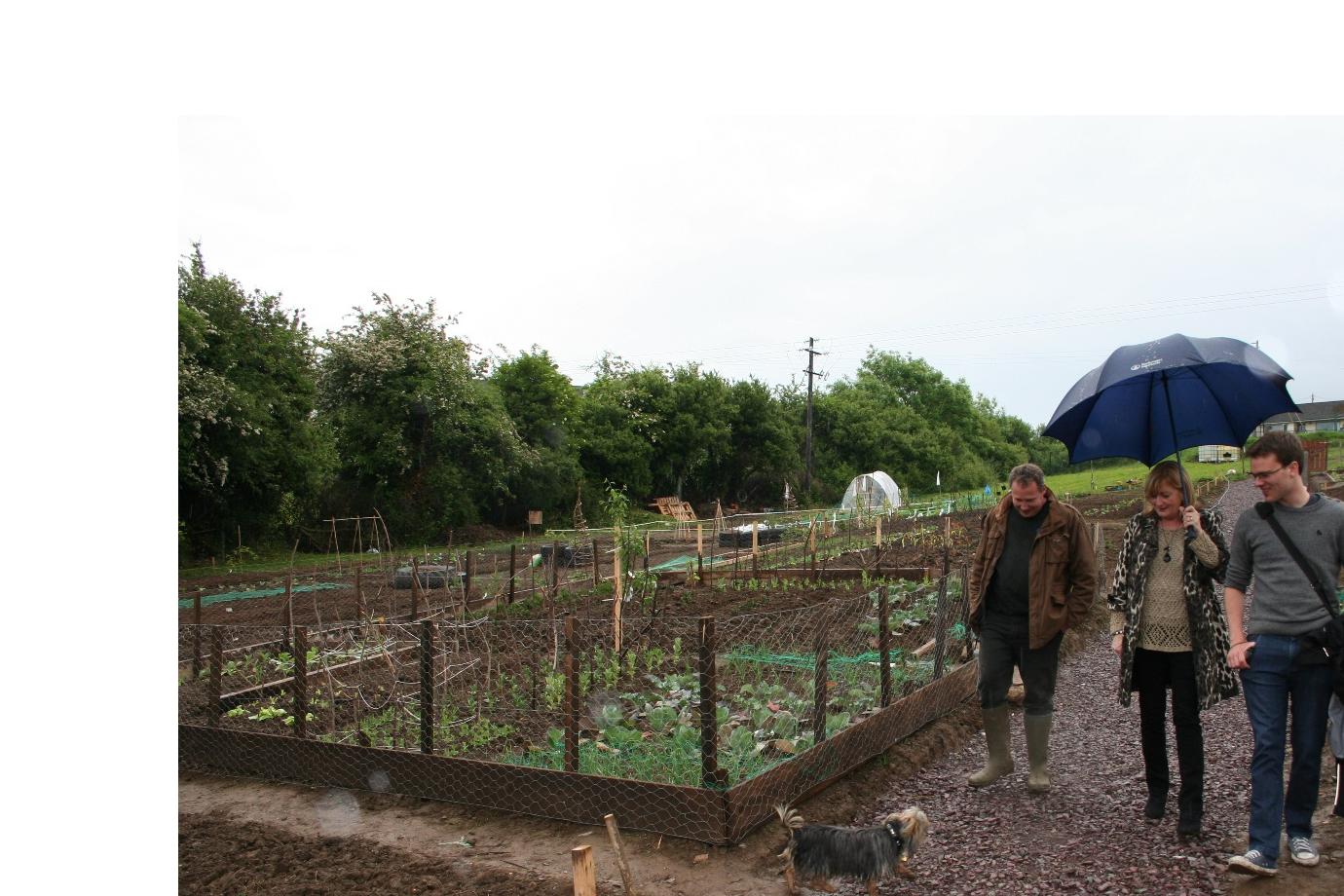
 Michal O Hare, Monaghan Allotment Society; Verona McGettigan, Ballinode Tidy Towns, Mícheál Callaghan, MEG; on a recent visit to the newly developed allotments at Killygoan, Monaghan.

On a recent visit to the new allotments at Killygoan, Monaghan, Mícheál Callaghan of MEG, saw first hand the positive impact local food projects can have on local communities.

We live in an era when we have more food available to us than ever before, with fewer people than ever involved in agriculture. We can go to our local supermarket and buy kiwi fruit from New Zealand or Coconut from the Tropics. Much of the food we produce in Ireland is exported to other countries. As well as resulting in increased emissions from large food miles, this systems of global food production also undermines local food security and often benefits large retailers at expense of smaller producers. This has a negative impact on smaller food retailers and local producers and leaves local communities more vulnerable to disruptions to this supply chain. The recent horse meat scandal showed some of the issues associated with large scale, globalised food production.

Local food production and market gardening can provide local jobs, boost food security and build community links. As well as this, food produced locally for local markets is easily traceable with consumers often having a direct relationship with the producer.

Allotments

Over the space of a few short weeks this Spring, volunteers from Monaghan Allotment Society and the Killygoan area of Monaghan Town, transformed an idle field to a vibrant community growing space, at Killygoan. Twelve people are now the proud holders of allotment plots, growing all kinds of vegetables and learning new skills. On a recent visit to the site, this MEG member was struck by how busy the site was and how much enthusiasm and pride those present showed for their plots. As well as improving local food security and helping to develop new growing skills, the development of the site has brought people together and built new links, acting as a new focal point for the community. It is a testament to what can be achieved when a community comes together to realise a common goal. As well as the allotments in Monaghan Town, Monaghan Allotment Society have two sites in Tydavnet and wish to develop further allotments in Monaghan Town.

Castleblayney is well served with community food projects. The mid – Monaghan town has three community gardens, with an allotment currently being developed in the town, thanks to the work of Castleblayney Community Gardens and the Castleblayney Enterprise Project.

MEG is also currently working with Ballinode Tidy Towns to develop a community garden and allotments at Cappog, Ballinode.

GIY

Grow It Yourself is a national organisation which aims to encourage people to grow their own food, using whatever space they have available, whether that be a small window box or a small farm. Their website has a wealth of information and tips for growers and first timers. GIY Monaghan meet on a monthly basis in the Market House, Monaghan, and their meetings feature guest speakers and provide opportunity to exchange tips and advice with other growers. Their meetings are open to all and they can be contacted at giymonaghan@gmail.com

Transition Towns

Transition Towns is a growing international movement, founded in Kinsale, which seeks innovative ways to build community resilience in response to the social, economic and environmental effects of Climate Change. The aim is to bring people together, through skill sharing and networking, in order to build more sustainable towns and villages, providing jobs and opportunities which will enable communities to flourish in a less energy rich world. A report commissioned by Transition Town Totnes, in England, states that harnessing just 10% of the demand for local goods and services in the sectors of food, renewable energy, retro fitting and Care & Health, could add up to £5 million to the local economy, provide hundreds of jobs and lessen the impact on the environment.

Monaghan Ecological Group (MEG) is a recently formed Transition Initiative which aims to harness the potential for a more positive local economy and society at local level.

Ballybay Food Event

 MEG is organising a local food networking event in the Ballybay Wetlands Centre on Friday 23 August. All are welcome to attend, and it will be of particular interest to those interested in the local food economy and sustainability. It will provide an opportunity for organisations, public representatives and individuals to come together, enjoy locally produced food and learn more about the work of MEG in the relaxed setting of Ballybay Wetlands Centre. All food on the evening will be provided by local growers and producers. Local musicians will provide the backdrop for what will be a celebration of the power of what can be achieved at community level. The event will open with an address from a prominent figure in the Transition Movement.

For more information about MEG please contact monecogroup@gmail.com

Useful Resources

Monaghan Ecological Group – http://www.monecogroup.wordpress.com

GIY Ireland – www.giyireland.com

Transition Network – www.transitionculture.orgwww.transitiontownsireland.ning.com

Ballinode Community Allotments

In partnership with Ballinode Tidy Towns and Monaghan Allotment Society, Transition Monaghan applied to Monaghan County Council for permission to use the greenfield site at Cappog, Ballinode for the purpose of developing community allotments and a community garden for the people of Ballinode. Over the Autumn and Winter months we will begin preparing the site so  that we residents and community groups in Ballinode can being growing in Spring 2014.

DSCF6141

The site for the proposed allotments & community garden in Ballinode.

Continue reading

Monaghan Ecological Group (MEG)

ImageMonaghan Ecological Group (MEG) is part of the world wide Transition Town movement. The transition town movement is a response to the social, economic and ecological crisis which are the results of climate change and shrinking supplies of cheap fossil energy. The transition town movement recognises the great challenges that will be faced by society as a result and seeks to foster a community led response to these challenges by building resilient, sustainable and fulfilling local communities in which to live. We will all have to live with less energy in the future, however it is possible to do so in a way which actually enhances happiness and community cohesion.

The transition town movement is aptly named as it is about helping communities in transition to this new paradigm. It focuses on building ways of living that are more connected than ever and that operate within the ecological limits of our planet. The transition town movement is a bottom up initiative which empowers local people, independent of centralised decision making, to make positive changes to their community, without waiting on someone else to implement these measures for us. This transition will face us all and it is vital that as a community we can pool our resources, skills and knowledge to make this transition as effective as possible.

MEG focuses on building links with local bodies and other local interest groups as well as local representatives and politicians to ensure that there is cohesion in the transition to a low energy, sustainable society. There are many ways that this can be done and anyone who has a special skill or interest is highly encouraged to become part of this movement for the future of our community.

The main activities and areas that the group focus on are food growth and security, education as well as empowering people with various skills needed to make the transition and the establishment of links and contacts with local businesses to bring them on board. There are many successful transition town organisations around the globe and more can be found out about this movement on the website of the transition network –   www. transitionnetwork.org.

Facebook – www.facebook.com/monaghan.ecologicalgroup

E-mail – monecogroup@gmail.com

We also have a dropbox a/c containing more information regarding events and meetings the group has/will hold.  For details on how to access this account please email MEG.

Foraging in Rossmore (June 2013)

Learning about Wild Food and Medicine in Rossmore Park

Up to 30 people gathered recently in Rossmore Park to hear Felim MacGabhann speak about the wild and edible plants of the park, on a walk organised by Transition Monaghan.  The walk was well attended and extremely informative and enjoyable despite the poor weather. TM member Mícheál Callaghan reflects on the walk and related issues. Scroll down to see more pictures from this event.

Felim

Felim MacGabhann speaking in Rossmore Park at the recent walk which focused on wild and edible/medicinal plants

Continue reading

Cloughjordan Ecovillage Trip (April 2013)

Members of Monaghan Ecological Group enjoyed an interesting and inspirational trip to Cloughjordan Eco Village, Tipperary, on Saturday last. Scroll down to see photos of this event.

Cloughjordan,is a village of under 1,000 people located in North Tipperary, near  the towns of Roscrea and Nenagh. In the 1990s a group of people from different walks of life, with a concern for environmentally sustainable living, decided to come together to start an intentional community, centered around the values of environmentally and economically sustainable community living and green enterprise. They placed an ad in the Farmers Journal seeking land, and acquired a site of 67 acres of lush farm and woodland in rural Tipperary. Over the years, the project has gone from strength to strength, with 53 residential units, consisting of housing and apartments, currently on site. There is scope for up to 135 units on site.

Continue reading

The Evidence is in the Ice

MEG members Mícheál Callaghan and Liam Murtagh went along recently to a public screening of film Chasing Ice at the IFI Dublin. The film depicts the work of photographer James Balog and his team who captured changes in the Arctic Ice Caps using time lapse photography and video capturing of the ice caps over a number of years. The result is an unprecedented recording of the dramatic changes in the Arctic Ice Caps over recent years. The film provides compelling evidence that Climate Change is occurring, that it is the result of human activities and it is happening faster than previously expected.

Continue reading