Overuse of Antibiotics in Farming & Healthcare Creates Superbugs

The World Health Organisation (WHO) has recently warned of the increasing prevalence of antibiotic resistant bacteria.  This means that common antibiotics we routinely use to treat small infections may soon be useless and could leave us in life-threatening situations.  Dearbhla Lenehan, a PhD research student and member of Transition Monaghan takes a look how this era of antibiotic resistant bacteria has come about.

d

There are many situations in which antibiotics are really important in combatting illness, but taking antibiotics when we don’t need them can be harmful and helps bacteria become resistant to them.  There are two main organisms that cause infections – viruses and bacteria.  Viruses cause illnesses more often than bacteria. Viruses cause colds, flus, sore throats and most coughs. Unfortunately, taking antibiotics for a viral infection  will not make you feel  better  and can help bacteria turn into                                                   superbugs.                                                                                                                                                                                                                                                            Dearbhla Lenehan

Another reason for the emergence of these superbugs is not finishing a course of antibiotics. Antibiotics are designed to kill bacteria and when we take them, both good and bad bacteria in our bodies are killed.  When we start to feel better we might think there is no need to continue taking our medication.  This is not true.  The first antibiotic dose will kill off a lot of the infection causing bacteria, which is why you start to feel better, however, if you do not finish your antibiotic course, there are still some infection causing bacteria left in your system.  If they are not all killed off, it allows these surviving bacteria time to thrive once again by becoming resistant to the antibiotic that tried to kill them.

The overuse of antibiotics in the farming industry is a massive contributor to the emergence of these antimicrobial resistant bacteria strains.  Farm animals and poultry are routinely given antibiotics for prevention and treatment of disease.

In organic food production antibiotics are not used on the same scale as on non-organic farms. An organic farmer may only use antibiotics on animals in the interest of animal welfare and where other options have failed or are likely to fail. When an animal is treated with antibiotics on organic farm, that animal, or any derived food such as milk, meat or eggs, is not allowed to enter the human food chain for a defined withdrawal period following treatment. Perhaps we as consumers should whenever possible try to buy organic produce – the more of us who buy such produce the more farmers will convert to organic systems. In Co Monaghan there are only about 15 organic producers or processors listed as being certified or ‘in conversion’ to organics.

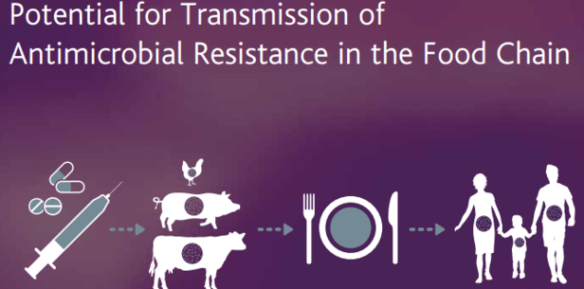
The Food Safety Authority of Ireland has warned that urgent control measures must be instated to reduce the number of farm animals and poultry being given antibiotics.  This comes as a recent report found that antimicrobial resistant bacteria are transmitted from farm animals into the food chain. How bacteria gain this resistance is through sharing genes with naturally occurring environmental microorganisms that have resistance genes normally. When exposed to low levels of antibiotics, in a bid to survive, bacteria can acquire these resistance genes from other species. This is how bacteria become antibiotic resistant allowing existing pathogens, to gain greater resistance and turn into ‘superbugs’.

The European Centre for Disease Control estimates around 25,000 deaths a year in the EU is caused by resistant bacteria. It is no wonder that bacteria become resistant to antibiotics when approximately 250,000 tonnes of antibiotics are used annually for medical and agricultural use.  In a bid to reduce the resistance evolution, the recent FSAI report concluded that we need to prevent infections on farms so drugs don’t have to be used and that surveillance along the food chain must be improved. WHO and the US Centers of Disease Control understand that we are entering a superbug era and have identified this as high priority research.  We too can help halt bacterial resistance by using antibiotics wisely both in healthcare and faming. The advice is not to dump unused antibiotics in drains or toilets but rather bring them to your local pharmacy for safe disposal.

While research on antibiotics and superbugs is ongoing, we all still need to take precautionary measures now to avert a situation emerging in which antibiotics are completely useless – and this could happen in the very near future.
fsai

Source: Food Safety Authority of Ireland

The December Noticeboard can be found here and the January noticeboard is here
Transition Monaghan Supports the Community Energy Proclamation

Capture
The Community Energy Proclamation visions a transition to a clean, secure energy future for everyone in Ireland.  The proclamation has been signed by over 100 community groups (including Transition Monaghan), co-operatives, energy agencies and NGO’s, and calls for a number of policy changes to allow communities to participate in Ireland’s energy generation and to allow the community energy industry to develop.
These include setting a target for community energy in Ireland and removing a number of technical and financial barriers such as access to the grid, payments for solar energy for micro-generation and for renewable heat, and support and advice structures to enable community groups to develop renewable energy projects.

The vision of the proclamation is for a transition to a clean, secure energy system for the citizens of Ireland, where communities – whether organised as co-operatives, voluntary associations or individual citizens – can get involved in energy planning, conservation, energy generation and energy distribution.

The Communtiy Energy Proclamation is available at this link and is attached.
https://drive.google.com/file/d/0B91skN4BggMWTzFxd1MxeFFob1k/view?usp=sharing

or by clicking on the following pdf file – Community_Energy_Proclamation

It can still be signed here.
In contrast to many of our European neighbours, community owned renewable energy in Ireland is practically non existent.  A fundamental shift in policy is required that views citizens and communities as indispensable agents in securing our energy future, not obstacles to be negotiated.

This transformation will not happen without the power of the people.


Monaghan Marchers Brave Storm to Join Worldwide Campaign for a Safer Climate

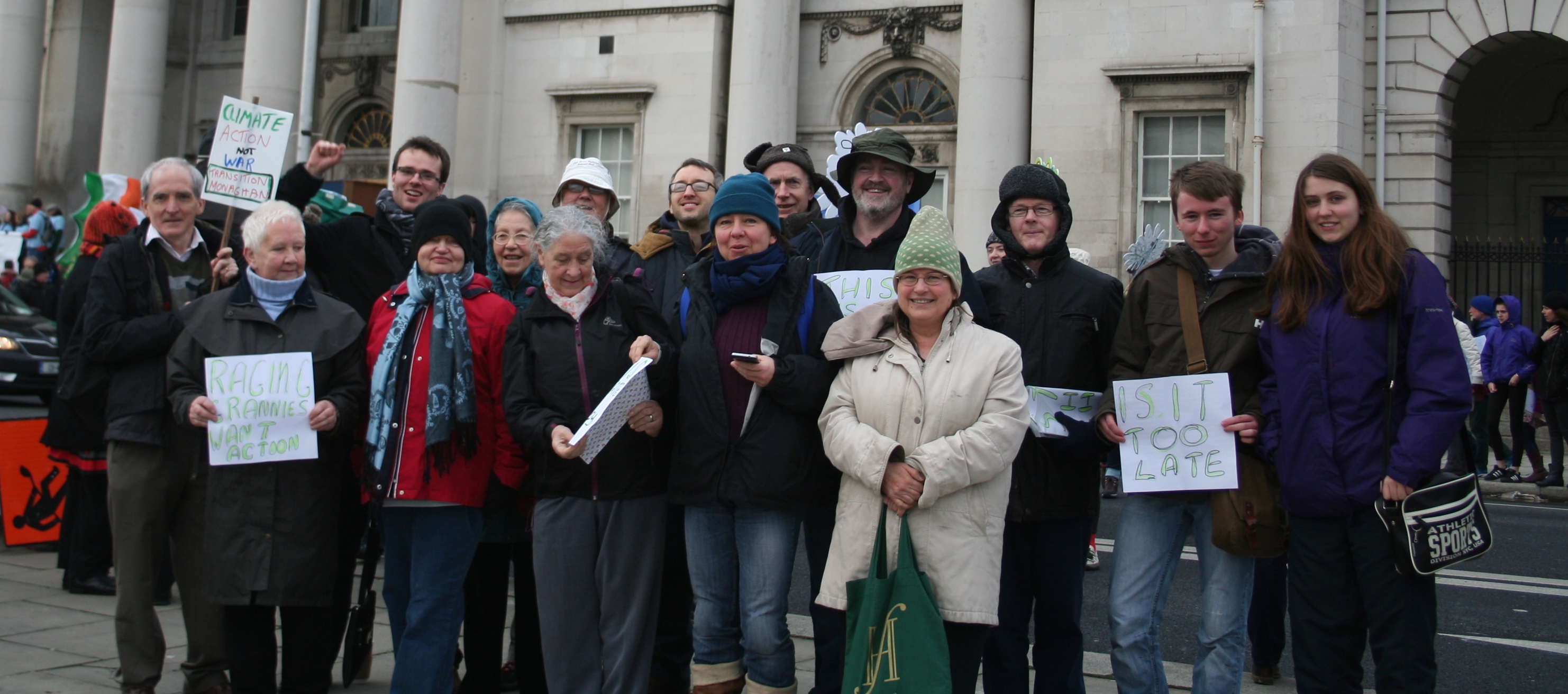
On the eve of the UN Summit on climate change in Paris (COP21), hundreds of thousands of people marched to demand action on climate change in cities across the globe. Among the estimated crowd of 5,000 in Dublin, was a number of people who made the journey on a bus organised by Transition Monaghan, despite adverse weather conditions.

climate march

Climate campaigners from Monaghan pictured outside the Custom House at the start of last Sunday’s Climate March in Dublin.    

Continue reading

Take ‘Transition’ Bus to Climate March in Dublin on Sunday

Join in Global Call for a Safe Climate for This & Future Generations

climate

People in Co. Monaghan have the opportunity to support the call for action on climate change and climate justice by attending the Peoples Climate March in Dublin on this Sunday, 29 November. The march is one of 1500 marches taking place in 70 countries in advance of the crucial climate talks taking place in Paris in December.

A bus is being organised by the Transition Monaghan Group and it will call via Monaghan, Castleblayney and Carrickmacross to pick up anyone who wishes to go along. The times of departure are 11am from the Court House Car Park, Monaghan; 11:30am from the Old Coach Inn, Castleblayney; 12 noon from Carrickmacross Courthouse Square. To book tel 086 8130296 or email transitionmonaghan@gmail.com – preferably by tomorrow Friday at 6pm. Further details on Transition Monaghan Facebook page and at http://www.transitionmonaghan.org.

It is anticipated that hundreds of thousands of people will take to the streets, in buoyant mood, to demand strong action on climate change, in marches and gatherings across the globe. As well as the gathering in Dublin, there will be gatherings in Belfast and Cork and show that we demand action from politicians to secure a stable future for us all.

The marches happen the day before world leaders gather in Paris for hugely significant UN Climate Change talks (COP21), where it is hoped that they will agree a legally binding text which will set the world on a path to stabilise the climate this century. Based on pledges made by countries to date it is unlikely it will be enough to bring the world under the critical 2 degree warming threshold to avoid runaway climate change. Therefore civil society has an important role to play in calling on politicians to go further. Indeed COP21 is about much more than staying below 2 degrees of warming. Climate change is an economic, social and security issue. It is an opportunity for politicians and citizens to unite to create a more stable world of enough, where people are not driven to conflict to attain basic resources like water and food.

In the wake of recent atrocities, COP21 is an opportunity for leaders to show they are committed to peace and security by reaching a deal in Paris. The campaigning group AVAAZ has called on people to turn up in their hundreds of thousands around the world in solidarity with the people of Paris, who will not be allowed to march at this time. Indeed, thousands of activists who had planned to travel to Paris during COP21 will no longer be allowed to march peacefully in Paris during the conference. While security is undoubtedly on everyone’s minds, it is a sad reality that ordinary citizens will be prevented from voicing their concerns over the future of the planet, while large and powerful lobbyists, many from the fossil fuel industry, will have privileged, high – security access to the conference, where they will attempt to woo politicians against necessary emissions cuts. Let’s all do what we can, and turn up in strength and solidarity on this Sunday and show politicians that we stand with them in their attempts to secure a positive deal for us all.

More than Just a March

While the march will be a focal point of action in Ireland before COP21, there are other prominent events coming up. On Friday and Saturday the Pope’s recent encyclical, ‘Laudato Si’ will be the focus of a conference in Dalgan Park, Navan. Speakers including Eco–theologian Fr Sean McDonagh, climate scientist Professor John Sweeney and leader of the Green Party Eamon Ryan will address the links between theology and the climate. If you are unable to attend this event, but would still like to learn more about the encyclical and discuss how it is relevant to life in Co. Monaghan, there is a discussion group every Monday evening in the Pastoral Centre Monaghan at 7:30pm.

The climate marches remind us that we need to move to a low carbon economy.  On this theme a free ECOPRO seminar take place this Saturday in DCU, Dublin. It’s entitled ‘Sustainable Communities, Sustainable Jobs, Developing a Circular Economy’.  See Noticeboard below for contact details for all events mentioned above.

It’s worth bearing in mind, that the climate march and the energy generated around the Paris talks is only the start of a citizen–led movement which is gaining momentum around the world. Transition Monaghan have plans to organise a number of events promoting local action and resilience in Co. Monaghan, and we always welcome new members. Keep an eye on this column or http://www.transitionmonaghan.org to keep up to date with how you can get involved!

Paris Atrocities Won’t Stop Crucial Climate Talks Climate Marches Planned for Dublin and Worldwide

Last week’s atrocities in Paris shocked us and we sympathise with the families and friends of the dead and injured.  French authorities have confirmed that next month’s crucial climate talks in Paris will go ahead but amid tighter security. In advance of these talks, marches are being organised worldwide to remind the decision makers that they need to sign a climate agreement that will ensure a liveable world for our children and grandchildren. The Dublin march will take place on Sunday, 29 November at 2pm. A bus is being organised by Transition Monaghan to take people from Monaghan to the Dublin march – details at the end of this article.

Last year, all over the world, nearly half a million people took to the streets of their major cities (including over 300,000 in New York alone) to demand strong political action on the climate issue. Gradually it appears that many citizens and leaders are beginning to realise that we are the first generation to feel the effects of global warming and the last generation to be able to do anything about it – but many people including politicians remain to be convinced.

It is widely recognised that we must act now to prevent the critical 2 degree plus rise in average global temperatures. Only last week, scientists revealed the average global temperatures for the first 9 months of the year were 1 degree above pre–industrial levels for the first time in history. This new data will inject urgency into the upcoming UN climate talks in Paris, where world political leaders aim to reach a deal that will keep global average temperature rises below the critical 2 degree mark.

Our politicians need both pressure and support from us to make a deal in Paris a reality. They are facing lobbyists and pressure groups from multinational industries (such as aviation, fracking, oil and gas). These lobbyists have had a lot influence on our politicians – ensuring that little has been done to tackle the high emissions that are causing climate problems. These problems will only worsen if a ‘business as usual’ approach continues.  Instead of a 2 degree increase, a very undesirable 4 degree increase is predicted by the end of this century if we continue the current trend in emissions.

Climate change has already affected millions of the world’s poorest people, inflicting drought, famine and severe flooding on those who have fewest resources to adapt to such changes. While the consequences of not acting are dire, the good news is that there is still a small amount time to affect change, and ordinary citizens can play a very powerful role in bringing about change. Naomi Klein in her book ‘This Changes Everything’ called for a coming together of people of all backgrounds to demand no new fossil fuel extraction and a more equitable world. Pope Francis in his encyclical Laudato Si’ has also emphasised the important role we all can play in tacking the issue of climate change. People Power all over the world is now surging and it is succeeding. One encouraging example of this occurred last week in the US. After years of campaigning by local townspeople and indigenous populations all across the proposed route, Barack Obama announced that a major oil pipeline (KeystoneXL) between Canada and the USA is being halted.

This year, just a couple of days before the start of the all-important UN climate summit (COP21) in Paris, people all over the world will be part of the largest mobilisation for justice ever seen and once again stand up for their homes, for their neighbours, their families, their children and for their and everyone’s future. Organisations such as Trocaire, Stop Climate Chaos and Friends of the Earth are calling for people to turn up in their thousands and join them at The Custom House in Dublin for our contribution to the ‘global action’. The People’s Climate March will take place on the Sunday, 29 of November at 2pm.  We have organised a return bus from Monaghan to Dublin. To book your seat please email transitionmonaghan@gmail.com or book via the link on the website: transitionmonaghan.org or on our Faceboook page. The cost is €10 per person.

‘RE–IMAGINING MONAGHAN’ PLANNING EVENT

Re-imagine monaghan

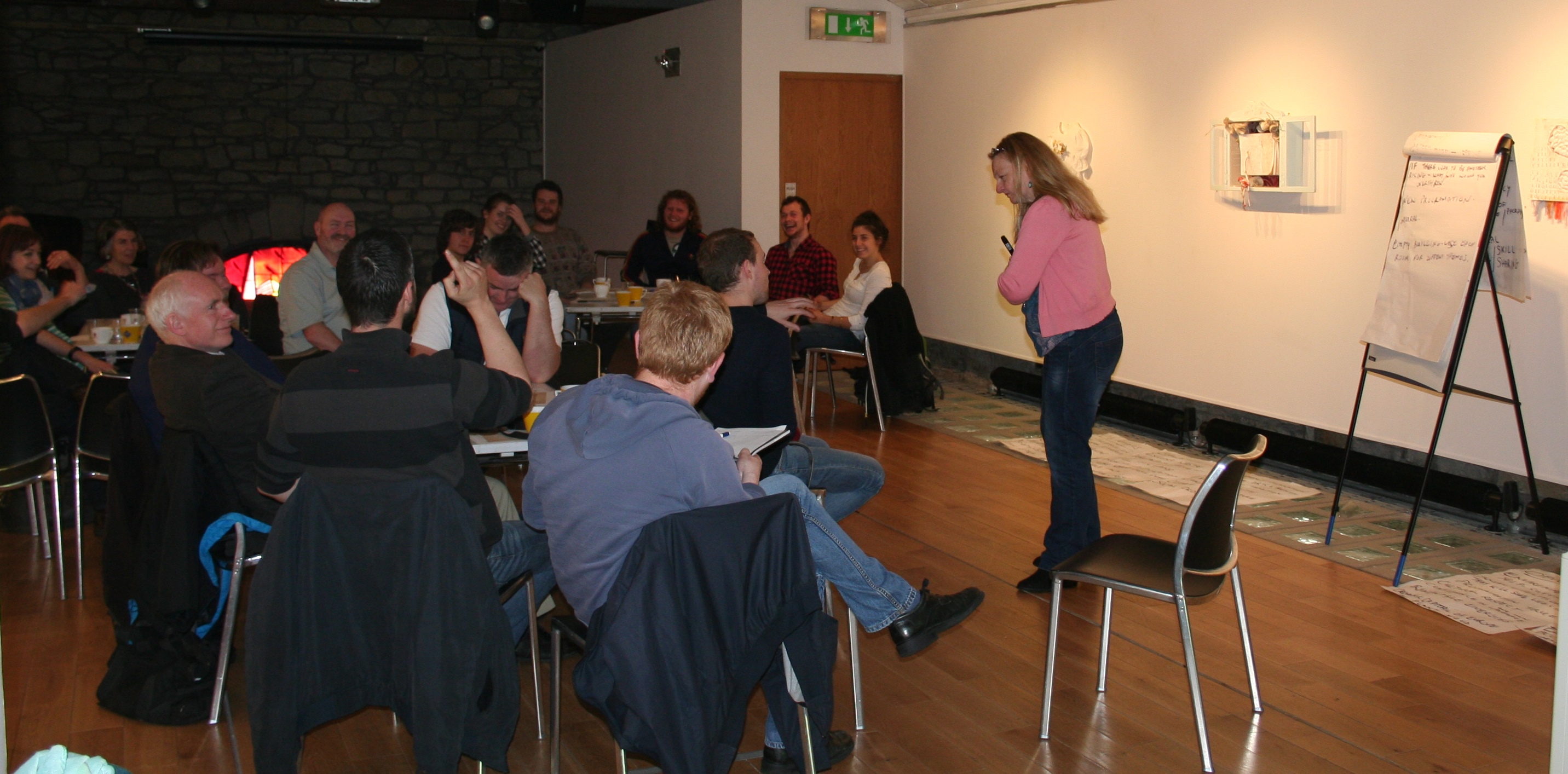
Pictured above is Dara Mac Gabhann facilitating a workshop in the Market House, Monaghan on Saturday last. The workshop focused on the challenges and opportunities that participants felt that people of Co Monaghan will face in the coming 100 years. Creative ways to convey how these opportunities would be realised were explored with a view to holding an event on this theme as part of Monaghan County Councils 1916 – 2016 commemorations. Transition Monaghan will consider the output of the workshop and liaise with Monaghan County Council in relation to planning the 2016 event. There will be a further meeting in the near future to begin acting on the ideas suggested. If you weren’t able to make it on Saturday, but would still like to input, you are welcome to do so by contacting transitionmonaghan@gmail.com.

MAPPING OUR BUILT HERITAGE & PROVIDING FUNDING FOR PROTECTED STRUCTURES

Maps of the Architectural Conservation Areas (ACAs) for Monaghan Town, Carrickmacross and Clones are now available to download from the Monaghan Co Council website. Meanwhile the Minister for Arts, Heritage and the Gaeltacht, Ms Heather Humphreys, TD, has announced the Built Heritage Investment Scheme (BHIS) 2016, a new investment scheme for the repair and conservation of protected structures.  The closing date for completed applications is on or before Monday, 7 December 2015. To download the maps of the Co Monaghan ACAs or the BHIS details / application form see http://www.monaghan.ie/en/newsevents.

More Focus Needed on the Sustainability Summit and Less on the ‘Controversy’ at the Web Summit

Two Transition Monaghan representatives, Jennifer McAree and Mícheál Callaghan, attended the National Sustainability Summit which was held in the Aviva Stadium, Dublin on Tuesday, 3 November. Jennifer now reflects on the conference, the theme of which was ‘securing Ireland’s Future’Jen McSree

While there was much media coverage on the controversial Web Summit in the RDS, the National Sustainability Summit, which was happening nearby, received virtually no attention. This lack of coverage was undeserved as the summit brought together a range of businesses and agencies from across Ireland to showcase and share new experiences and ideas in the sustainability field. They included innovative business leaders from Irish and international companies who have made impressive strides in making their businesses more eco-friendly and socially               Jennifer McAree                responsible. Others were representatives of                                                              forward-thinking governmental or semi-state agencies                                                     that have taken steps to improve their environmental practices.

Workshops at the conference covered the following topics: Food & Agriculture; Energy; IT; Construction; Water, Wastewater & Water Efficiency; Transport Supply Chain & Logistics; Corporate Social Responsibility & Stakeholder Engagement and Environmental Stewardship. Paul Price from An Taisce spoke about ‘Pathways to a Low Carbon Future’. He stressed how Ireland must go beyond the EU 2020 goals and start to take more stringent action right now if we are to have any impact on climate change. Our agriculture and energy emissions are especially high and must be addressed immediately. Jennifer Casey of Business in the Community (BITC) encouraged all enterprises to make changes that will improve their environmental and corporate social responsibility (CSR) performance. By doing so, it not only raises the positive profile of the company in question, but can elicit major financial savings.

Michael Kelly gave an inspiring talk about setting up ‘Grow it Yourself’ (GIY), an organisation he founded which has seen huge success around the country and beyond since its inception. Michael experienced a ‘light-bulb moment’ during a trip to his local supermarket when he realised he was buying garlic from China, when it could easily be grown in his back yard. With no previous experience he began growing his own vegetables and now believes that everybody should give it a try. GIY received a €100,000 grant from Social Entrepreneurs Ireland which has helped to build upon its success.

A really inspiring presentation was given by Niamh Kirwan from ‘FoodCloud’. Set up in 2012 by two young Irish Trinity graduates, the business links retailers with charities that need a constant supply of food. This is done through the ‘FoodCloud App’ or by text message. Produce that would otherwise end up in landfill is sent to feed those in need. Most Tesco stores in Ireland are now signed up to the scheme, and FoodCloud will soon expand into the UK market. Other interesting talks included the problem of invasive species in Ireland and what is being done by Inland Fisheries Ireland to fight it; Cork University Hospital’s impressive journey to achieve An Taisce’s Green Flag status; the plight of Ireland’s biodiversity, and the opportunities that exist for a more circular economy, i.e. thinking about the design of products from the very beginning in order to reduce carbon emissions and reliance on raw materials and energy throughout their manufacture.

This was a really worthwhile summit and I left with much to think about. While such conferences have a role in promoting sustainability, there is still a long way to go – and very little time left – for the business and farming sectors in Ireland to reduce greenhouse gas emissions to acceptable levels. This is the level required to ensure that we in Ireland play our part in the global effort to avoid catastrophic climate change. The ‘Web Summit’ is moving, somewhat controversially, to Lisbon next year. Perhaps this means the national media will be less distracted and pay a little more attention to the National Sustainability Summit 2016 happening here in Ireland.

Gatherings in Monaghan, Dublin & Paris to Focus on a Sustainable Future for All

A gathering in the Market House, Monaghan this Saturday morning will consider plans for an event in 2016 to re-imagine Co Monaghan in 100 years time. The Transition Monaghan event which commences at 11am is open to all. In December, world leaders will meet in Paris for the crucial UN Climate Talks (COP21. A ‘People’s Climate March’ will take place in Dublin in advance of the Paris Summit to highlight the need for the summit to agree a legally binding agreement to avert climate chaos.  While different in scale to our gathering in Monaghan, the Paris gathering will be one that will also look to a sustainable and resilient future – where the needs of people will be met without compromising the ability of future generations to meet their own needs.  This week we take a closer look at the Monaghan and Dublin events – there are other events related to climate change and sustainability that are listed in the Noticeboard below.  

 COME TO THE MARKET HOUSE THIS SATURDAY TO  RE-IMAGINE MONAGHAN’S FUTURE

 Climate Change will be one of the biggest issues in the next hundred years. It is important that we, as a community, respond by taking actions that will reduce our environmental impact while also preparing for the changes that lie ahead in all sector of life. We would like to invite all members of the public, to share their ideas on how we can re – imagine Monaghan’s future for the next 100 years, to ensure our continued prosperity and well – being in challenging times. It seems that the main challenge will be how to live in  a zero-carbon society and ensure that as individuals and communities we are resilient and that human rights and justice prevail. Increasing numbers of refugees arriving in our communities,  resulting from conflict and climate change, is an example of how the world is likely to be different in the coming years.

As part of Monaghan County Councils 1916 – 2016 commemorations, Transition Monaghan has been invited to prepare an event entitled ‘Re – Imagining Monaghan’s Future’, which will run next year. This will be an interactive, engaging and fun day of workshops which will present the various challenges and opportunities facing our county in a creative way. In particular we would like to invite local artists, actors, poets, writers, film – makers, singers and all creative types to consider how we can present these challenges in more engaging and appealing ways.

If you have any ideas for short plays, songs, poems, films, talks, workshops, or if you are simply curious about what other people think, then come along to our brainstorming workshop this Saturday in The Market House, from 11am to 1pm. Participation is free of charge and everyone is welcome. If you would like more details please contact Mícheál on 086 865 2724 or e-mail transitionmonaghan@gmail.com.

JOIN US AT THE PEOPLE’S CLIMATE MARCH ON 29 NOVEMBER

On the 29th of November, hundreds of thousands of people are expected to take to the streets of cities across the world, to demand action on climate change, on the eve of the Paris Climate summit. Dublin will host its own climate march on Sunday 29th November, and the organisers are calling on people of all ages, from every background to come out paris marchand show their ‘Earth Pride’. The march will leave from Custom House Quay, in the city centre, at 2pm. While the issue is of huge importance, the day itself will be light – hearted and will provide an opportunity to show solidarity with those who are worst affected by climate change. Transition Monaghan will be organising transport at a reasonable rate for anyone who wishes to join us on the day. More details will be released in next week’s Sustainability Matters column. If you are interested, or would like to receive an e-mail update, please email transitionmonaghan@gmail.com

Could you Suggest how we Might ‘Re-imagine Co Monaghan’s Future’?

Calling all artists and musicians, activists and pacifists, school teachers and shopkeepers, grandparents and young people, butchers, bakers and candlestick makers, GIY enthusiasts and farmers and as many imaginative, creative Monaghan people as possible to come alone and create the best fun inspiring and uplifting event Monaghan will see in 2016!

Transition Monaghan is seeking your views on how we can re – imagine Monaghan’s future to 2116, and so ensure that our county has the resilience to deal with the environmental, social and economic challenges of the 21st century. We are holding a brainstorming event on Saturday, 7 November, from 11am to 1pm in The Market House, Monaghan. People of all ages, backgrounds and interests are being invited to come along and express how best we can address the challenges and opportunities that face us in the next 100 years. The ideas generated will help us plan an exciting event next year as part of Monaghan County Council’s 1916 Commemorations. The event in 2016, entitled, ‘Re – Imagining Monaghan’s Future’ will feature a number of sessions, whereby artists, musicians, poets, story tellers, academics, and many more will express their views on what Monaghan could and should look like in a hundred years time.

If you are interested in writing a poem about climate change, a drama about the importance of community or a song about growing your own veg (as examples of some possible ideas!) then we why not come along to our brainstorm on Saturday, 7 November. The session, which is free to attend, will be facilitated by Dara Mac Gabhann, who is well – known from her work in Monaghan Community Forum and various arts and cultural organisations.  Tea and coffee will be provided.  If you have queries / ideas, please contact transitionmonaghan@gmail.com or call Mícheál on 086 865 2724. For information on Transition Monaghan see our Facebook page or our website http://www.transitionmonaghan.org.

COMING TOGETHER OF GENERATIONS AT MONAGHAN U3A CLIMATE JUSTICE CONFERENCE

Defying age – related stereotypes, over 120 people of all ages, attended the highly successful Climate Justice Conference on Friday last, organised by Monaghan U3A (University of the Third Age). The conference, entitled ‘What will we tell the children when they start to ask us why?’ focused on the intergenerational elements of climate change. This refers to the fact, that carbon emitted into the atmosphere remains there for hundreds of years, so unless we take radical action now, those who are not yet born will suffer the worst effects of climate change.

A number of very interesting speakers outlined the scientific, moral, ethical, cultural and political elements of climate change. Theologian and Columban priest, Fr. Seán McDonagh referred to the Pope’s recent encyclical on climate change (Laudato Si’) as “the most important document from the Church in my lifetime”. Fr McDonagh expressed his belief that each diocese should set up a Synod to address the issue of climate change. He quoted the Pope’s strong words about our planet “starting to look more and more like a big pile of rubbish”, and he challenged the notion that human – beings have ‘dominion’ over the Earth.

Two particularly interesting guests were Sigurd Reimers of Grandparents for a Safe Earth and Elizabeth Vezina of the North American Raging Grannies. They are ‘older’ activists who campaign in various ways on climate change and other environmental issues. Sigurd Reimers describes how Grandparents for a Safe Earth engage in peaceful demonstrations, occupy banks and take part in colourful and creative marches and actions. He spoke of the need to be aware of the emotional element of climate change, in particular, as it can lead to feelings of helplessness and frustration. The Raging Grannies, also partake in various colourful direct actions, by conveying their message through song, dance and marches. Perhaps their contributions will inspire some of the attendees to set up similar organisations in Co. Monaghan?

Other speakers at the event included Professor John Barry (Queen’s University), Dr Lorna Gold, (Trócaire) Dr. Frank McGovern (EPA), Paul Nolan (Met Eireann) and Oisín Coughlan (Friends of the Earth). There were also contributions from Young Friends of the Earth, Age Action and Linking Generations (Northern Ireland). One of the key messages to come from the conference was the need to stress to politicians the importance of strong, meaningful emission reduction targets. This is a message with which Transition Monaghan would agree.

Postscript: This week we hear that gigantic fires in Indonesia, that have been intentionally lit,  are  out of control and will make global warming even worse. It points to the urgent need for a concerted effort, by all of us, to use the last opportunity we have to avert the oncoming climate crisis.

u3A

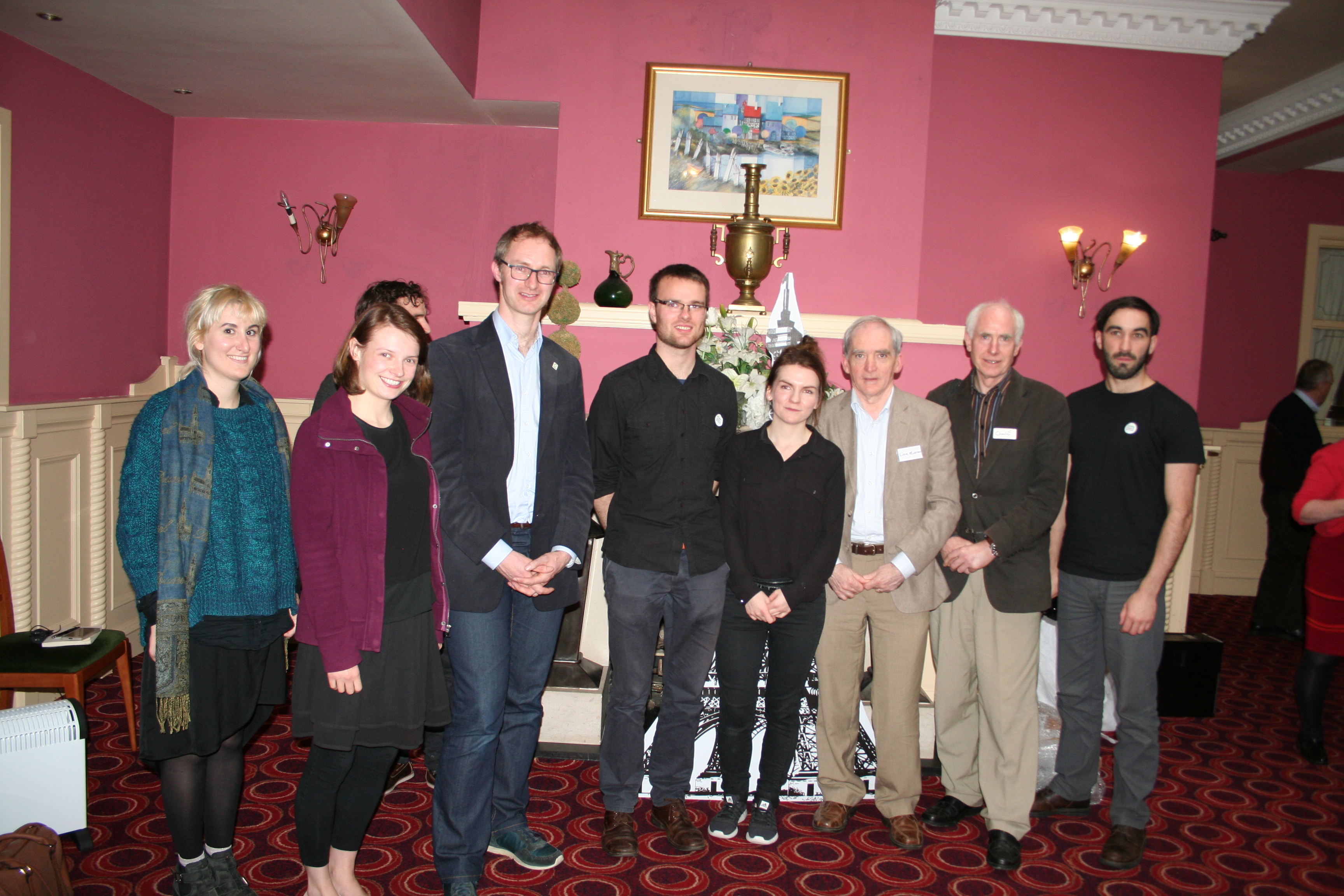
Pictured at the U3A Climate Change Conference in Monaghan were members of Friends of the Earth and Transition Monaghan: (left to right) Sydney Weinberg, Heather Mason, Oisin Coughlan, Mícheál Callaghan, Meaghan Carmody, Liam Murtagh, Charlie Barker and Conan Connolly.

Budget 2016 is not ‘Future-Proof’, say Environmental Organisations

Will Budget 2016 help in preparing Ireland for the low carbon / low energy future that is needed to deal with climate change, now regarded by many scientists as the greatest threat facing humanity? An Taisce says that in the Budget there is no overarching vision to dramatically transform our transport, housing, energy and agriculture sectors towards genuine sustainability or serious investment in adaptation to the projected impacts of climate change. One measure that was welcomed by An Taisce was the move to commit extra funding to the ‘Better Homes’ Programme as a start in improving the efficiency of our total housing stock but the organisation says that there is much more to be done.

Charles Stanley Smith, spokesperson for the Environmental Pillar a coalition of 28 Irish national environmental NGOs said: “The stabilisation of Ireland’s finances in recent years has been commendable but it will count for little if we fail to prepare our communities and businesses for future shocks. Ireland’s commitments around climate change mean that we must prepare now for a low energy world now. We need a new type of politics which moves away from the shortsightedness of the five year electoral cycle and works to deliver a better Ireland for our children and theirs.”

The Environmental Pillar welcomed plans to substantially increase the development of new housing as necessary given the current housing crisis. However it is calling on the Government to build this new wave of housing stock to passive house standard as it will “mean that that those living in these new houses will benefit for many years to come from low energy bills”.

On environmental protection, the Environmental Pillar says that the Government missed another important opportunity to fund the protection of Ireland’s environment through investing in the Environment Fund. A huge amount of environmental protection measures, such as recycling initiatives, litter and waste enforcement, pollution monitoring, and wildlife conservation, are paid for from the Environment Fund. In the last three years the revenue into the fund has fallen by a third from roughly €65m to and estimated €43m. In the coming years the fund, which draws from the plastic bag tax and the landfill levy, is expected to fall further. To prevent serious environmental impacts from the diminishing fund the Environmental Pillar says that is essential that the Government commit further funding to the fund and that this should have happened in Budget 2016.

 How do you Imagine Monaghan’s future to 2116?

What do you think are the big challenges that we in Co. Monaghan will face in the next 100 years? What sort of county would you like to live in in 2116? As part of Monaghan Co. Council’s 1916 commemorations, Transition Monaghan will be organising an event entitled ‘Re – Imagining Monaghan’s Future’.  With the broad theme of sustainability in mind, we will host an interactive, fun and thought – provoking day of workshops along this theme, with a strong arts, cultural and action planning focus. In order to put together an event which is of interest to as many people as possible, we are inviting members of the community to have their say on what type of workshops or content interest them. We invite anyone who would be interested to attend a planning workshop on Saturday, 7 November, from 11am to 1pm in the Market House, Monaghan. Ideas and suggestions put forward will help us shape the final event. We are keen to ensure that our 2016 event is inclusive and reflects the diversity of groups, talents and viewpoints in Co. Monaghan. We hope to collaborate with others in the community who make this event happen. This might mean taking part in a performance, or by hosting a talk, performing a sketch or musical piece or doing a demonstration. For further information email transitionmonaghan@gmail.com or call 086 865 272.  More details will be posted on www.transitionmonaghan.org and on Facebook.

Launch of New Book: ‘Life’s Delicate Balance’ by Nellie McLaughlin

book

 Life’s Delicate Balance: Our Common Home & Laudato Si’ is just published and available in Veritas bookshops. The author Sister Nellie McLaughlin is a Mercy Sister based in Donegal – she launched the book last week in the Veritas Bookshop in Derry. According to the publisher the book “exhorts people everywhere to pay heed to the Pope’s call to save our planet from destruction. With core questions included for reflection and action, this clear and concise book is an urgent and timely wake-up call in its own right.” The book is an 80 page paperback and is priced at €7.99. We will review Life’s Delicate Balance’ in this column in the coming weeks.